- 1. Why Accommodation Tiers Matter More in Patagonia
- 2. The Four Tiers, Defined
- 3. INN & B&B: Simple, Central and Good Value
- 4. Comfort: The Reliable Middle
- 5. Superior: Character, Location and Service
- 6. Luxury: All-Inclusive Lodges and Prime Positions
- 7. The Thing the Tiers Don’t Tell You: Location Beats Category
- 8. Availability: Why the Best Rooms in Each Tier Go First
- 9. Mixing Tiers Across One Trip
- 10. How to Choose Your Tier
- 11. Frequently Asked Questions
- What are the accommodation tiers in Patagonia?
- What is the difference between Comfort and Superior in Patagonia?
- Is luxury accommodation worth it in Patagonia?
- Can I mix accommodation tiers on one Patagonia trip?
- How far in advance should I book accommodation in Patagonia?
- Does a higher tier mean a better Patagonia trip?
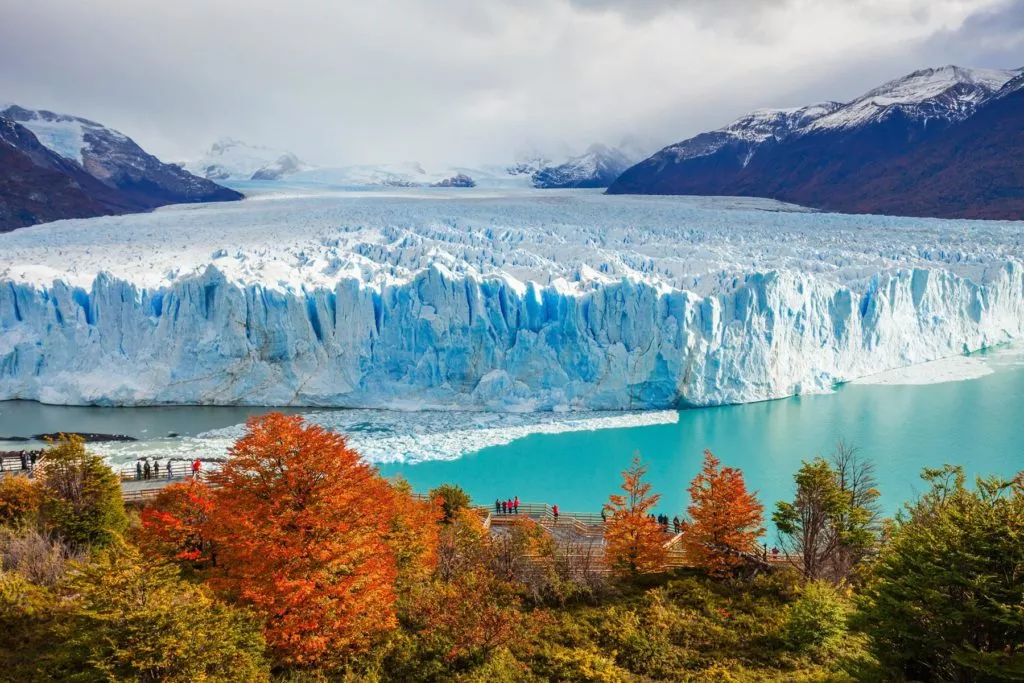
In Patagonia, where you sleep can matter as much as which category you pick.
You’ve chosen Patagonia, roughly settled on the route, and then a new word appears in every quote you receive: your tier.
Comfort. Superior. Luxury. INN & B&B. The same trip, priced four different ways, and almost nothing explaining what actually separates one level from the next.
It’s a fair place to feel stuck, because the tier you choose shapes more than the price. It shapes where you sleep, how close you are to the sights, and — in a region this remote — whether the room you want is even available.
Most travelers assume the tiers are simply a ladder of luxury: pay more, get nicer. That’s part of it, but it misses the point that matters most in Patagonia, where a room’s value is set as much by its location as by its thread count.
So this is a plain Patagonia accommodation tiers comparison: what each level actually gives you, what the real difference between Patagonia lodge categories is, and what’s different about Comfort, Inn or Superior in Patagonia when you get past the labels.
It’s written for the traveler comparing categories before making contact — which, according to what we see, is exactly when most people get stuck.
We’ll define the four tiers, walk through what each delivers, explain the one thing the tier names don’t tell you, and finish with how to match a category to your trip without overpaying or under-sleeping.
The short version, before the detail: the tiers are real and useful, but the decision is not simply about price. It’s about location, availability, and what you actually want your evenings to feel like.
1. Why Accommodation Tiers Matter More in Patagonia
In most destinations, hotel category is a straightforward trade of money for comfort. A three-star and a five-star sit on the same street; you pick your budget and move on.
Patagonia breaks that logic, because the region is enormous and nearly empty. The properties worth staying in are small, scattered, and limited in number, so the category you choose interacts with something scarcer than comfort: availability.
A tier here isn’t only a comfort level. It’s a pool of specific properties, and in peak season those pools drain at different speeds.
There’s also the location factor, which barely exists elsewhere. A room’s worth in Patagonia depends heavily on how close it sits to the glacier, the trailhead or the park gate — and that cuts across the tiers rather than following them.
This is closely tied to what a trip actually includes, which we cover in detail in our guide to what’s included in a Patagonia tour. Accommodation is the single largest line in most quotes, so the tier you pick moves the total more than almost any other choice.
Understand the tiers properly and you can spend your budget where it changes the experience, rather than where it merely changes the brochure.
2. The Four Tiers, Defined
Say Hueque organises Patagonian accommodation into four categories, and it helps to see them side by side before going deeper into each.
They run from simple and central to full-service and remote, and the jump between adjacent tiers is smaller than most travelers expect — while the jump from the bottom to the top is genuinely large.
| Tier | What it is | Best for |
| INN & B&B | Small inns and bed-and-breakfasts; simple, clean, central | Budget-conscious travelers who spend little time in the room |
| Comfort | Reliable mid-range hotels with private facilities | Most first-time travelers wanting dependable comfort |
| Superior | Boutique and premium hotels with character and better locations | Travelers who want a sense of place and more service |
| Luxury | Top lodges, often all-inclusive, in prime positions | Those prioritising location, exclusivity and guided excursions |
The key thing to notice is that this is a difference of lodge categories, not a difference of trip quality. A well-designed Comfort itinerary and a Luxury one visit the same glaciers, the same mountains, the same towers — the tier changes where you sleep, not what you see.
3. INN & B&B: Simple, Central and Good Value
The most accessible tier is built around small inns and bed-and-breakfasts in the main towns, and it’s a better option than its price suggests.
Rooms are simple but clean and comfortable, usually with private bathrooms, and the properties tend to sit centrally in El Calafate, El Chaltén or Puerto Natales — walkable to restaurants and, in El Chaltén’s case, to the trailheads themselves.
What you give up is service and setting. There’s no lodge restaurant, no spa, no sweeping window over the steppe — you’re in a town, not at the edge of the wilderness.
What you gain is value and often a warmer, more local feel. Family-run B&Bs in Patagonia can be genuinely charming, and the hosts frequently know the area better than any concierge.
For travelers who plan to spend their days out on trails and glaciers and treat the room as a place to sleep, this tier makes real sense. You’re not paying for a view you won’t be in the room to see.

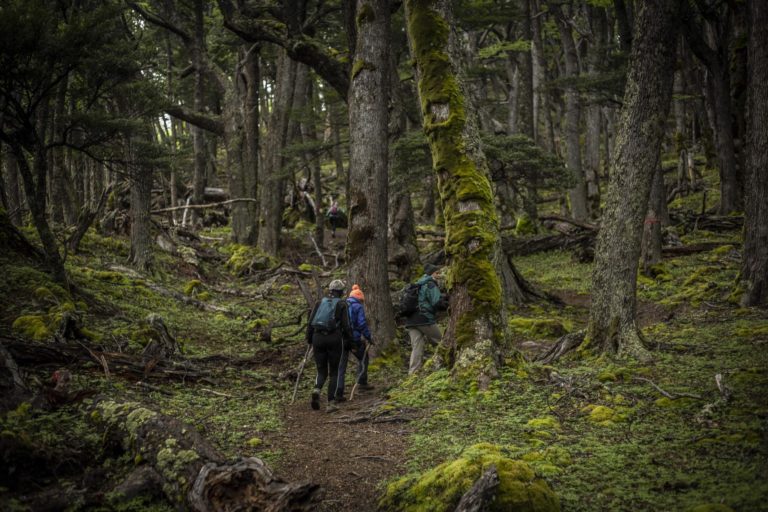
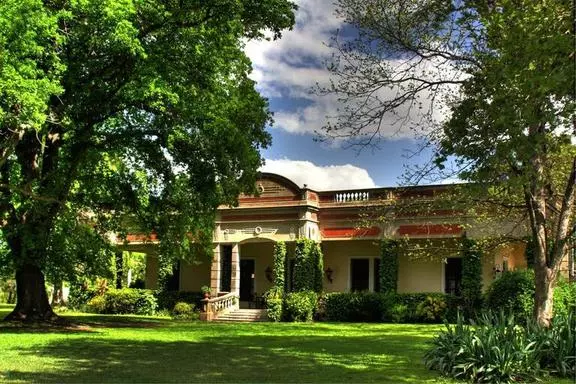
The INN & B&B tier: simple, central rooms, like this inn in El Calafate.
4. Comfort: The Reliable Middle
The Comfort tier is where most first-time travelers land, and for good reason: it removes the uncertainty without the premium.
These are solid, mid-range hotels with private facilities, consistent standards, and enough comfort that nothing about the room distracts from the trip. Think dependable rather than memorable.
Locations are generally good — central in the towns, or a short transfer from the parks — without commanding the prime positions the top tier occupies.
The Comfort tier’s real strength is predictability. In a region where a bad night’s sleep can undermine a hard day’s hiking, knowing exactly what you’re getting has genuine value.
It’s also the tier that combines most flexibly across a multi-stop route, which matters when you’re choosing a Patagonia package that fits your trip. You can hold a consistent standard from El Calafate to Torres del Paine without the cost swinging wildly between stops.
For the majority of travelers, this is the sensible default — comfortable, well-located, and free of the compromises at either extreme.
5. Superior: Character, Location and Service
The Superior tier is where accommodation stops being a backdrop and starts being part of the experience.
These are boutique and premium hotels with genuine character — design that reflects the landscape, better positions closer to the sights, and a level of service that anticipates rather than reacts.
The locations are the real upgrade. Superior properties tend to hold the more sought-after spots: the lodge with the lake view, the hotel a little closer to the park gate, the estancia with the open horizon.
You also get more of the things that make an evening pleasant after a long day outdoors — a proper restaurant, a bar, often a spa or hot tub, and staff who can arrange the details.
For travelers who see accommodation as part of the journey rather than merely a bed, and who want a sense of place without the top-tier price, Superior is frequently the sweet spot — a meaningful step up that stops short of full luxury.
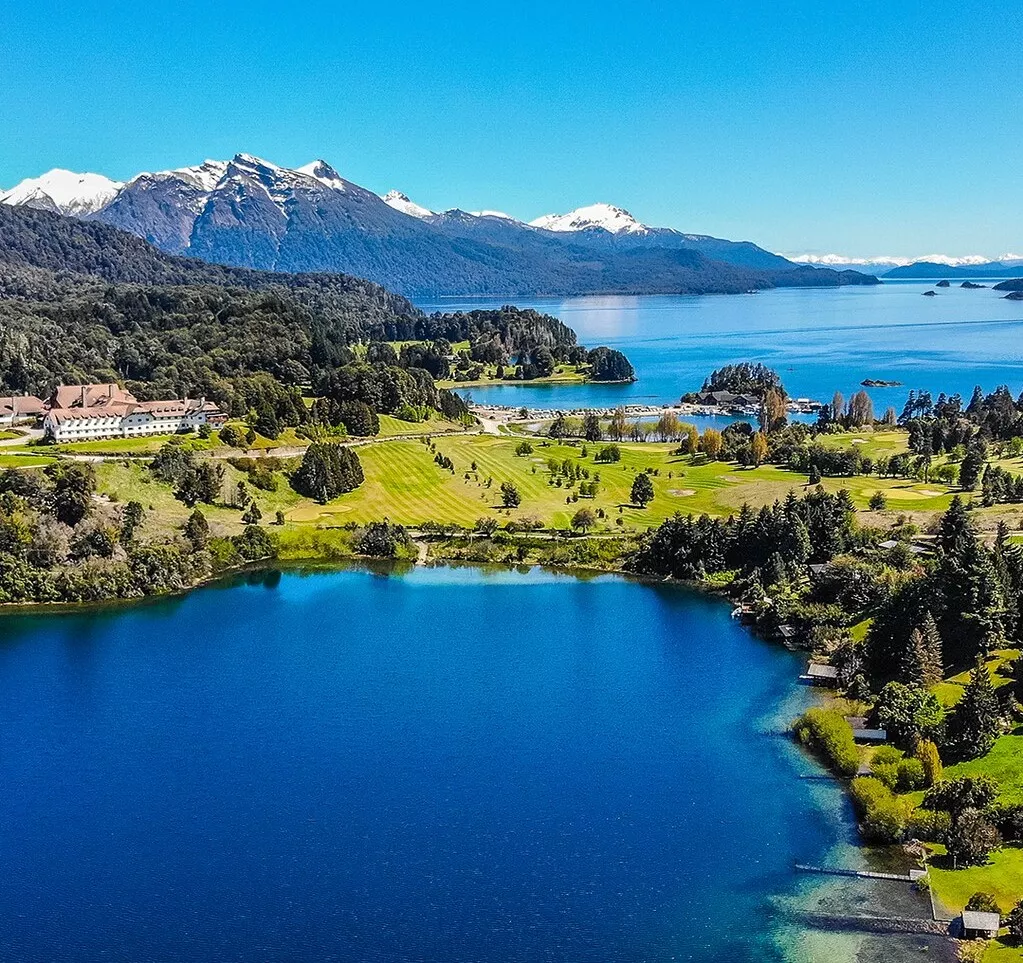
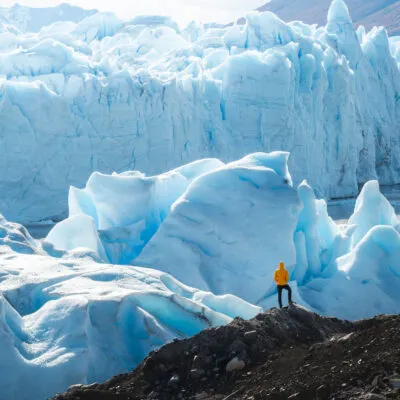
The Superior tier: boutique hotels with character and better locations.
6. Luxury: All-Inclusive Lodges and Prime Positions
At the top sits the Luxury tier, and in Patagonia this means something specific and worth understanding.
Luxury here is rarely about marble and gold. It’s about the finest lodges in the most privileged positions — frequently the ones built inside or right at the edge of the national parks, where no other category can place you.
Many of these properties are all-inclusive, bundling accommodation, meals, drinks and a daily menu of guided excursions into one price. You arrive, and everything is arranged around you.
This is the tier that buys access rather than opulence. Staying inside the national park means you’re on the trail at seven in the morning, before the day visitors arrive, with the great sights briefly to yourself.
It’s the level we explore fully in our guide to the best luxury travel options in Patagonia, and it suits travelers for whom location, exclusivity and effortless logistics matter more than the number on the invoice.
The jump from Superior to Luxury is the largest on the ladder — in price, but also in what you actually get, which is proximity to the wilderness that money can otherwise not buy.
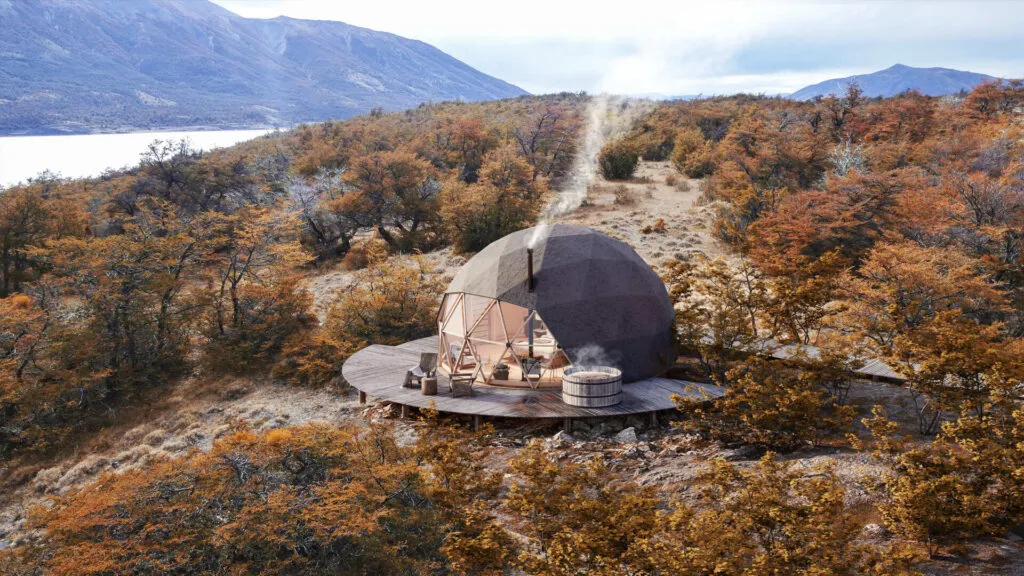
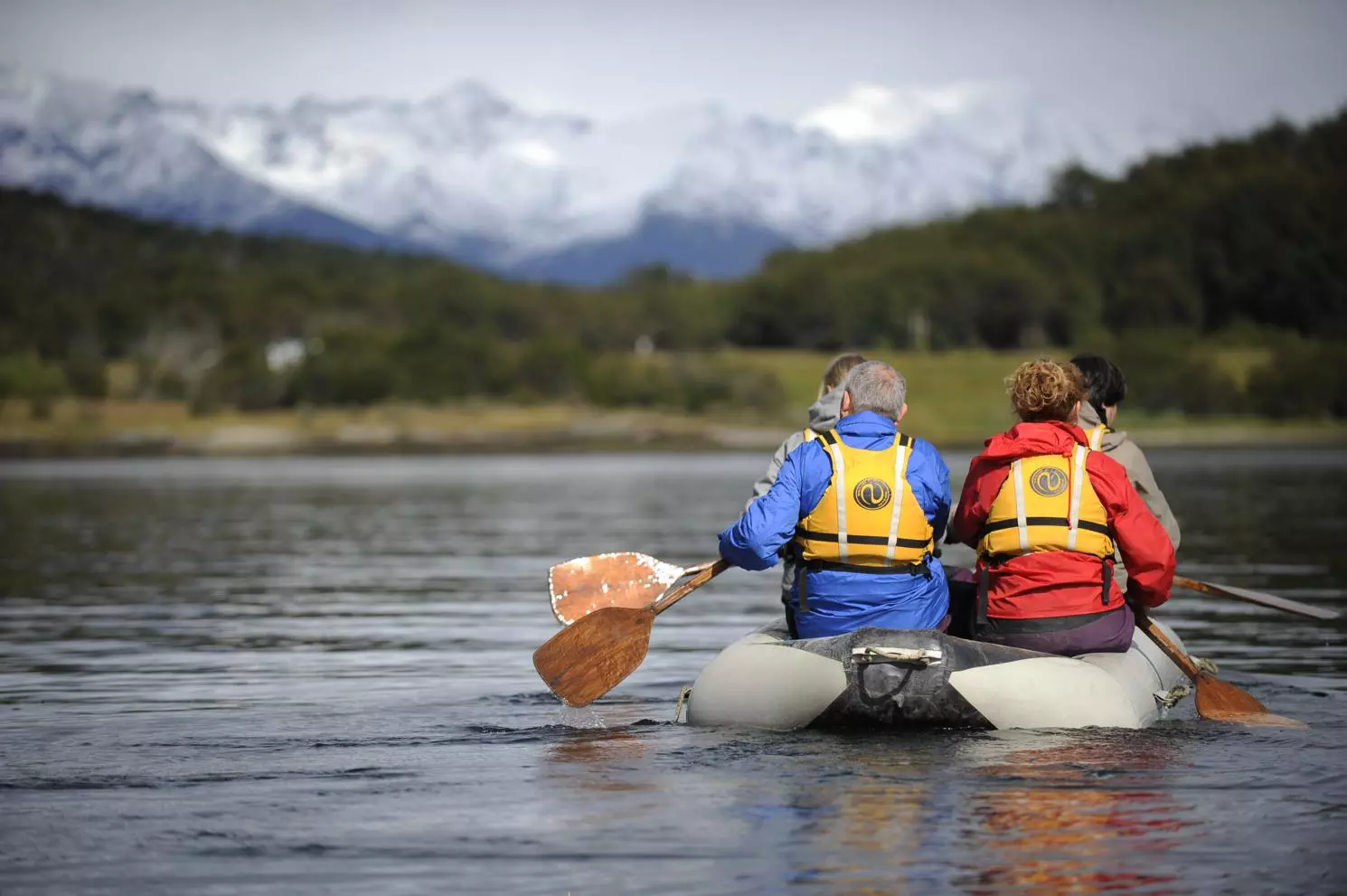
The Luxury tier: top lodges in prime positions, like this camp near El Calafate.
7. The Thing the Tiers Don’t Tell You: Location Beats Category
Here is the single most important idea in this guide, and it runs against the instinct to simply climb the tier ladder.
In Patagonia, where you sleep often matters more than how luxurious the room is. A well-placed Comfort hotel can deliver a better experience than a grander property an hour away.
The clearest example is the national parks. A modest room inside Torres del Paine or steps from the Perito Moreno access gives you early mornings and late evenings on the trails, empty of crowds — something no five-star hotel in town can offer.
So the honest advice is often to choose position over polish. Spend on the room that puts you closest to the reason you came, rather than the room with the longest list of amenities.
This is exactly the kind of judgement that shapes a good El Calafate tour, where the difference between a lodge near the glacier and a hotel in town changes the whole rhythm of the day.
The tiers are a useful starting point. But the best accommodation decision in Patagonia is frequently a lower tier in a better location, not a higher tier in a worse one.
8. Availability: Why the Best Rooms in Each Tier Go First
Whichever tier you choose, there’s a constraint that overrides all of it, and it catches travelers out every season.
The best properties in every category are small and few, and they book out remarkably early — frequently eight to twelve months ahead for peak dates between December and February.
This isn’t only a Luxury problem. The best-located Comfort hotel and the most charming B&B fill just as fast, because Patagonia’s total inventory is tiny relative to global demand.
What this means in practice is that your tier is not a fixed guarantee. Leave the booking late and the Superior rooms in the right location may be gone, leaving you a choice between a higher tier you didn’t budget for or a worse position.
It’s the most common reason a considered trip becomes a compromised one, and it’s entirely avoidable with early planning — the same logic that runs through how to prepare for a trip more broadly.
Book early, and the tier you want in the location you want is yours. Book late, and availability chooses for you.
9. Mixing Tiers Across One Trip
One thing many travelers don’t realise is that you don’t have to choose a single tier for the whole trip. You can mix tiers, and often you should.
The reasoning is that not every stop deserves the same spend. A night in a town before an early flight has little to gain from a Luxury lodge, while a night beside the glacier or inside the park is exactly where the top tier earns its cost.
A common and sensible pattern is Comfort in the transit towns and Superior or Luxury at the destinations that matter most — the places where the view from your window is part of the point.
This lets you concentrate your budget where it changes the experience and save it where it wouldn’t, which is almost always a better trip than a flat tier across every night.
It’s the kind of tailoring a specialist does routinely, and it’s far more effective than picking one category and applying it uniformly from the first night to the last.
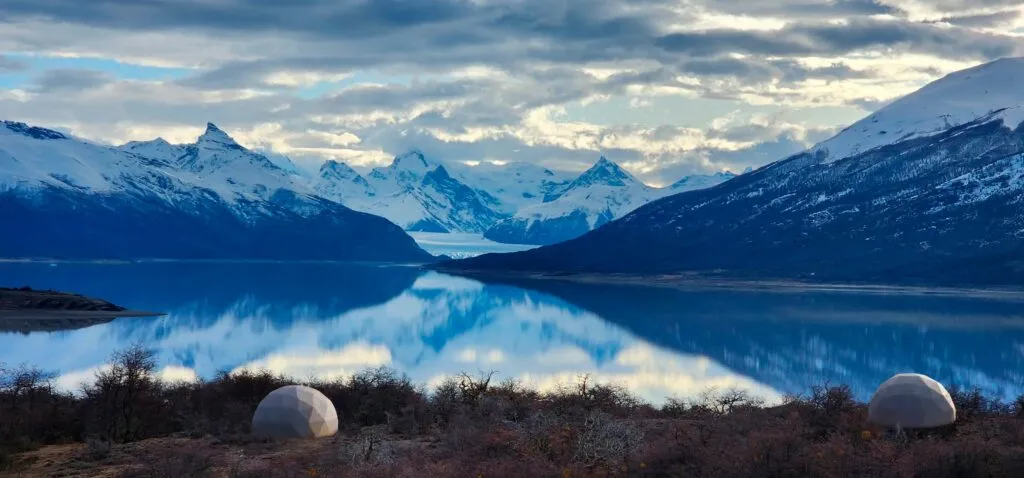
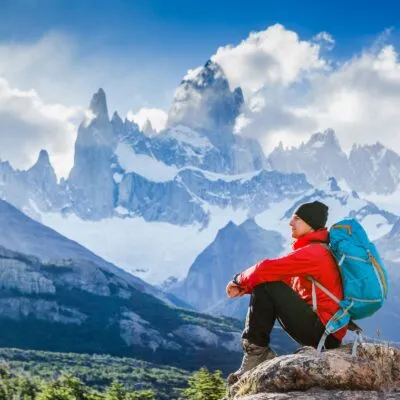
Mixing tiers: save the top category for the stops where the view is the point.
10. How to Choose Your Tier
With the four levels clear, the decision comes down to a few honest questions about how you travel.
How much time will you actually spend in the room? If you’re out on trails from dawn to dusk, a lower tier in a great location serves you better than a grand room you barely see.
How much does setting matter to your evenings? If a lodge restaurant, a hot tub and a view are part of how you unwind, Superior or Luxury will feel worth it.
And how close do you want to be to the sights? If early, crowd-free access to the parks is a priority, the Luxury tier’s inside-park positions are frequently the only way to get it.
| If you are… | The tier that usually fits |
| Out hiking all day, room is just for sleeping | INN & B&B or Comfort, chosen for location |
| A first-timer wanting dependable comfort | Comfort, mixed with Superior at key stops |
| Drawn to design, service and a sense of place | Superior |
| Prioritising park access, exclusivity and ease | Luxury at the destinations that matter |
If you’d like help matching categories to your specific route and dates, our Patagonia tours span every tier, and our travel specialists build the mix around you rather than selling a single level. The Patagonia travel guide is a good place to picture the destinations first.
11. Frequently Asked Questions
What are the accommodation tiers in Patagonia?
Say Hueque organises Patagonian accommodation into four categories. INN & B&B covers small, simple, central inns and bed-and-breakfasts. Comfort is reliable mid-range hotels with private facilities.
Superior means boutique and premium properties with more character, better locations and stronger service, while Luxury is the top lodges, often all-inclusive and in prime positions inside or beside the national parks.
The important point is that all four visit the same sights — the tier changes where you sleep and how close you are to the wilderness, not what your trip actually sees.
What is the difference between Comfort and Superior in Patagonia?
Comfort is the reliable middle: dependable mid-range hotels with private facilities, good central locations, and predictable standards that suit most first-time travelers.
Superior is a meaningful step up in character, service and — most importantly — location. These boutique and premium properties tend to hold the more sought-after positions, with lake views, better proximity to the parks, and amenities like a proper restaurant or spa.
The jump between them is smaller than the jump to Luxury. For travelers who want a sense of place without the top-tier price, Superior is frequently the sweet spot.
Is luxury accommodation worth it in Patagonia?
It depends on what you value, but in Patagonia luxury buys something specific: access. The finest lodges occupy positions inside or right at the edge of the national parks that no other tier can offer.
That means being on the trail before the day visitors arrive, with the great sights briefly to yourself, plus the ease of all-inclusive lodges that bundle meals and guided excursions.
If early, crowd-free park access and effortless logistics matter more to you than the price, it’s worth it. If you’ll spend your days out regardless of where you sleep, a lower tier in a great location may serve you better.
Can I mix accommodation tiers on one Patagonia trip?
Yes, and it’s often the smartest approach. You don’t have to apply one category to every night of the trip.
A common pattern is Comfort in the transit towns, where a night before an early flight gains little from a grand lodge, and Superior or Luxury at the destinations that matter most — beside a glacier or inside a park, where the view from your window is part of the experience.
Mixing tiers concentrates your budget where it changes the trip and saves it where it wouldn’t, which usually produces a better journey than a single flat category throughout.
How far in advance should I book accommodation in Patagonia?
Eight to twelve months ahead for peak dates between December and February, and this applies to every tier, not just Luxury.
The best-located Comfort hotels and the most charming B&Bs fill as quickly as the top lodges, because Patagonia’s total inventory is tiny relative to demand.
Booking late doesn’t just risk a higher price — it risks losing the location you wanted, leaving a choice between a tier you didn’t budget for or a worse position. Early planning is the only way to secure both the category and the spot you want.
Does a higher tier mean a better Patagonia trip?
Not necessarily, and assuming so is the most common mistake. All four tiers visit the same glaciers, mountains and towers — the category changes where you sleep, not what you experience by day.
In fact, location often matters more than category. A well-placed Comfort hotel near the Perito Moreno access or inside Torres del Paine can deliver a better experience than a grander property an hour away.
The best decision in Patagonia is frequently a lower tier in a better location rather than a higher tier in a worse one. Choose position over polish where the two compete.