- 1. The Timeline: 90 Days, 30 Days, 7 Days
- 2. Passport, Visa and Entry Requirements
- 3. Travel Insurance: Argentina Formally Expects It
- 4. Cash in Argentina: The Rules Nobody Explains
- 5. Cards, ATMs and the Exchange Rate
- 6. How Much Money to Actually Bring
- 7. Tipping in Argentina: The Actual Numbers
- 8. Domestic Flights: Check-In and the Fifteen-Kilo Trap
- 9. Crossing into Chile? Two Things That Save You Money
- 10. Packing: Argentina Is Not One Climate
- 11. Health, Altitude and Pharmacies
- 12. Phones, Connectivity and Your Itinerary in One Place
- 13. The Final Week, in One Place
- 14. Frequently Asked Questions
- How do I prepare for a trip to Argentina?
- Do I need a visa to travel to Argentina?
- How much cash should I bring to Argentina, and in what form?
- What is the baggage allowance for domestic flights in Argentina?
- What should I pack for Argentina?
- What do I need to know before crossing from Argentina into Chile?
- Do I need vaccinations or to worry about altitude in Argentina?
The things that go wrong on Argentine trips are almost never the interesting things.
Nobody’s holiday is ruined by choosing the wrong glacier. It’s ruined by arriving at a domestic check-in desk with a twenty-three-kilo suitcase for a fifteen-kilo allowance, at six in the morning, with a card that doesn’t work.
Or by bringing a stack of perfectly good twenty-dollar bills and discovering they’re worth noticeably less than hundreds. Or by folding those hundreds in half and watching an exchange house refuse them.
These aren’t exotic problems. They’re boring, specific, and entirely preventable — and they’re what actually separates a smooth first day from a bad one.
So this is the real Argentina travel checklist: what to do before traveling to Argentina, in the order it needs doing, with the numbers included rather than implied.
It’s written for two people. If you’ve already booked, this is your pre-departure list — work through it and you’ll land prepared.
If you haven’t booked yet, read it anyway. It’s a reasonably honest preview of the practical texture of an Argentine trip, which is worth knowing before you commit to one.
A note on dates: Argentina changes its currency rules more often than most countries change governments, and airlines revise baggage policies quietly. Everything here was accurate at the time of writing, and the items that shift most are flagged as such.
Confirm those with your airline or your travel specialist in the final fortnight. Everything else is stable enough to act on today. Below, the Argentina pre-departure tips that actually matter.
1. The Timeline: 90 Days, 30 Days, 7 Days
Preparation for Argentina isn’t one task. It’s three clusters, and doing them in the wrong order is how people end up rushing the ones that can’t be rushed.
At ninety days out, handle anything involving a government or an insurer. Check your passport’s expiry, confirm whether your nationality needs a visa, and buy travel insurance.
Insurance early matters more than people think, because cancellation cover only protects you against things that happen after you buy it. Buying it a week before departure means you’ve insured almost nothing.
At thirty days, move to money and logistics. Order your cash, tell your bank you’re travelling, and check the baggage allowance for every internal flight on your itinerary — not just the international one.
At seven days, it’s execution. Check in online, download boarding passes, confirm your first transfer, and put your documents somewhere you can reach them with one hand and a suitcase in the other.
The final twenty-four hours should be dull. If they’re not, something from the ninety-day cluster got left.
2. Passport, Visa and Entry Requirements
Start here, because it’s the only item on this list that can end a trip before it begins.
The good news for most of our travelers: Argentina does not require a tourist visa from citizens of the United States, Canada, the United Kingdom, or most European countries. You arrive, you get a stamp, you go.
That said, visa policy is a government’s prerogative and it changes. Argentina’s foreign ministry publishes the current list, and it’s worth two minutes to confirm your own nationality rather than assuming.
What Argentina does formally expect, and what people forget, is a small set of supporting items: valid medical insurance with full coverage for your stay, a return or onward ticket out of the country, and the address of where you’ll be staying.
These are rarely checked with much rigour. They are occasionally checked with total rigour, and the second scenario is the one worth preparing for.
Have your first hotel’s address written down somewhere that isn’t behind a login screen, because you may be asked for it before you have a signal.
If your route crosses into Chile or Brazil, those countries have their own rules — and Brazil in particular reintroduced visa requirements for several nationalities, including US and Canadian citizens. Check each country you enter, not just the first.
3. Travel Insurance: Argentina Formally Expects It
Insurance is on the entry requirements list, which already distinguishes it from the optional extras.
But the requirement is not the point. The coverage is, and this is where most travelers under-buy by a wide margin.
The line that matters most in Argentina is medical evacuation. In Patagonia you can be six hours from a hospital and considerably further from one you’d choose, and evacuation is the category of cost that changes lives.
Check the adventure activities clause with genuine attention. Plenty of standard policies quietly exclude trekking above a certain altitude, ice trekking, horse riding, or kayaking — which is to say, they exclude the reason you booked.
If your itinerary includes the Perito Moreno ice trek or anything in Torres del Paine, read that clause before you pay for the policy rather than after.
Trip cancellation cover should name the things that actually happen: illness, a family emergency, and supplier insolvency.
And buy it early. A policy purchased the week before departure covers the flight and almost nothing else.
4. Cash in Argentina: The Rules Nobody Explains
This is the section where Argentina is genuinely unlike anywhere else, and where a little knowledge is worth real money.
Bring physical US dollars, and bring them in hundreds. Not fifties, not twenties — USD 100 bills, or €100 notes if you’re coming from Europe.
The reason is that denomination affects the rate. Smaller bills are routinely exchanged at a worse rate than hundreds, for no reason other than convention, and the gap is not trivial across a two-week trip.
Then, condition. Exchange houses and banks in Argentina are unusually particular about the physical state of a note. Marks, tears, writing, or significant creases can get a bill refused outright.
So don’t fold them. Bring them flat, in an envelope, the way they came from your bank. This sounds fussy and it is entirely real.
One more: some exchange houses will not accept the older, smaller-portrait US hundred-dollar design — the “small face” bills. If your bank hands you older notes, ask for the current design.
None of this is written anywhere at the airport. It’s simply what everyone in Argentina already knows, and what visitors learn expensively.
5. Cards, ATMs and the Exchange Rate
Argentina’s currency situation is the single most volatile practical item on this list, and any article claiming a permanent answer is lying to you.
Here is the durable shape of it. Argentina has, at various points in recent years, offered foreign-issued Visa and Mastercard a preferential exchange rate for tourists — meaning card payments were processed considerably better than the official rate.
When that has been in force, the practical effect is large: you need far less physical cash than the old advice suggests, and paying by card is often the best rate available to you.
Because this policy has changed more than once, and will again, treat it as something to confirm rather than assume. Ask your travel specialist in the fortnight before you fly. It genuinely changes how much cash you carry.
ATMs exist, mostly inside banks, and they generally work around the clock. The catch is fees: each Argentine bank charges its own, your bank charges another, and withdrawal limits are often low enough that you pay the fee repeatedly.
Chilean ATMs are much the same. If your trip crosses into Torres del Paine, don’t plan on ATMs as your primary source of anything.
The sensible default: bring a reasonable amount of cash for small purchases and tips, use cards where they’re accepted, and treat ATMs as the fallback rather than the plan.
6. How Much Money to Actually Bring
The question everyone asks, and the one most guides refuse to answer with a number.
For daily expenses — meals not included in your itinerary, drinks, shopping, taxis, incidentals — budget roughly USD 50 to 100 per person, per day.
The spread is wide because it genuinely depends on you. Fifty is comfortable if your itinerary includes most meals and you’re not shopping. A hundred covers a good dinner out with wine most nights.
On top of that, budget tips separately, in cash, and read the next section before you decide how much.
A useful framing: the cash you carry isn’t for the trip. Your trip is largely prepaid. The cash is for tips, for small purchases in places that don’t take cards, and for the days a card machine simply doesn’t work.
Which is more often than you’d like, particularly in Patagonia, where a lodge’s connection can go down with the weather.

7. Tipping in Argentina: The Actual Numbers
Tipping is optional in Argentina, customary in practice, and almost never explained with figures — which leaves travelers guessing at exactly the moment they’d rather not.
So here are the numbers we give our own travelers. They’re guidelines rather than rules, and they should still track the quality of the service you got.
| Service | Suggested tip, per person |
| Full-day tour | USD 30–40, split between the guide and the driver |
| Half-day tour | USD 15–20, split between the guide and the driver |
| Transfers | USD 2–5 |
| Hotel porters and drivers | USD 1–2 |
| Housekeeping | USD 1–2 per night |
| Restaurants | 10% of the bill |
The operationally important detail: gratuities are generally cash only, in US dollars or Argentine pesos. Not on the card, not added to the bill.
Which means the tipping budget has to be part of the cash you bring, in usable denominations. This is the single most common reason travelers run short in the first week.
Do the arithmetic before you fly. A twelve-day trip with several full-day tours adds up to a few hundred dollars in cash, and you don’t want to discover that in El Chaltén.
8. Domestic Flights: Check-In and the Fifteen-Kilo Trap
If you take one practical thing from this article, take this one, because it catches almost everybody.
Your international flight almost certainly gave you a twenty-three-kilo checked allowance. Your Argentine domestic flight may not.
Aerolíneas Argentinas typically allows one checked bag up to fifteen kilos, plus a carry-on up to eight kilos and a personal item up to three.
LATAM, SKY and GOL are generally more generous: one checked bag up to twenty-three kilos, with a carry-on up to ten and a personal item up to three.
So a suitcase that flew from New York without comment can cost you an excess fee at Buenos Aires domestic departures, at dawn, on the day you fly to El Calafate.
Pack to the smallest allowance on your itinerary, not the largest. If any leg is on Aerolíneas, fifteen kilos is your real number.
Then check in online, twenty-four hours before each flight, directly with each airline — not through the agency, and not at the airport. Select your seats and download the boarding passes to your phone while you still have reliable wifi.
Airlines revise these allowances without announcement, so confirm yours in the final week. This is the item on this list most likely to be out of date by the time you read it.
9. Crossing into Chile? Two Things That Save You Money
Most Argentine Patagonia itineraries cross into Chile for Torres del Paine, and Chile has two administrative details worth knowing in advance. One is mandatory. The other is worth real money.
The mandatory one: Chile requires an agricultural declaration, completed online up to seventy-two hours before you enter. It’s free, it takes a few minutes, and it exists because Chile is serious about not importing pests.
Don’t bring fresh fruit, meat, seeds or plants across the border. Declare honestly and the process is painless; get caught with an undeclared apple and it isn’t.
Now the one that pays. On entering Chile you’ll be handed a small slip of paper by the immigration police — the Tarjeta Única Migratoria, or tourism card. It looks like a receipt. It looks disposable.
It is not. That slip exempts foreign visitors from Chile’s nineteen per cent VAT on hotel accommodation, provided you pay in US dollars and can present it at check-in.
Nineteen per cent, on Patagonian lodge rates, across several nights, is not a rounding error. Travelers lose this every single season by putting the slip in a pocket and washing the trousers.
Put it with your passport the moment you receive it, and keep it until you leave the country.
10. Packing: Argentina Is Not One Climate
The single biggest packing mistake is treating Argentina as a destination rather than a continent’s worth of weather.
Buenos Aires has a temperate, humid climate. Summers are genuinely hot — averages between 20°C and 35°C, occasionally pushing past 38°C — and the humidity does the rest. Spring sits around 15°C to 24°C.
Winter, from June to September, runs roughly 4°C to 17°C: cold in the day, cooler at night, and rarely as mild as visitors expect.
The Litoral — Iguazú and the northeast — is subtropical and warm year-round, averaging about 21°C. Summer regularly exceeds 32°C, and winter lows sit near 10°C. Expect rain in any month, and pack long sleeves for the sun and the mosquitoes rather than for the cold.
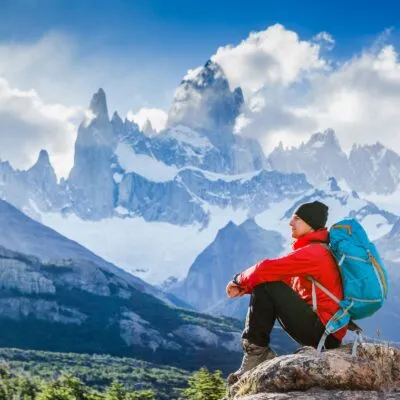
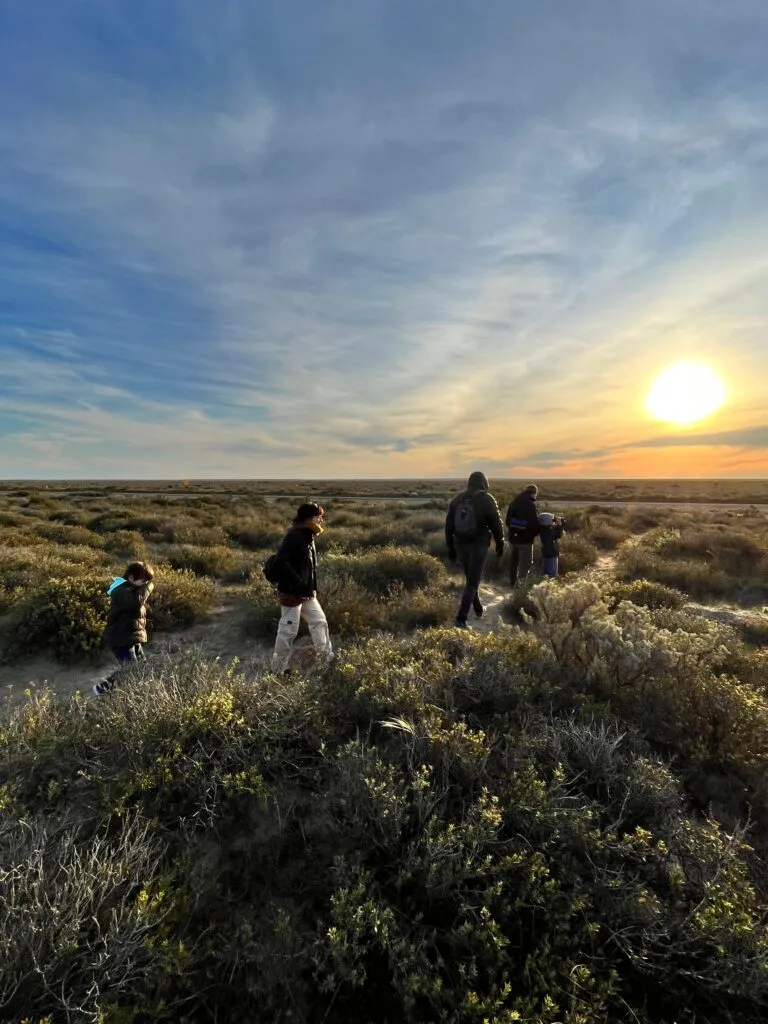
Patagonia is its own argument. The rule there is layers and wind, not temperature — a warm day at El Chaltén can turn on you inside an hour, and the wind is the thing you’ll remember.
Waterproof outer layer, warm mid-layer, broken-in walking shoes. Non-negotiable, even in January.
If your trip spans regions, pack for the coldest and wettest leg and accept carrying a jumper through Iguazú. The Argentina travel guide breaks the regional climates down properly, and it’s worth a look before the suitcase comes out.
11. Health, Altitude and Pharmacies
Argentina is an easy country healthwise, with a few specifics worth handling in advance.
No vaccinations are required for entry from Europe or North America. If your route continues into Bolivia, yellow fever vaccination is mandatory there — a detail that catches multi-country travelers rather than Argentina-only ones.
Altitude is the one to plan around, and it only applies if you’re going northwest. Salta and Jujuy climb well above 2,000 metres, and the Salinas Grandes higher still. Arrive, go gently for a day, drink water, skip the wine on night one.
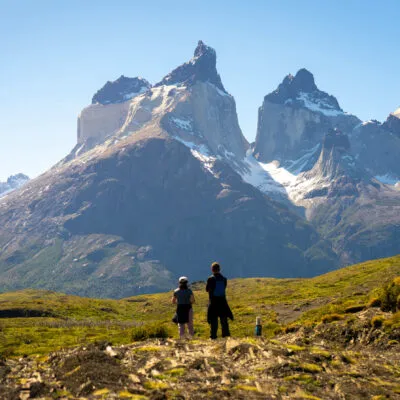
Patagonia, despite the drama, is essentially at sea level. Fitz Roy looks like altitude and isn’t.
Bring your prescription medication in its original packaging, with enough for the trip plus a few days, and split it across two bags rather than trusting one.
Argentine pharmacies are excellent, widely available in cities, and staffed by pharmacists who can advise. In Patagonian villages they are not. Carry your own basics — blister plasters, painkillers, sunscreen, and something for an unfamiliar stomach.
The sun in Patagonia is stronger than the temperature suggests. People get burned in a headwind at twelve degrees and don’t understand why.
12. Phones, Connectivity and Your Itinerary in One Place
Connectivity in Argentina is good in the cities and patchy exactly where the scenery is best, which is a trade most people accept happily once they’re there.
Buenos Aires, Mendoza and El Calafate are fine. El Chaltén is limited. Parts of Patagonia and the Northwest have nothing at all, and the lodges that do have wifi share it across everyone in the building.
Plan for that rather than fighting it. An eSIM bought before departure is the simplest solution and costs little; alternatively, ask your provider about roaming rates before you fly rather than after.
The important preparation is offline access. Download your boarding passes, your first hotel address, your maps, and anything you’d need if you landed with no signal — because you may.
Our own travelers get their full itinerary in the Vamoos app: the day-by-day programme, hotel details, vouchers and trip information, all in one place and available offline. If you’ve been sent login details, download it before you fly rather than at the airport.
Whatever system you use, the principle holds. Anything that only exists in your inbox doesn’t exist at a border crossing.
13. The Final Week, in One Place
Everything above, compressed into the seven days when it actually gets done.
| When | Task | The detail that matters |
| 7 days out | Confirm baggage allowance per flight | Pack to the smallest allowance — 15 kg if any leg is Aerolíneas |
| 7 days out | Confirm the currency situation | Ask your specialist whether cards get the tourist rate right now |
| 5 days out | Get cash | USD 100 bills, flat, unmarked, current design |
| 5 days out | Tell your bank you’re travelling | Cards get blocked otherwise, usually on day one |
| 3 days out | Chile agricultural declaration | Only if crossing — free, online, within 72 hours of entry |
| 24 hrs out | Check in for each flight | Directly with each airline; select seats; download passes |
| 24 hrs out | Download everything offline | Itinerary, vouchers, maps, first hotel address |
| Before you go | Split your documents | Passport copy and meds in a second bag |
| On arrival in Chile | Keep the tourism card | It waives 19% VAT on hotels — with your passport, not your pocket |
If anything on this list is unclear for your specific itinerary, ask rather than guess. Our travel specialists answer these questions daily, and the currency and baggage items in particular are worth a direct check in the final fortnight.
Get these right and your first day in Argentina is boring in exactly the way a first day should be.
14. Frequently Asked Questions
How do I prepare for a trip to Argentina?
Work in three clusters. At ninety days, handle anything involving a government or an insurer: check your passport, confirm visa requirements for your nationality, and buy travel insurance early, since cancellation cover only protects against what happens after you purchase it.
At thirty days, deal with money and logistics — order cash, notify your bank, and check the baggage allowance for every internal flight rather than just the international one.
At seven days it’s execution: check in online with each airline, download boarding passes and your itinerary for offline use, and confirm your first transfer. The final day should be dull.
Do I need a visa to travel to Argentina?
Most travelers from the United States, Canada, the United Kingdom and Europe do not need a tourist visa for Argentina. You arrive, receive a stamp, and enter. Argentina’s foreign ministry publishes the current list, and it’s worth confirming your own nationality rather than assuming, since policy can change.
What Argentina does formally expect is valid medical insurance covering your full stay, a return or onward ticket, and the address of your accommodation.
If your route continues into Chile or Brazil, check those separately — Brazil reintroduced visa requirements for several nationalities including US and Canadian citizens.
How much cash should I bring to Argentina, and in what form?
Budget roughly USD 50 to 100 per person per day for meals not included, drinks, shopping and incidentals — plus your tipping budget on top, which is cash-only.
The form matters more than most people realise. Bring USD 100 bills rather than smaller denominations, because the rate on hundreds is meaningfully better. Bring them flat and unmarked: exchange houses routinely refuse notes with tears, writing or heavy creases, and some won’t take the older small-portrait design.
Argentina’s card and exchange rules change often, so confirm the current situation before you fly — it materially affects how much cash you need.
What is the baggage allowance for domestic flights in Argentina?
It’s frequently lower than your international allowance, and this catches travelers constantly. Aerolíneas Argentinas typically permits one checked bag up to fifteen kilos, plus an eight-kilo carry-on and a three-kilo personal item.
LATAM, SKY and GOL are usually more generous, at twenty-three kilos checked with a ten-kilo carry-on.
So a case that flew internationally without comment can incur an excess fee at Buenos Aires domestic departures. Pack to the smallest allowance on your itinerary, and confirm with each airline in the final week — these policies get revised quietly.
What should I pack for Argentina?
Pack for regions, not for a country. Buenos Aires is humid and temperate — hot summers averaging 20°C to 35°C, and winters from June to September that run 4°C to 17°C and feel colder than visitors expect.
Iguazú and the northeast are subtropical, averaging around 21°C, over 32°C in summer, with rain possible any month — pack long sleeves for sun and mosquitoes rather than warmth.
Patagonia is about layers and wind rather than temperature: a waterproof outer shell, a warm mid-layer, and broken-in walking shoes, even in January. If your trip spans regions, pack for the coldest, wettest leg.
What do I need to know before crossing from Argentina into Chile?
Two things. Chile requires a free agricultural declaration completed online within seventy-two hours of entry, and you must not carry fresh fruit, meat, seeds or plants across the border. Declare honestly and it’s painless.
The second is worth actual money. On entry, immigration police hand you a small paper slip — the Tarjeta Única Migratoria. It looks like a receipt and it is not.
That slip exempts foreign visitors from Chile’s 19% VAT on hotel accommodation when paying in US dollars. Across several nights in a Patagonian lodge, that’s a significant sum. Keep it with your passport until you leave.
Do I need vaccinations or to worry about altitude in Argentina?
No vaccinations are required to enter Argentina from Europe or North America. If your trip continues into Bolivia, yellow fever vaccination is mandatory there — a detail that affects multi-country travelers.
Altitude only matters in the northwest. Salta and Jujuy sit well above 2,000 metres and the Salinas Grandes higher still, so take the first day gently and go easy on the wine. Patagonia, despite appearances, is essentially at sea level.
Bring prescription medication in original packaging, split across two bags. Pharmacies are excellent in cities and absent in Patagonian villages, so carry your own basics — and more sunscreen than the temperature suggests.