- 1. What Actually Makes the W Hard
- 2. The Three Stages, Honestly Assessed
- 3. Direction: East to West, or West to East?
- 4. The Wind: What It Actually Does to Your Plans
- 5. What to Pack for the W Trek in Patagonia: The Real List
- 6. Refugios vs Camping: The Pack Weight Decision
- 7. Training: What Actually Prepares You
- 8. The Booking Chain That Catches Everyone
- 9. Mistakes Experienced Hikers Make
- 10. Timing, and Fitting the W Into a Wider Trip
- 11. Frequently Asked Questions
If you’ve done multi-day treks before, most W Trek content will be useless to you.
It’s written for people who have never slept in a refugio, and it spends its energy explaining what a trekking pole is and reassuring you that you don’t need to be an athlete.
Fine advice for a first-timer. Actively unhelpful if you’ve walked the Tour du Mont Blanc, the Inca Trail, or a week in the Dolomites and want to know what’s actually different about this one.
Because something is different, and it catches experienced hikers more often than beginners. Beginners arrive nervous and over-prepared. Experienced hikers arrive confident, look at the elevation profile, and conclude it’ll be straightforward.
Then they meet the wind.
The W Trek is not technically difficult and its climbs are moderate by alpine standards. What makes it hard is a combination that doesn’t show up on a profile: sustained daily distances, four or five consecutive days, and weather that can turn a pleasant valley walk into a genuine fight.
So this is the W Trek difficulty with real advice for experienced hikers — the honest stage-by-stage breakdown, what the wind does to your gear choices, how the refugio system changes your pack weight, and where confident hikers most often get it wrong.
It assumes you know how to walk. It focuses on what Patagonia specifically demands — the kind of Torres del Paine W Trek preparation an expert guide would actually give you, rather than a reassurance written for beginners.
1. What Actually Makes the W Hard
Let’s be precise, because “hard” is doing a lot of work in most descriptions.
The route covers roughly 60 to 80 kilometres depending on which variants you walk, across four to five days, with daily distances typically between fifteen and twenty-two kilometres and cumulative daily ascent usually in the 500 to 800 metre range.
Read that as an experienced hiker and it looks modest. A twenty-kilometre day with 700 metres of gain is a good day out, not an expedition.
Three things change the arithmetic.
First, consecutive days. You’re not doing one twenty-kilometre day; you’re doing four or five back to back, on legs that don’t fully recover, often with a pack.
Second, the terrain quality. Long sections are loose moraine, root-tangled forest and boulder fields, particularly the final approach to the towers and the upper French Valley. Your kilometre-per-hour rate is slower here than the distance suggests.
Third, and decisively, the wind. Patagonian gusts regularly exceed anything most hikers have walked in, and sustained headwind on an exposed section is genuinely exhausting in a way that no elevation profile records.
The W is a moderate route made difficult by conditions and repetition. That’s the accurate framing.
2. The Three Stages, Honestly Assessed
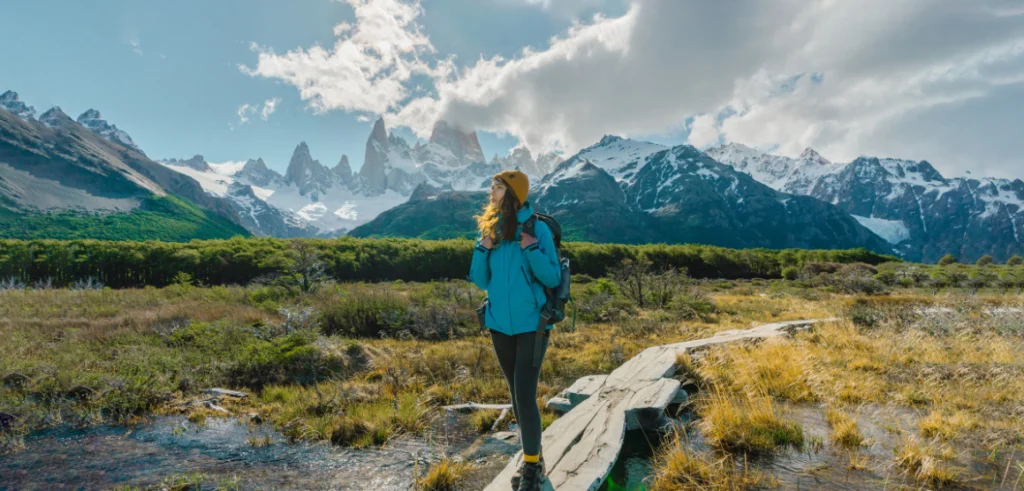
The W’s three arms are not equal, and knowing which day is the hard one lets you plan your energy properly.
The Base of the Towers is the hardest day and the one people underestimate most. From the welcome centre it’s roughly eighteen kilometres round trip and can take up to nine hours, with a final section up steep, loose moraine that is genuinely unpleasant in bad weather.
It’s also the day with the highest chance of disappointment, because the towers are frequently in cloud. Experienced hikers who insist on a sunrise start should know the pre-dawn moraine scramble in the dark is not trivial.
The French Valley is the longest. From Los Cuernos to the Mirador Británico and back runs around 17.5 kilometres, with roughly 6.5 hours of walking from Francés to the upper viewpoint alone.
It’s also the most rewarding for strong hikers — the upper amphitheatre is a full circle of granite and hanging glaciers, and many trekkers who turn back at the lower Mirador Francés miss the better half.
Grey Glacier is the gentlest arm. Refugio Paine Grande to Grey is around eleven kilometres and about three hours, largely undulating with excellent views over the ice.
| Stage | Distance / time | The honest assessment |
| Base of the Towers | ~18 km round trip, up to 9h | Hardest day; loose moraine finish; high cloud risk |
| French Valley | ~17.5 km, ~6.5h to Británico | Longest; upper viewpoint is worth the extra effort |
| Grey Glacier | ~11 km, ~3h | Gentlest arm; the recovery day of the trek |
3. Direction: East to West, or West to East?
Unlike the O Circuit, which must be walked counter-clockwise, the W can be done in either direction — and experienced hikers should think about this rather than accepting the default.
East to west starts at the Las Torres sector, meaning you tackle the Base of the Towers on day one, then the French Valley, and finish at Grey.
The argument for it: you hit the hardest day with fresh legs, and the trek gets progressively easier.
The argument against: day one is your hardest day with no acclimatisation to the terrain, and if the towers are clouded, you have no second chance later in the trip.
West to east begins with the catamaran across Lake Pehoé to Paine Grande, doing Grey first, then the French Valley, then finishing at the towers.
The argument for it: you build into the trek, and you reach the towers on your last day having had several days to watch the weather — with the option of timing that final push for the best forecast.
For experienced hikers who care most about actually seeing the towers, west to east is frequently the smarter choice. For those who want the hardest day done early, east to west.
4. The Wind: What It Actually Does to Your Plans
This deserves its own section because it’s the single most underestimated element of the W, and the one experienced hikers are least prepared for.
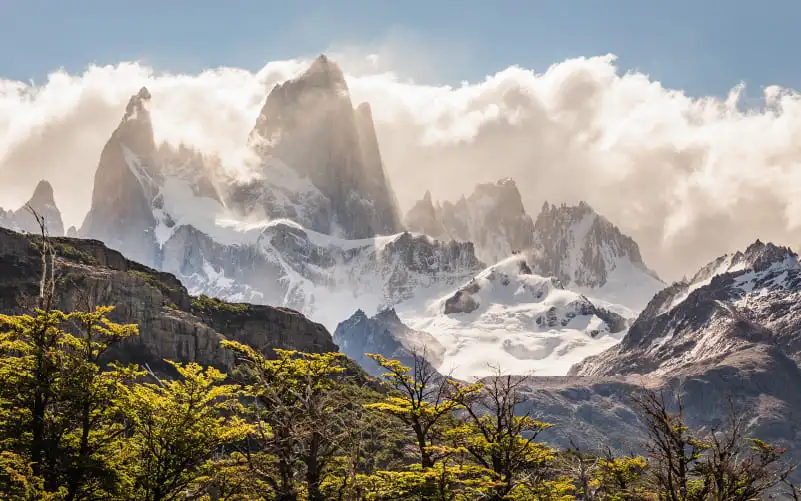
Patagonian wind is not a stronger version of wind you’ve walked in elsewhere. On exposed sections it can knock a loaded hiker off balance, and gusts frequently exceed 100 kilometres per hour in the peak summer months.
Counter-intuitively, the windiest period is December to February — the height of the trekking season. November and March are meaningfully calmer, which is one reason experienced hikers often prefer the shoulders.
The practical consequences are specific. A brimmed hat will leave your head. An umbrella is useless. Loosely attached gear will be gone, permanently.
Trekking poles stop being an optional comfort and become genuine stabilisers on exposed traverses. Anyone who normally leaves them at home should reconsider for this route.
Your rain shell needs to be genuinely windproof with a hood that cinches properly, because wind-driven rain here arrives horizontally and finds every gap.
And your daily timing should account for it: mornings are typically calmer, with wind building through the afternoon. Early starts aren’t only about crowds.
5. What to Pack for the W Trek in Patagonia: The Real List
Assuming you own the basics, here’s what to pack for the W Trek in Patagonia that’s specific to this route rather than generic trekking advice.
The layering system matters more than any single item, because you will experience sun, wind, rain and cold in a single day and sometimes within one hour.
A genuinely waterproof and windproof hard shell is the non-negotiable piece. Water-resistant softshells that serve you well in the Alps are not sufficient here.
Boots should be broken in and, ideally, mid-height for ankle support on the moraine sections. Waterproof matters less than you think in summer, but grip on wet rock matters a great deal.
Bring more warm mid-layer than the temperature suggests. The air temperature may be twelve degrees, but with wind chill on an exposed ridge it will feel considerably colder.
A headlamp is essential if you’re considering a pre-dawn start for the towers, and useful in refugios regardless.
Water is generally drinkable from streams within the park, which meaningfully reduces carrying weight — bring a bottle you can refill rather than three litres of capacity.
Leave behind: heavy camera tripods, excessive spare clothing, and anything that catches wind. Every experienced hiker on this route wishes they’d packed lighter.
| The Patagonia-specific essentials | Why |
| Windproof hard shell with cinching hood | Wind-driven horizontal rain; softshells aren’t enough |
| Trekking poles | Stabilisers on exposed traverses, not just knee savers |
| Broken-in mid-height boots with good grip | Loose moraine on the towers approach; wet rock |
| Extra warm mid-layer | Wind chill exceeds what the thermometer suggests |
| Headlamp | Pre-dawn towers starts; refugio use |
| Refillable bottle, not large capacity | Stream water is generally drinkable in the park |
6. Refugios vs Camping: The Pack Weight Decision
This is where the W differs most from the wilderness treks experienced hikers may be used to, and it changes the trip fundamentally.
The refugio network along the route is genuinely developed. You can walk the entire W sleeping in bunk rooms with hot showers and cooked meals, carrying only a daypack.
For an experienced hiker this can feel like cheating. It isn’t — it’s a legitimate choice that changes what the trek is.
Carrying fifteen kilos versus seven kilos on a twenty-kilometre day in high wind is not a marginal difference. It affects your pace, your enjoyment, and your margin on the hard sections.
The middle path is common: camping with your own gear at some sites, using refugio meals at others, which cuts food weight substantially without giving up the self-sufficiency.
Full camping gives you the wilderness experience and total independence, at real cost in weight and in the quality of your rest across five consecutive days.
Our honest view for strong hikers who want to walk hard: go light with refugios and put the energy into doing the full French Valley and a proper towers day, rather than carrying a heavy pack and cutting the extensions short.
7. Training: What Actually Prepares You
If you already hike regularly, you don’t need a training programme. You may need to adjust what you train.
Back-to-back days are the specific adaptation. Single long walks build fitness, but they don’t prepare you for setting off on day four with legs that haven’t recovered.
The most useful preparation is consecutive-day hiking — two or three days in a row, ideally on varied terrain, in the two months before you go.
Descent conditioning matters more than most hikers expect. The moraine descent from the towers is steep and prolonged, and quad fatigue on descent is the most common complaint we hear afterwards.
If you use poles, practise with them on descents beforehand rather than deploying them for the first time on loose rock.
Break in your boots properly. This is obvious advice that experienced hikers ignore because they’ve just bought a new pair for the trip — and it’s the single most common cause of a ruined W.
Fitness is rarely the limiting factor for experienced hikers here. Feet, knees and weather tolerance are.
8. The Booking Chain That Catches Everyone
This is the part where independent, experienced hikers most often come unstuck, and it has nothing to do with ability.
You cannot simply walk the W. Every night must be spent at a designated refugio or campsite, all of them must be reserved in advance, and the park requires proof of your bookings before permitting entry.
The sites are operated by different concessionaires, which means assembling a continuous itinerary may involve booking across more than one system, with different release dates and availability.
Peak-season dates sell out months ahead. Miss one night in the chain and the sequence doesn’t connect — you can’t simply walk further and improvise.
This is genuinely harder than the trek itself, and it’s why many experienced hikers who could easily walk the route independently end up booking it as an organised trip.
Our five-day W Circuit trek handles that chain, and our broader Patagonia hiking trips can be arranged with the logistics covered and the walking left entirely to you.
9. Mistakes Experienced Hikers Make
The failure modes here are specific, and they’re different from the ones beginners hit.
Underestimating the route from the elevation profile. It looks moderate; it doesn’t walk moderate in Patagonian conditions.
Bringing alpine gear rather than storm gear. The Alps demand insulation and technical capability; Patagonia demands wind and rain protection above all else.
Packing too heavy out of habit and self-sufficiency instinct, when the refugio network makes that unnecessary.
Rigid scheduling. Experienced hikers plan tightly and dislike changing plans, but the weather here rewards flexibility — moving your towers day by twenty-four hours can be the difference between a view and a cloud.
Skipping the upper French Valley because the day already felt long. The Mirador Británico is the best viewpoint on the trek and the one most often abandoned.
And the big one: treating it as a route to complete rather than conditions to manage. The hikers who have the best time here are the ones who stay adaptable.
10. Timing, and Fitting the W Into a Wider Trip
Season choice matters more for experienced hikers than for anyone else, because you’re equipped to take advantage of the shoulders.
The trekking season runs roughly October to April. December to February brings the longest days, the most reliable refugio operation, the biggest crowds and the strongest winds.
November and March are the connoisseur’s choice: calmer conditions, thinner trails, better light, and considerably better availability — at the cost of less predictable weather and shorter days.
For strong hikers who can handle variable conditions, the shoulders are usually the better trek.
On trip structure: the W is a four-to-five-day module inside an eight-to-ten-day trip once you account for reaching Puerto Natales, entering and exiting the park, and a buffer day.
Build in that buffer. It’s not padding — it’s the day you use when the weather closes the towers approach and you want a second attempt.
Most hikers pair it with the Argentine side, where El Chaltén offers world-class day hiking with no reservation chain at all. Our Chilean Patagonia tours and Argentine Patagonia tours are routinely built either side of a trek.
If you want a straight assessment of whether your dates, fitness and ambitions line up, our travel specialists will give you one.
11. Frequently Asked Questions
How difficult is the W Trek for an experienced hiker?
Technically undemanding but physically more taxing than the numbers suggest. The route covers roughly 60 to 80 kilometres over four to five days, with daily distances of fifteen to twenty-two kilometres and cumulative ascent typically between 500 and 800 metres a day.
Read as a single day that’s moderate. What makes it hard is the repetition across consecutive days, terrain that includes loose moraine and boulder fields, and Patagonian wind that can exceed 100 kilometres per hour.
Most experienced hikers find fitness isn’t the limiting factor. Feet, descent fatigue and weather tolerance are.
What should I pack for the W Trek in Patagonia?
The Patagonia-specific essentials are a genuinely waterproof and windproof hard shell with a cinching hood, broken-in mid-height boots with good grip, trekking poles, and more warm mid-layer than the temperature suggests because wind chill exceeds the thermometer.
Add a headlamp if you’re considering a pre-dawn start for the towers. Stream water is generally drinkable inside the park, so bring a refillable bottle rather than large carrying capacity.
Leave behind anything that catches wind, heavy tripods and excessive spare clothing. Softshells that serve you well in the Alps are not sufficient here — wind-driven rain arrives horizontally and finds every gap.
Which direction should I hike the W Trek?
Either is permitted, unlike the O Circuit which must be walked counter-clockwise. East to west starts at Las Torres, so you tackle the hardest day — the Base of the Towers — with fresh legs and the trek gets progressively easier.
West to east begins with the catamaran across Lake Pehoé to Paine Grande, doing Grey Glacier first and finishing at the towers.
For hikers who care most about actually seeing the towers, west to east is often smarter: you arrive on the final day having watched the weather for several days and can time that push for the best forecast.
Should I stay in refugios or camp on the W Trek?
The refugio network is genuinely developed, so you can walk the entire route sleeping in bunk rooms with hot meals and carrying only a daypack. For self-sufficient hikers this can feel like cheating, but it materially changes the trek.
Carrying fifteen kilos rather than seven on a twenty-kilometre day in high wind affects your pace, your enjoyment and your safety margin.
A common middle path is camping with your own gear at some sites while using refugio meals at others, cutting food weight without losing independence. For strong hikers wanting to walk hard, going light and doing the full French Valley is usually the better trade.
Do I need to book refugios in advance for the W Trek?
Yes, without exception, and this catches experienced independent hikers more than the trail itself does. Every night must be spent at a designated refugio or campsite, each reserved in advance, and the park requires proof before permitting entry.
The sites are run by different concessionaires, so a continuous itinerary may mean booking across more than one system with different release dates.
Peak-season dates sell out months ahead, and a single missing night breaks the chain — you can’t improvise and walk further. This is genuinely the hardest part of doing the W independently.
When is the best time to hike the W Trek?
The season runs roughly October to April. December to February offers the longest days and full refugio operation, but also the biggest crowds and, counter-intuitively, the strongest winds of the year.
November and March are the connoisseur’s months: calmer conditions, thinner trails, better light and considerably better availability, traded against less predictable weather and shorter days.
For experienced hikers equipped to handle variable conditions, the shoulder months usually deliver the better trek. Whichever you choose, build a buffer day into the itinerary for a second attempt at the towers.