Torres del Paine is the crown of Chilean Patagonia, and the most-photographed national park in the region. It is also unusually hard to organise well. Its refugios and campsites are run by competing concessionaires, every night on the trail must be booked in advance, and its weather cancels excursions without warning. Choosing the right company here is less about taste and more about competence.
From a homepage, the companies selling Torres del Paine look identical — the same towers, the same trek, the same promise of expert guides. The differences that matter are invisible until something goes wrong: whether a company has its own team on the ground, whether it can assemble the booking chain, and whether it steers you toward the right base inside or outside the park.
So this is an honest look at the best tour companies for Torres del Paine, and how to compare them. Transparency first: Say Hueque is one of the companies below, and this is our blog. Rather than pose as a neutral referee, we’ve described each company accurately and said who it genuinely suits.
We’ll cover what actually separates a good Torres del Paine company from the rest, then look at three that approach the park differently — a direct specialist operator and two established continent-wide operators.
The goal is to help you compare the kind of company to the trip you want, whether that’s a lodge-based visit or a full trek — and whether that turns out to be us or not.
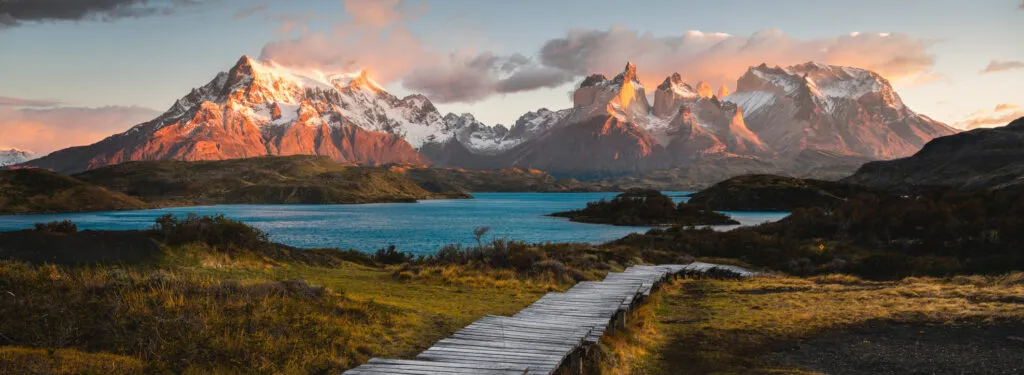
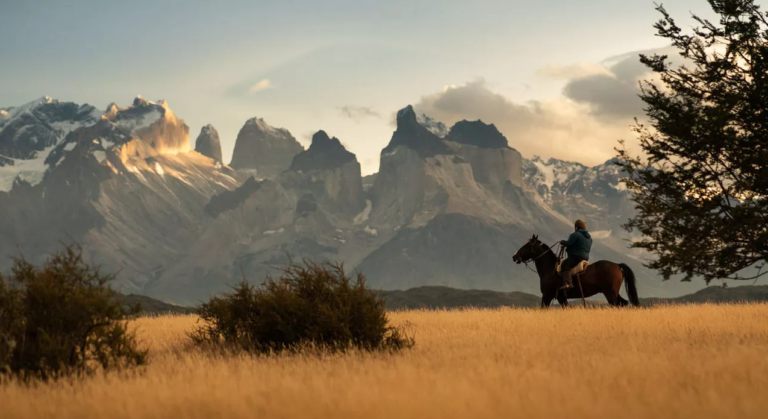
Torres del Paine concentrates the drama of Patagonia — and the logistics that make choosing a company hard.
1. What Actually Separates a Good Torres del Paine Company
The park’s logistics make certain things matter more than they would elsewhere.
The first is the booking chain. Every night on the W or the O must be reserved in advance at a designated refugio or campsite, and because those belong to different concessionaires with separate systems, assembling a continuous route is genuinely hard from abroad. A good company holds the relationships to build it reliably.
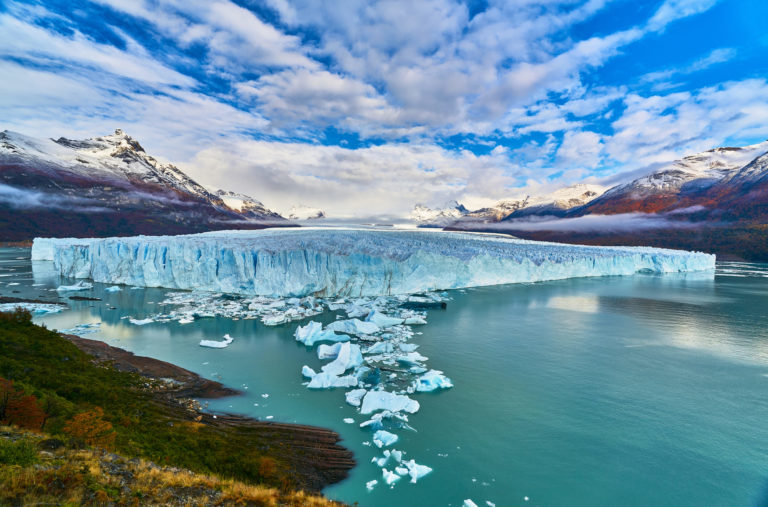
The second is on-the-ground support. The weather closes trails and cancels the Grey Glacier boat regularly, and the difference between a good company and a bad one is whether someone local rebuilds your day by breakfast.
The third is location honesty — whether a company puts you inside the park, where you’re on the trail before the day visitors arrive, or commutes you in from Puerto Natales to save money. Here, location beats category.
These are the tests we set out in our checklist for choosing a travel agency, and they apply with extra force in a park this logistically demanding.
2. Say Hueque — The Patagonia Specialist
We’ll go first and try to earn it. Say Hueque has specialised in Argentine and Chilean Patagonia for more than two decades, with its own teams on the ground in Chilean Patagonia rather than partners it doesn’t control — which is exactly what a park this weather-dependent rewards.
That in-country presence is what makes it possible to rebuild your day when the Grey Glacier boat is cancelled or the wind closes a trail. The company also holds the refugio relationships to assemble the booking chain, which is the single hardest part of a Torres del Paine trip to do yourself.
Everything is tailor-made, so a trip is built around whether you want the full W or O trek or a lodge-based visit that reaches the same viewpoints as day walks — and it’s honest about staying inside the park versus commuting from Puerto Natales. Our Torres del Paine tours and broader Chilean Patagonia trips are built on that logic, and they routinely sequence the crossing to the Argentine side.
For travelers weighing a group departure instead of a private trip, our guide to the best places for a group trip to Patagonia is a useful companion. The honest limit: if the park is a minor add-on to a trip centred far away, a broader operator may fit.

Staying inside the park buys early, crowd-free mornings that no hotel in Puerto Natales can match.
3. South America Travel — The Established Custom Operator
South America Travel approaches Torres del Paine as one destination within a whole-continent remit, backed by more than twenty-five years of custom itineraries.
This US-based operator covers essentially all of South America, from Chile through Bolivia, Peru and Brazil, with a long track record of continent-spanning trips. For a traveler whose Torres del Paine visit is part of a wider South American journey, that breadth and longevity are genuine advantages.
The trade-off is the one breadth always carries: a company covering a dozen countries is less concentrated in the specific logistics of one national park than a Patagonia specialist. You can see their approach at southamerica.travel.
Whether that suits you depends on the shape of your trip — a theme we develop in our guide to the best companies for multi-country tours in South America.
Now you can choose your type of trip:
Type of trip



4. South America Adventures — The Continent-Wide Operator
South America Adventures rounds out the three with another continent-wide custom model.
The company designs custom itineraries across South America, with the stated aim of knowing every corner of the continent and revealing the unexpected. For a Torres del Paine trip that forms part of a broader route — pairing the park with Peru, say, or the Atacama — that reach is useful.
As with any continent-wide operator, the strength is breadth rather than the concentrated, park-specific knowledge a specialist keeps. You can explore their range at southamericaadventures.travel.
The real choice, again, is breadth versus depth, and it depends on whether Torres del Paine is the heart of your trip or one stop on a longer one.
How the Three Compare
None is objectively best; they’re built differently, and the right one depends on the shape of your trip.
| Company | Model | Strongest for |
| Say Hueque | Direct operator, own teams in Chilean Patagonia | Torres del Paine treks and lodge-based visits |
| South America Travel | Established continent-wide operator (25+ years) | The park within a wider South America trip |
| South America Adventures | Continent-wide custom operator | Torres del Paine as one leg of a longer route |
The short version: for the park itself — the refugio chain, the weather, the choice of base — a specialist with teams on the ground fits; if Torres del Paine is one stop on a continental journey, breadth may serve you better.
Inside the Park or Puerto Natales? How to Choose
Whichever company you choose, one decision shapes the trip more than the star rating of your hotel: whether you sleep inside the park or commute from Puerto Natales.
Staying inside means you’re on the trail before the day visitors arrive, with the great viewpoints briefly to yourself. Commuting adds one to two hours each way and puts you on the trail with everyone else. A good company is honest about this trade-off and steers you toward position over polish.
Ask any company the same questions: do you have your own team in Chilean Patagonia, how do you handle the refugio booking chain, and where exactly will I sleep — inside the park or in town? The answers separate the specialists from the resellers.
Have questions about where to stay? Our travel specialists can help you think through the options before you talk prices. The Torres del Paine travel guide will also help you get your bearings in the park before choosing a base.
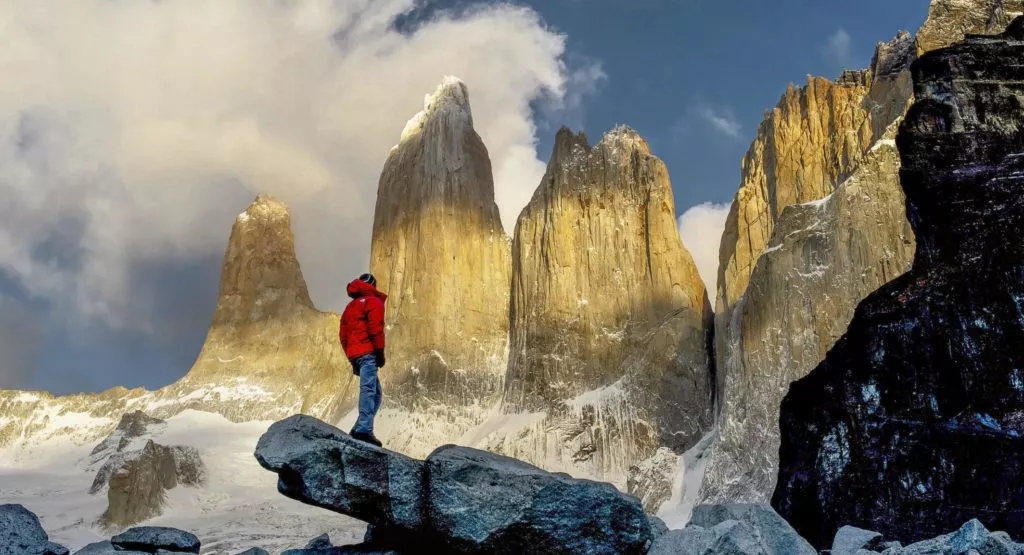
The base of the towers at first light — the reward of staying inside the park rather than commuting in.
5. FAQs About The Best Tour Companies for Torres del Paine
There’s no single best company — only the best for your trip. For the park itself, with its refugio booking chain, its weather and the choice of base, a specialist with its own teams on the ground, such as Say Hueque, offers the strongest support.
For a Torres del Paine visit that’s part of a wider South American journey, an established continent-wide operator like South America Travel or South America Adventures may fit better, since breadth matters more than depth on a multi-country route.
The decision turns on whether the park is the heart of your trip or one leg of a longer one.
Inside the park, almost always, if the experience matters more than the saving. Staying inside puts you on the trail before the day visitors arrive, with the great viewpoints briefly to yourself and the best light of the day.
Commuting from Puerto Natales adds one to two hours each way and puts you on the trail with the crowds, and a grander hotel in town can’t compensate for arriving late.
This is the clearest example in Patagonia of location beating category, and a good company will steer you toward the right base rather than the cheapest one.
It depends on your time and fitness. The W Trek is a four-to-five-day route taking in the park’s three great valleys; the O Circuit adds a remote back section over eight to nine days for experienced trekkers; and a lodge-based visit reaches the same headline viewpoints as day walks, without carrying a pack.
All three see the towers, the French Valley and Grey Glacier — the difference is how much you walk and where you sleep.
A good company will be honest about which suits you rather than defaulting to the hardest option, and will build in a weather buffer whichever you choose.
Not strictly, but it’s far harder to do well independently than most travelers expect. Every night on the trail must be reserved in advance at a designated refugio or campsite, and the park requires proof of those bookings before letting you start.
Those sites belong to different concessionaires with separate booking systems that sell out months ahead, so assembling a continuous route from abroad is genuinely difficult.
A good company holds the relationships to build the chain reliably, coordinates transfers and the border crossing, and provides local support when the weather forces a change. For most travelers, that’s worth it.
Eight to twelve months ahead for peak dates between December and February, and earlier still for specific refugios or a particular guide. The park’s inventory is genuinely scarce, and the best-located sites fill first.
A single unavailable night breaks the whole trekking sequence, since the route is a chain that has to connect, which is why the booking is harder than the walking.
Booking early isn’t urgency for its own sake; in a park with this little capacity and this much demand, it’s simply how the route you want stays intact.