- 1. What Actually Makes a Place Work for a Group
- 2. El Calafate and the Perito Moreno Glacier
- 3. El Chaltén and the Fitz Roy Massif
- 4. Torres del Paine
- 5. Bariloche and the Lake District
- 6. Península Valdés and Puerto Madryn
- 7. Ushuaia and the Beagle Channel
- 8. A Patagonian Estancia: The Best Group Experience Nobody Books
- 9. The Carretera Austral, for the Self-Sufficient Group
- 10. How to Combine Them
- 11. Group Size, Timing, and Why You Must Book Earlier
- 12. Frequently Asked Questions
- What are the best places to take a group trip to Patagonia?
- What’s the ideal group size for a Patagonia trip?
- Can a group with mixed fitness levels travel together in Patagonia?
- How far in advance should a group book a Patagonia trip?
- When is the best time for a group trip to Patagonia?
- Is it better to join a group departure or organise a private group trip?
A group changes Patagonia. Not the landscape — the arithmetic.
Travelling here with eleven friends, or with three generations of a family, or with a dozen colleagues, is not simply the same trip with more people in the van.
It’s a different problem, and it has a specific shape. Patagonia’s best lodges have eight or twelve rooms. Its best excursions have vehicle limits. Its weather cancels things.
And a group is never one traveler. It contains someone who wants to be at the base of Fitz Roy by nine, and someone whose knees have opinions, and both of them paid the same amount.
So the best places to take a group trip to Patagonia are not simply the most beautiful ones. They’re the places that can absorb a group without diluting what the group came for.
Some famous destinations do this brilliantly. Others quietly punish you for arriving with more than six people, and nobody mentions it until you’re trying to seat fourteen for dinner in a town of nine hundred.
What follows is specific rather than scenic. For each place: why it works for a group, whether people of different fitness levels can split up and still share the day, what the capacity ceiling actually is, and what happens when the weather turns.
Then the practical part — group size, how to combine these into a route, and why a group needs to book considerably earlier than a couple does.
These are the Patagonia group tour destinations we recommend most often, and the reasoning behind each — so you can decide which of these group travel highlights in Patagonia are actually worth your days.
1. What Actually Makes a Place Work for a Group
Before the destinations, the tests. Three of them, and they sort Patagonia surprisingly cleanly.
The first is whether a group can split and reunite on the same day. This is the single most useful property a destination can have, and it’s rarely discussed.
A group of twelve will always contain a range of fitness and appetite. The places that work are the ones where the hard option and the gentle option start from the same door and end at the same table.
The second is capacity. Patagonia’s inventory is genuinely tiny — a celebrated lodge with ten rooms cannot take a group of sixteen, no matter how far ahead you ask.
Some towns have real hotels that can hold a group under one roof. Others will scatter you across three guesthouses, which quietly dissolves the point of travelling together.
The third is a weather alternative. Patagonia cancels excursions. A couple absorbs that with a bottle of wine; a group of fourteen with nothing to do and one café is a long, expensive afternoon.
The picks below all pass at least two of these tests. Where one fails, we say so.
2. El Calafate and the Perito Moreno Glacier
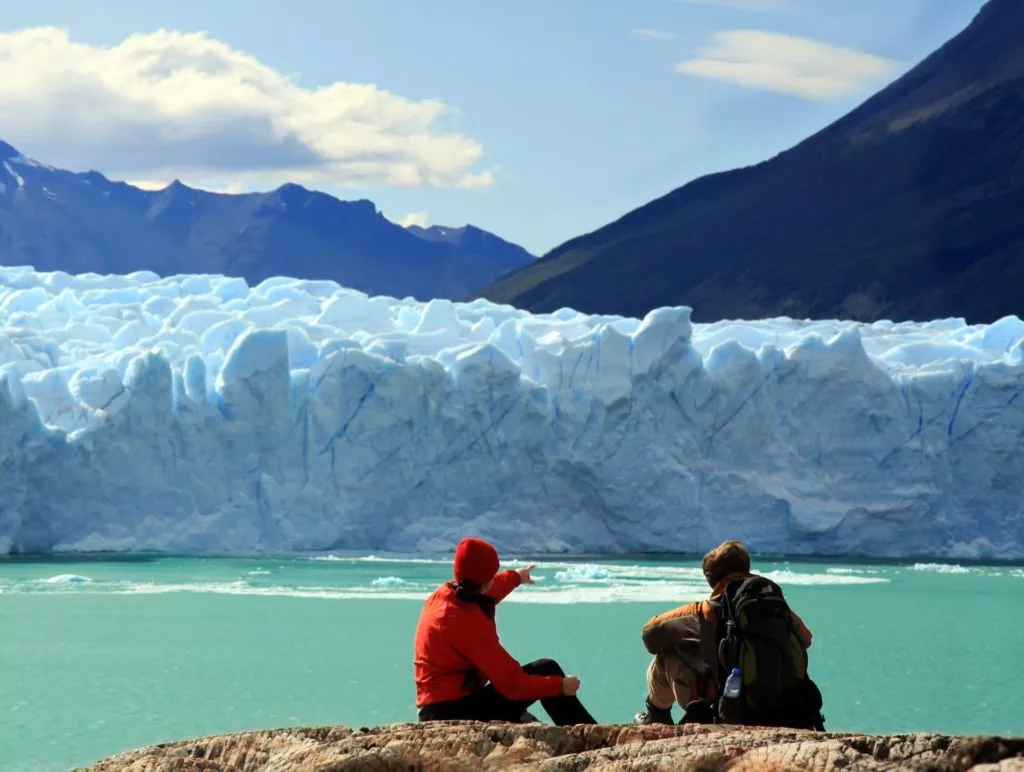
If a group trip to Patagonia has an obvious anchor, this is it — and the reason is not the glacier’s fame. It’s that Perito Moreno is the most group-proof sight in the region.
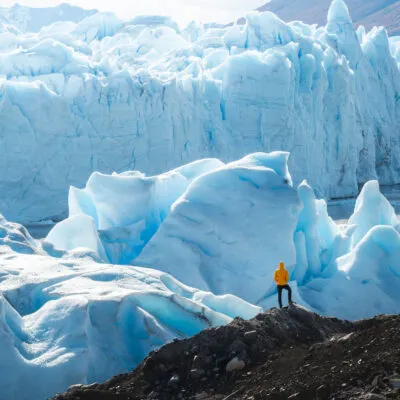
The glacier is served by kilometres of steel boardwalks descending across a hillside directly opposite the ice face. Which means everyone sees it.
The grandmother who can manage two hundred metres and the marathon runner get the same view, of a five-kilometre wall of ice calving into the water. Very few great sights are that democratic.
It splits beautifully, too. On a single day your group can put the able ones in crampons on the ice, send others onto a boat along the glacier’s flank, and leave the rest on the boardwalks — all on the same lake, all back for dinner together.
Capacity is the other reason it works. El Calafate is the largest tourist town in Argentine Patagonia, which means hotels that can actually hold twenty people under one roof, and restaurants that can seat them.
And the weather test: the glacier is visible in rain, wind and cloud. It is one of the very few Patagonian experiences that bad weather doesn’t cancel — it just changes the light.
Our El Calafate tours are usually built to flow onward to El Chaltén rather than doubling back, which matters more for a group than for a couple.
3. El Chaltén and the Fitz Roy Massif
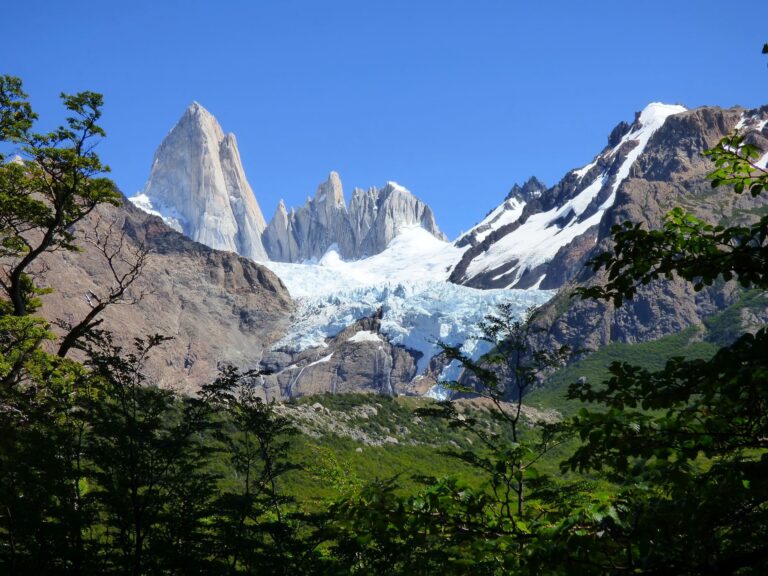
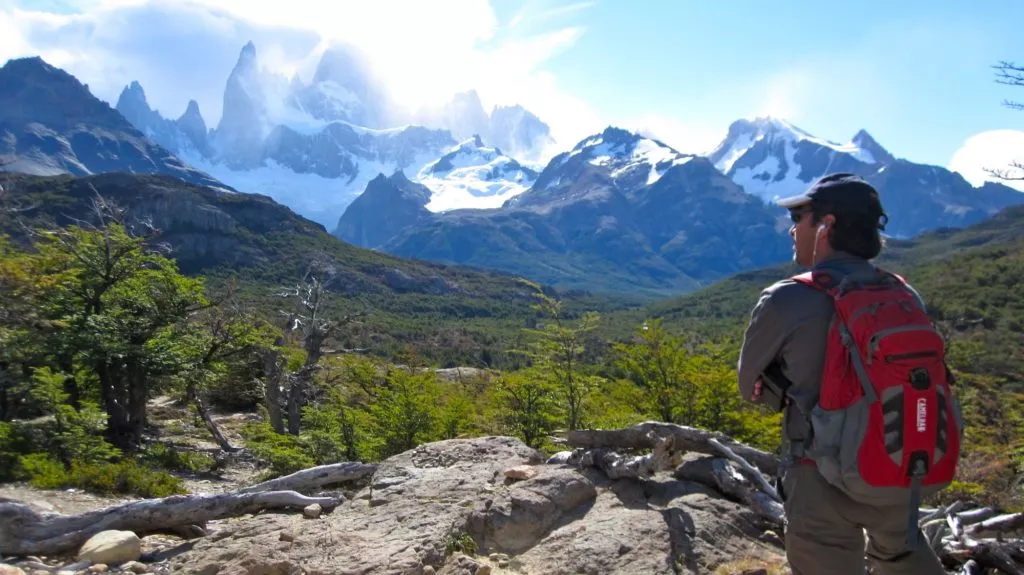
El Chaltén is the best group destination in Patagonia, and almost nobody picks it for the right reason.
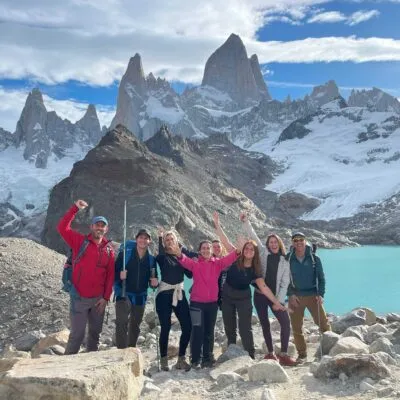
The reason is not Fitz Roy, spectacular as it is. It’s the trail network — every walk starts at the edge of town, and they come in every length.
Chorrillo del Salto is an hour, essentially flat, to a waterfall. The Mirador de los Cóndores is about the same, uphill, with the whole valley beneath you.
Laguna Capri is two to three hours through lenga forest with Fitz Roy in your face. Laguna de los Tres is eight to ten hours, with a brutal final kilometre of loose rock.
Now do the group maths. Twelve people with wildly different fitness leave the same door at eight in the morning, choose four different days, and are at the same table at eight in the evening.
Everyone had a real day. Nobody was held back and nobody was dragged. There is no other town in Patagonia where that works this cleanly.
The caveat is capacity. El Chaltén is small, its lodging is limited and mostly intimate, and a group of sixteen will likely need two properties. Book absurdly early.
Our El Chaltén trips are built around that split-and-reunite rhythm, which is the entire argument for the town.
4. Torres del Paine
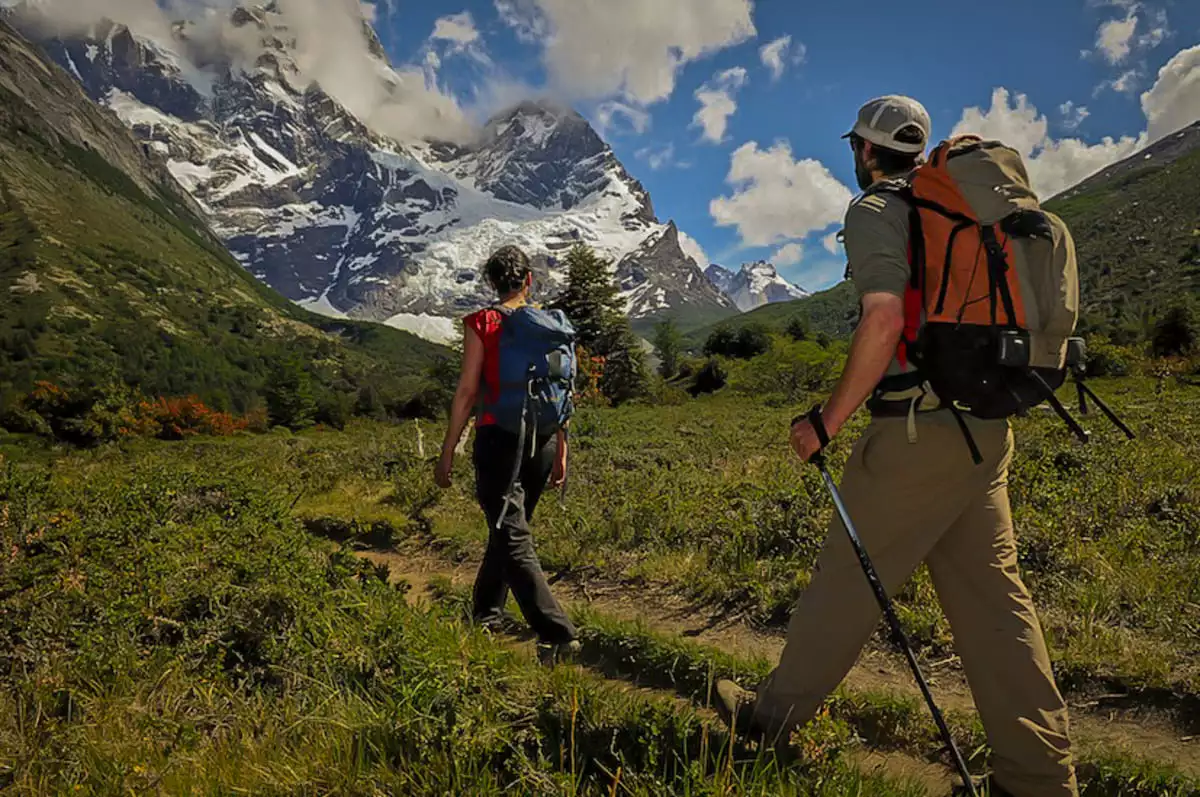
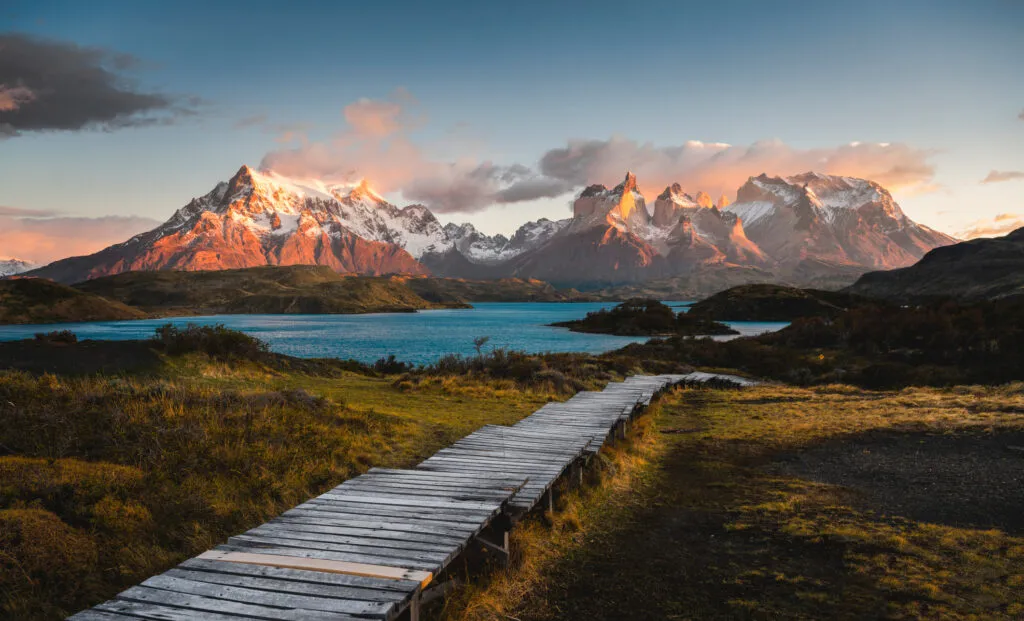
Across the Chilean border sits the drama most of your group came for: three granite towers rising vertically from the steppe, with glaciers, turquoise lakes and guanaco herds around them.
For groups, the lodge-based model here is the great advantage. Several properties in and around the park operate all-inclusive, with a daily menu of guided excursions at different difficulties.
That’s the split-and-reunite property again, delivered by a hotel instead of a trail network. Some of your group treks toward the base of the towers; others take the boat past Grey Glacier; everyone eats together.
It also solves the weather test, because the lodges have somewhere to be and something to do when the wind makes the trails unpleasant.
Capacity is the constraint, and it is a real one. The best-positioned lodges are small, and a group of sixteen may need a full buyout or a split across two properties.
Budget a day for the border crossing, too. The crossings are few and the timing is inflexible, and a group moves slower through them than two people do.
Our Torres del Paine tours cover both the lodge-based version and the full trek, which are genuinely different trips for a group.
5. Bariloche and the Lake District
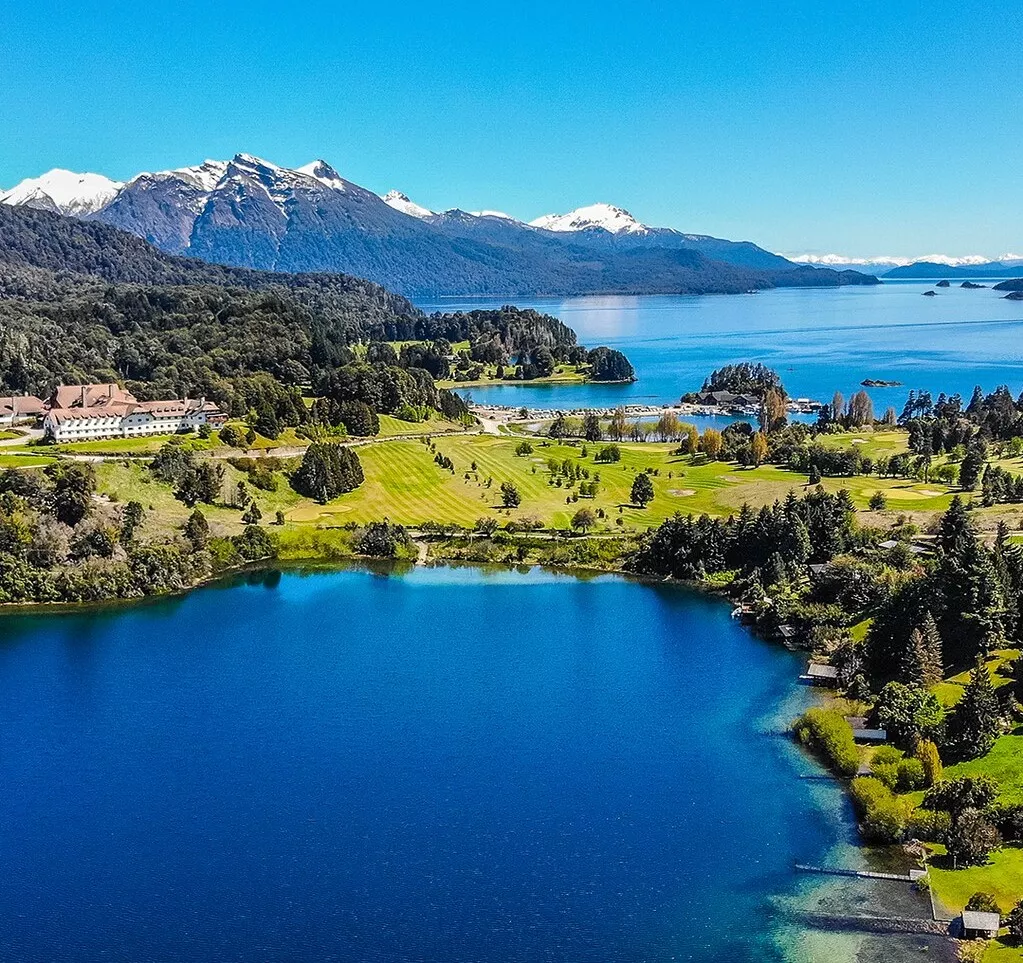
Bariloche is the most underrated group destination in Patagonia, and it’s underrated for a slightly embarrassing reason: it isn’t severe enough to impress people who like severity.
For a group, that’s precisely the point.
It is a real town, on a lake, with the Andes behind it. It has hotels that can hold thirty people, restaurants that can seat twenty without a month’s notice, and a road circuit — the Circuito Chico — that works entirely by vehicle.
The Cerro Campanario chairlift delivers one of the great panoramas in Argentina to anyone who can sit down. Chocolate shops and a serious craft beer scene do the rest.
Which means everybody participates. In a group containing people who genuinely don’t want to hike, Bariloche is the place where they stop being passengers.
It’s also meaningfully cheaper than the deep south, and it works outside the trekking season — the ski months give a group an entirely different trip on the same map.
For multigenerational travel it’s often the strongest single stop in Patagonia, and our Bariloche trips and family itineraries lean on it heavily for that reason.
6. Península Valdés and Puerto Madryn
If your group is mixed in every direction — ages, fitness, interest — wildlife is the great equaliser, and this is where Patagonia keeps it.
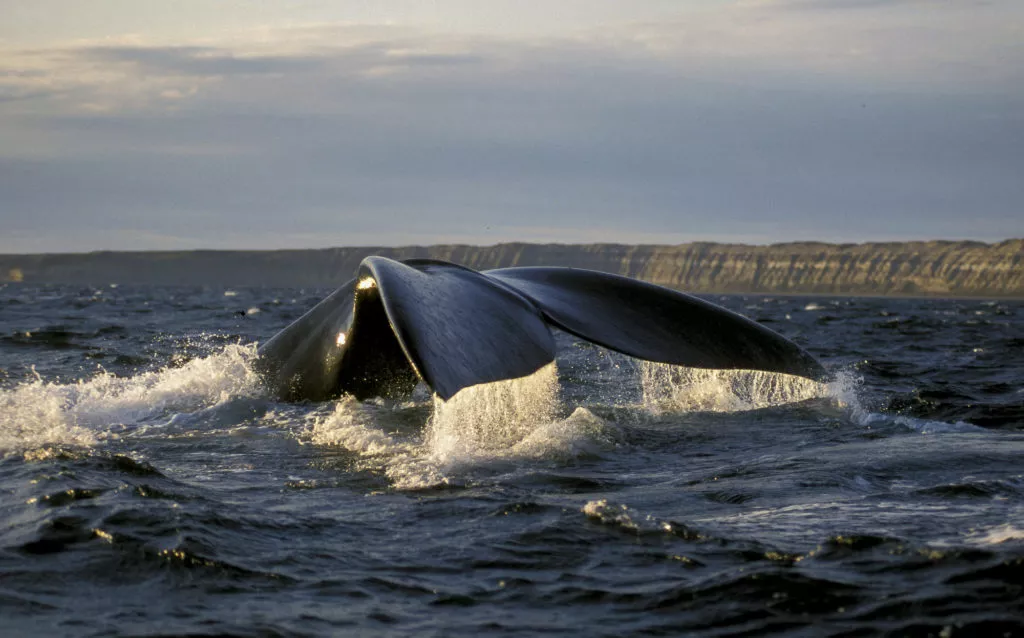
Península Valdés is a UNESCO World Heritage site on the Atlantic coast, and the roll call is extraordinary: southern right whales, Magellanic penguins, sea lions, elephant seals, and orcas.
Nobody has to hike. Nobody is left behind. A whale surfacing ten metres from a boat produces exactly the same reaction in a nine-year-old and a seventy-year-old, which is a rare thing on any itinerary.
Punta Tombo, to the south, holds one of the largest Magellanic penguin colonies on the continent — a walk among hundreds of thousands of birds on flat, easy ground.
Here is the specific detail that decides your dates. Southern right whales are present from roughly June to mid-December, peaking between September and November. Orcas at Punta Norte are a February-to-April affair.
Patagonia’s trekking season, meanwhile, runs from late October to March. So the overlap — whales and the south in one trip — is a narrow window from late October to mid-December, and it is the single most useful piece of timing knowledge for a group planning both.
Our Península Valdés wildlife trips are built around those seasons rather than against them.
7. Ushuaia and the Beagle Channel
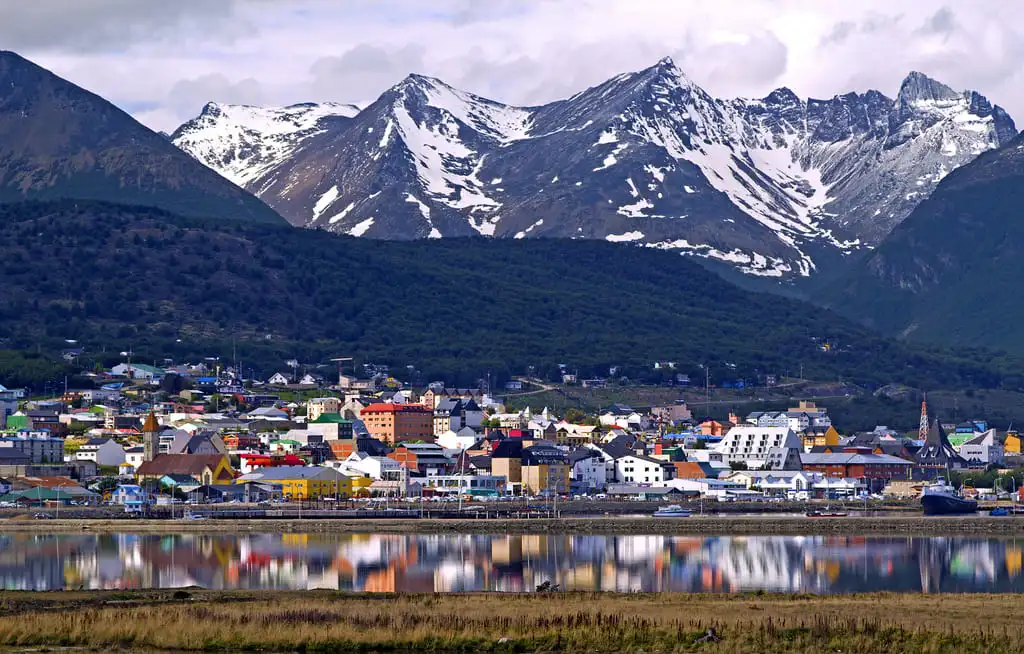
Ushuaia earns its place on a group itinerary partly through geography and partly through symbolism: it is the southernmost city in the world, and your group will want the photograph.
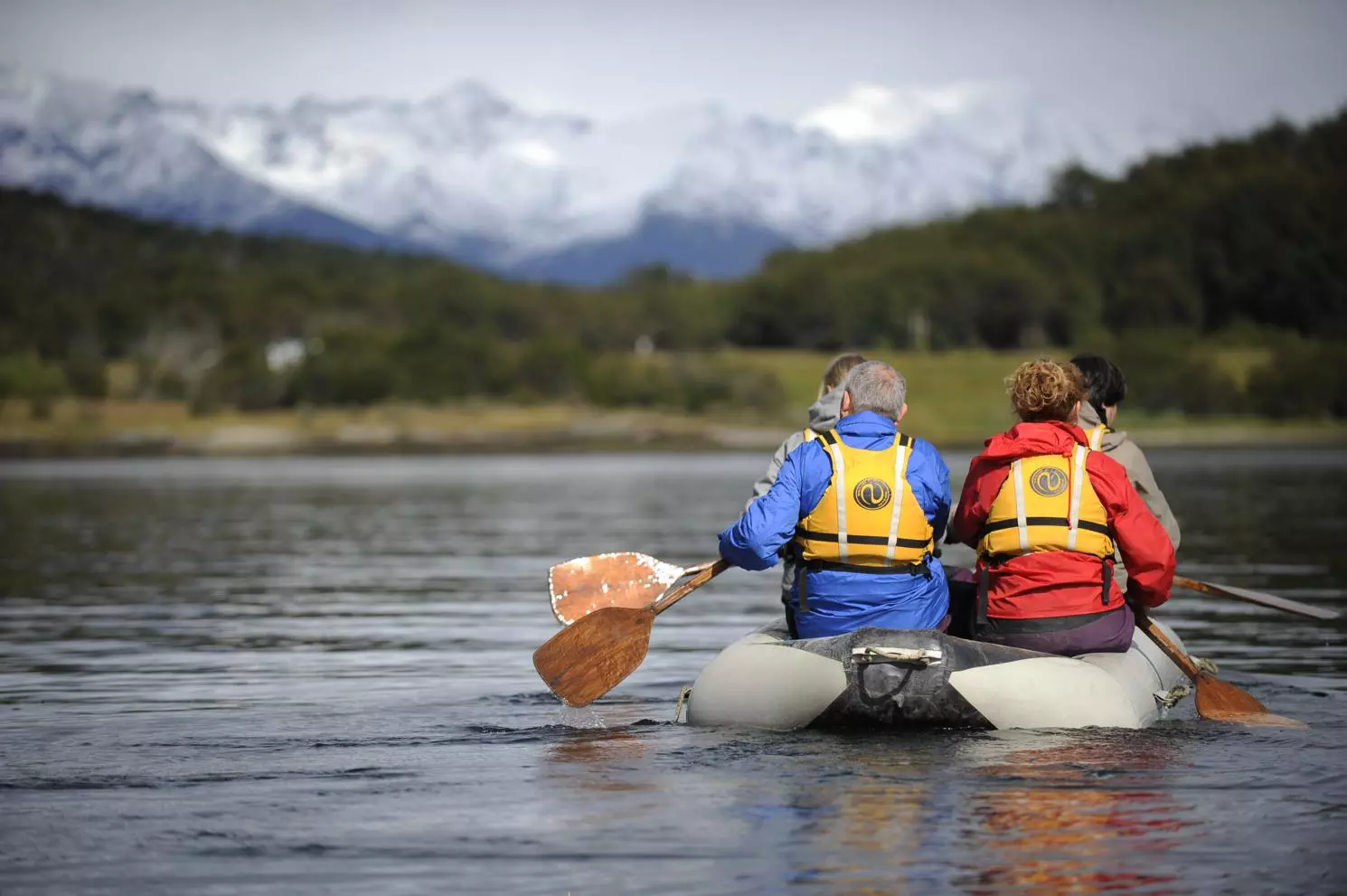
Practically, it works because so much of it happens on water. Beagle Channel boats have real capacity, and they deliver sea lion colonies, cormorants and the Les Éclaireurs lighthouse without asking anything of anyone’s knees.
Tierra del Fuego National Park adds gentle, well-graded trails through forest that turns scarlet in autumn — walkable by essentially everyone.
And then there’s dinner. Ushuaia’s king crab, pulled from the channel that afternoon, gives a group the kind of shared meal that becomes the story people tell afterwards.
The town has capacity, too, which is not something you can say about most places this far south.
It is also the doorway to Antarctica, and for a group with the appetite and the days, our Antarctica cruises depart from here — though treat that as its own trip rather than an add-on.
8. A Patagonian Estancia: The Best Group Experience Nobody Books
This is our strongest pick, and the one groups most often skip because the arithmetic looks wrong.
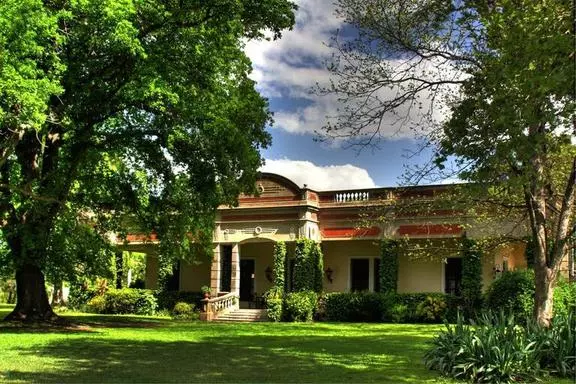
A Patagonian estancia — one of the vast sheep and cattle ranches pioneers carved out of the steppe a century ago — typically has six to twelve rooms. Groups look at that and assume it’s too small.
It is exactly backwards. At that size, your group isn’t squeezed into the estancia. Your group is the estancia.
Exclusive use changes everything. There are no strangers at breakfast. The asado in the stone quincho is yours. The gauchos ride out with your people, not with a rotating cast of couples.
The day has a shape that suits a group instinctively: riding at whatever level each person can manage, a sheep-shearing demonstration, lamb cooked slowly over open flame, and an evening with nowhere else to be and no phone signal to be somewhere else.
If you ask a group afterwards which night they remember, it is almost always this one. It’s where the trip stops being a series of excursions and becomes a shared thing.
Place it in the middle of the itinerary rather than at the start — a group needs a few days together before an estancia night lands properly. Our estancia journeys are built around exactly that.
9. The Carretera Austral, for the Self-Sufficient Group
This one is not for every group, and we’d talk most groups out of it. For the right one, nothing else compares.
Chile’s Carretera Austral runs south through a stretch of Patagonia that most itineraries never touch: temperate rainforest, hanging glaciers, and the Marble Caves on Lake General Carrera, where the water has carved the rock into blue-veined chambers.
Cerro Castillo delivers a jagged skyline that rivals anything further south, with a fraction of the people.
For a group, the appeal is the convoy. Three or four vehicles, your own pace, stops decided at breakfast rather than booked in March. The driving itself becomes the social part of the day.
The honest warnings: long stretches of gravel, thin infrastructure, and limited lodging that will not absorb a large group at short notice. Somebody in your group needs to genuinely enjoy driving.
Groups under about ten, with an appetite for self-reliance, get the most out of the Carretera Austral. Larger or less adventurous groups should choose almost anything else on this list.
10. How to Combine Them
Patagonia’s distances mean a group cannot have all of the above, and the most common group mistake is trying.
Every move costs a transfer or a flight, and a group moves slower than its slowest member — which compounds across fourteen people and a luggage hold.
The combinations below reflect what actually works at each length, by the kind of group you have.
| Group type | Days | Suggested combination |
| Friends, mixed fitness | 8–10 | El Calafate and El Chaltén — the split-and-reunite pairing |
| Multigenerational | 10–12 | Bariloche, El Calafate and an estancia night |
| Wildlife first | 9–11 | Puerto Madryn and El Calafate (late Oct–mid Dec only) |
| Serious hikers | 12–14 | El Chaltén and Torres del Paine |
| The full trip | 14–16 | El Calafate, El Chaltén, Torres del Paine and an estancia |
| Adventurous, self-driving | 12+ | Carretera Austral convoy, under ten people |
The broader Patagonia travel guide is worth a look before you fix a shape, because the map is more misleading than it appears.
11. Group Size, Timing, and Why You Must Book Earlier
One number reshapes every Patagonia group trip, and it isn’t the budget. It’s the headcount.
Under eight, you can go anywhere on this list. You behave like a private trip, fit in one vehicle, and most lodges can take you without negotiation.
Between eight and sixteen is the sweet spot. One larger vehicle, most properties can hold you under a single roof, and the group is still small enough to move.
Between sixteen and twenty-five, you’ve become a logistics project. Two vehicles, frequently two properties, and excursions that need to be reserved in blocks rather than joined.
Above twenty-five, in Patagonia, you are into charter and buyout territory, and the itinerary starts being designed around capacity rather than around scenery.
Now the part that catches groups out. A couple needs one room. A group needs fourteen rooms in the same building on the same night — and in a region where the good properties have a dozen rooms total, that is a fundamentally harder thing to find.
So where a couple books eight to twelve months ahead, a group should be talking twelve to eighteen months ahead for peak dates. November and March are genuinely easier, and often better.
If you’d rather join an existing group than assemble one, our guided group departures in Patagonia run on fixed dates — including the Patagonia Essentials departures — while private groups are built from scratch around your people.
12. Frequently Asked Questions
What are the best places to take a group trip to Patagonia?
El Chaltén is the strongest single pick, because its trails all start from town and range from one hour to ten — so a mixed-fitness group can split up in the morning and share dinner having each had a real day.
El Calafate is the most group-proof, since the Perito Moreno boardwalks give everyone the same view regardless of fitness, and it’s visible in almost any weather. Torres del Paine delivers the drama through lodge-based excursions at varied difficulty.
Bariloche suits multigenerational groups, Península Valdés works when interests are mixed, and an estancia night — with exclusive use of the whole property — is the one people remember.
What’s the ideal group size for a Patagonia trip?
Eight to sixteen is the sweet spot. At that size you fit in one vehicle, most lodges can hold you under a single roof, and the group is still nimble enough to change plans when the weather does.
Under eight, you can go anywhere and effectively travel as a private trip. Between sixteen and twenty-five, you become a logistics project: two vehicles, often two properties, and excursions booked in blocks.
Above twenty-five in Patagonia you’re into buyout and charter territory, and the itinerary starts being shaped by capacity rather than by what’s worth seeing.
Can a group with mixed fitness levels travel together in Patagonia?
Yes, and it’s the main thing to design for. The trick is choosing places where the hard option and the gentle option start from the same door and end at the same table.
El Chaltén does this best: four different walks from one hour to ten, all from the edge of town. El Calafate does it on a single day — crampons on the ice for some, a boat for others, boardwalks for everyone.
Torres del Paine achieves the same through lodge-based excursion menus. What doesn’t work is a route built around one difficulty level, which quietly turns half your group into spectators.
How far in advance should a group book a Patagonia trip?
Twelve to eighteen months for peak dates between December and February — considerably earlier than the eight to twelve months a couple needs.
The reason is structural rather than commercial. A couple needs one room; a group needs fourteen rooms in the same building on the same night. In a region where excellent lodges have a dozen rooms in total, that’s a far harder thing to secure.
November and March are meaningfully easier for availability, cheaper, and for many groups simply better — thinner crowds and softer light, at the cost of less predictable weather.
When is the best time for a group trip to Patagonia?
The season runs from late October to March. December to February brings the longest days and the most reliable trails, but also the highest prices and the tightest availability — which hurts groups more than individuals.
November and March are usually the better answer for a group: rooms are findable, prices are softer, and the crowds are thinner.
One specific detail matters if wildlife is on your list. Southern right whales at Península Valdés run from June to mid-December, so combining whales with the trekking south only works in a narrow window from late October to mid-December.
Is it better to join a group departure or organise a private group trip?
It depends on whether your group already exists. If you’re assembling friends, family or colleagues, a private trip is almost always better — the itinerary is built around your people’s actual range of fitness and interest.
If you’re a couple or a solo traveler who simply wants company, joining a guided group departure on fixed dates is more economical and removes the organising entirely.
The trade-off is control. A fixed departure moves at the group’s pace and adapts to weather for everyone; a private group trip can be rebuilt around your people on the morning it matters.