- 1. Understanding the Two Sides: Argentina and Brazil
- 2. The Argentine Side: Three Circuits, and How to Order Them
- 3. The Boat Ride Under the Falls
- 4. Beyond the Falls: The Jungle Nobody Books
- 5. Staying Inside the National Park
- 6. How Long Do You Actually Need?
- 7. When to Go: Weather, Water and Crowds
- 8. What to Expect on a Guided Tour
- 9. Practical Tips for First-Time Visitors
- 10. Combining Iguazú With the Rest of Argentina
- 11. Frequently Asked Questions
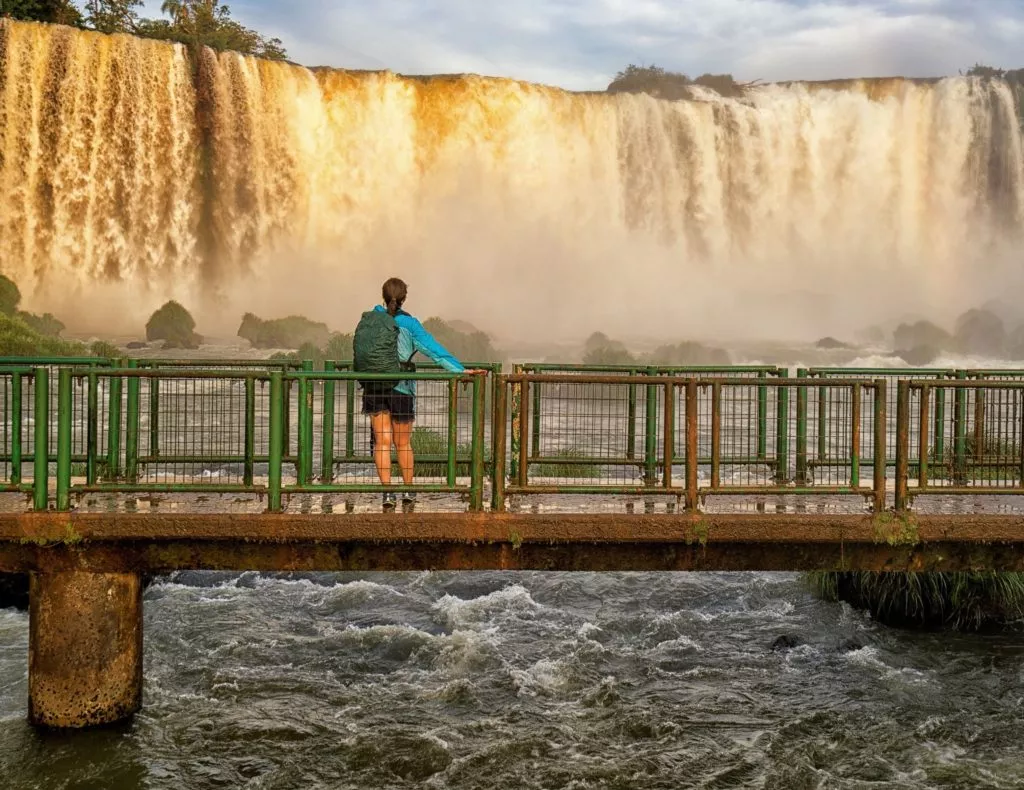
There’s a moment, standing on the walkway above the Devil’s Throat, when the noise stops being a sound and becomes a physical sensation.
Water the colour of milky tea pours over the edge in a volume that seems administrative rather than natural, and the spray rises so far that it falls back on you as rain. It’s difficult to think clearly. Most people just stop talking.
That is Iguazú, and it’s the reason 275 individual waterfalls spread across nearly three kilometres of subtropical jungle rank among the great sights of the planet.
Here is the problem for a first-time visitor. Iguazú is easy to see badly.
Most people arrive on a day trip, walk the main circuit in the middle of a crowd at the hottest hour, take a photograph and leave — and they genuinely believe they’ve seen it.
They haven’t. They’ve seen the busiest version of it, and missed almost everything that separates a good visit from a great one.
So this is a guide to the top tours for Iguazú Falls in Argentina and, more usefully, to how the place actually works: the two sides, the circuits, the boat, the jungle, the timing, and how long you genuinely need.
It also covers what to expect on a guided tour, because the best Iguazú Falls tours in Argentina are separated less by price than by timing and by who is walking you through the park.
Get those right and Iguazú becomes one of the two or three things you remember most from South America. Get them wrong and it’s a wet afternoon with a lot of other people.
1. Understanding the Two Sides: Argentina and Brazil
The single most important thing to know before booking anything: the falls sit on the border, and the two countries offer genuinely different experiences.
The Argentine side holds roughly eighty per cent of the falls, and it puts you among them. A network of walkways runs above, below and directly alongside the cataracts, and the star attraction — the Devil’s Throat — is reached by a long catwalk across the river to the very lip of the drop.
This is the immersive side. It takes a full day, sometimes two, and it’s where you get wet.
The Brazilian side is the panorama. It sits opposite, offering the wide postcard view of the whole system at once, and it can be seen properly in about half a day.
The classic advice — Argentina to be in them, Brazil to see them — is basically correct.
One operational point that has changed recently and catches travelers out: since April 2025, citizens of the United States, Canada, Australia and Japan need a visa to enter Brazil. If you want the Brazilian side, that has to be arranged in advance.
For many visitors the Argentine side alone is enough, and our Iguazú Falls tours are built around it, with the Brazilian side added when the visa and the days allow.
2. The Argentine Side: Three Circuits, and How to Order Them
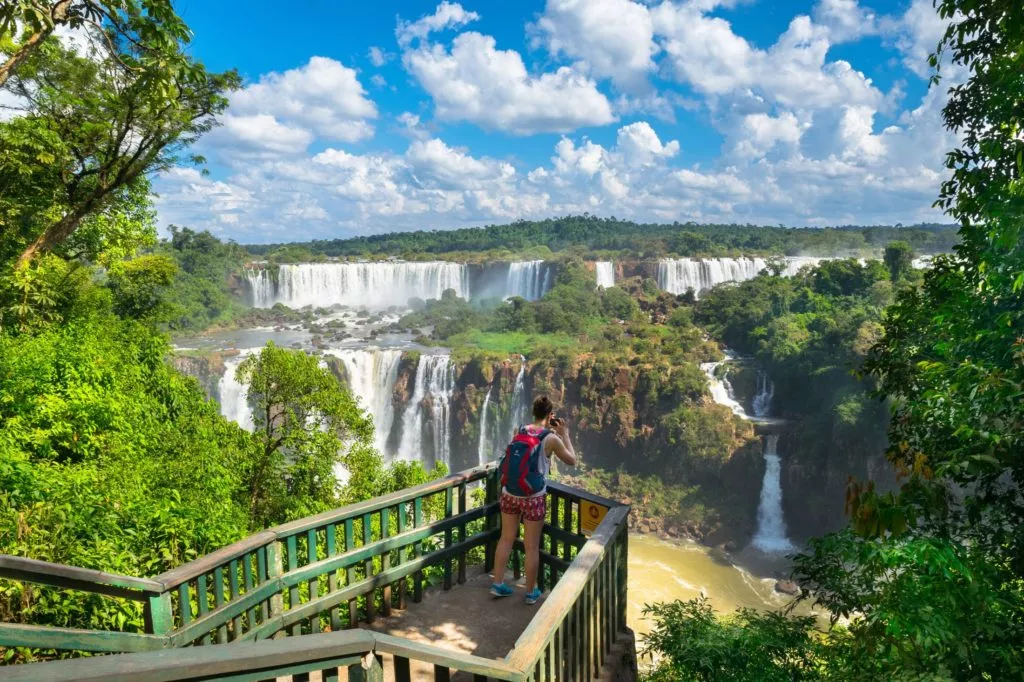
The Argentine park is organised into distinct circuits, and the order you walk them makes a real difference to the day.
The Upper Circuit runs along the top of the falls, crossing above the water so you look out over the edges as the river disappears beneath you. It’s flat, easy, and the gentlest introduction.
The Lower Circuit descends to the base, where you see the cataracts from below with the spray in your face. It involves stairs and it gets you properly wet, and it’s the one most people remember.
The Devil’s Throat is separate, reached by a small park train and then a long catwalk over the river. This is the climax, and it deserves to be treated as one.
The ordering that works best is Upper, then Lower, then the Devil’s Throat last — a build rather than an anticlimax.
The alternative, and the one experienced guides often prefer, is to do the Devil’s Throat first thing at opening, before the crowds arrive, then work the circuits afterwards.
Both are defensible. What doesn’t work is arriving at midday and doing the Throat at two in the afternoon with several hundred other people on the catwalk.
3. The Boat Ride Under the Falls
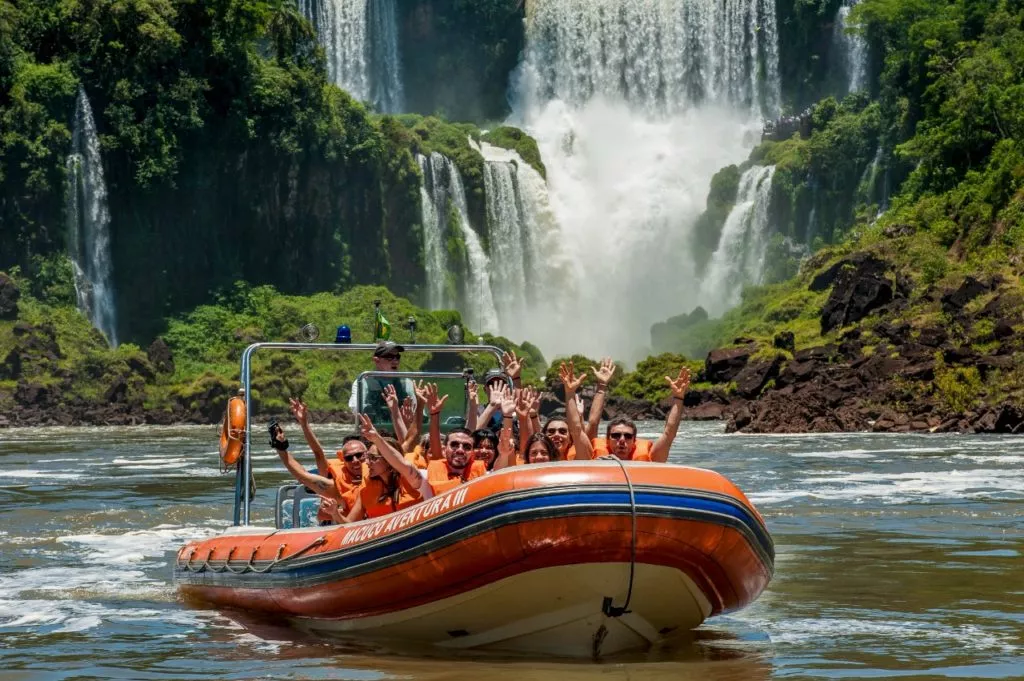
The most popular add-on at Iguazú is a boat that takes you directly into the spray at the base of the cataracts, and it deserves its reputation.
You board on the river, motor upstream through the gorge, and then the pilot drives the boat under the falling water — deliberately, repeatedly, and to the sound of everyone on board shouting.
You will be soaked. Not damp: soaked, comprehensively, in a way that no poncho prevents. This is the entire point and the operators are honest about it.
Practical preparation matters. Bring a dry change of clothes, a waterproof bag for phones and cameras, and shoes you don’t mind wearing wet for the rest of the day.
It’s a short experience — the run itself is brief — but it’s the most visceral thing you can do at Iguazú and it’s consistently the highlight for younger travelers.
Worth noting: it does not run in all conditions. High water, debris or weather can suspend it, which is another argument for having two days rather than one.
4. Beyond the Falls: The Jungle Nobody Books
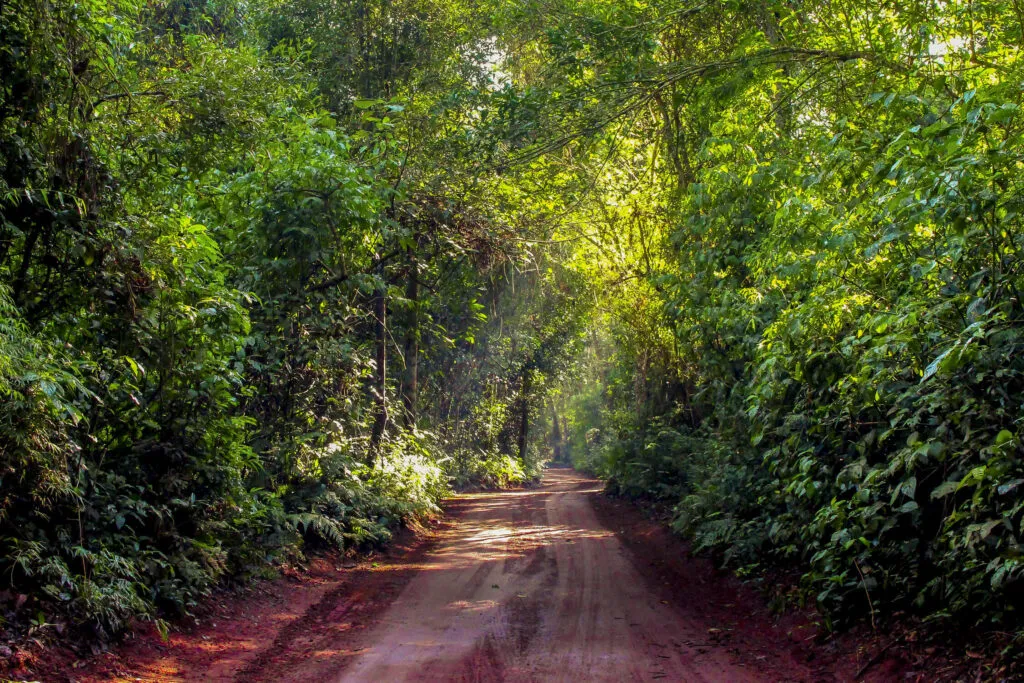
Iguazú is a national park, and the falls are only its most obvious feature. The surrounding Atlantic rainforest is one of the most biodiverse environments in South America and almost nobody makes time for it.
The wildlife is genuinely rich: toucans, hundreds of butterfly species, capuchin monkeys, caimans in the quieter waterways, and the ubiquitous coatis that patrol the walkways looking for unattended food.
Guided jungle walks, birdwatching outings at dawn, and 4×4 trails into the forest all exist and are dramatically less crowded than the main circuits.
There’s also a night walk on some itineraries, and the forest after dark is a completely different place — louder, closer, and considerably stranger.
This is the clearest reason to stay two nights rather than one. The falls need a day; the jungle is what you do with the rest of your time, and it’s what turns a sight into a destination.
Our full jungle experience at Iguazú is built around exactly that — the falls plus the forest, rather than the falls alone.
5. Staying Inside the National Park
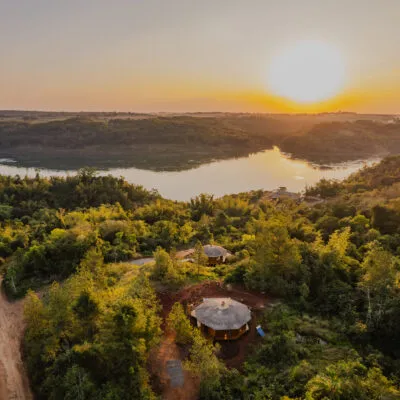
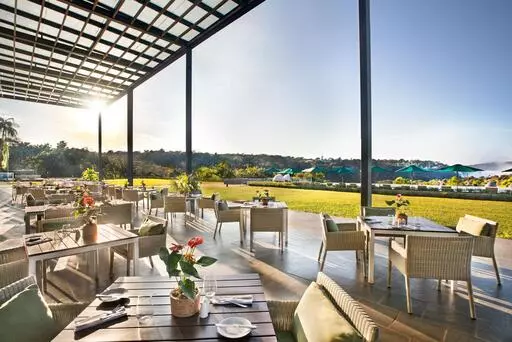
If there is one piece of advice that transforms an Iguazú visit, it’s this: there is lodging inside the Argentine national park, and staying there changes everything.
The falls open to day visitors at a set hour and close in the late afternoon. Guests staying inside the park can be on the walkways before that window opens and remain after it closes.
The difference is not marginal. The Devil’s Throat at first light, with nobody else on the catwalk, is a fundamentally different experience from the same place at noon.
Early morning also brings the wildlife out, before the heat and the crowds push it back into the forest, and the light is far better for photographs.
This is the single clearest example anywhere in Argentina of accommodation location mattering more than accommodation category. A comfortable room inside the park beats a luxurious one in town, every time.
Our luxury Iguazú stay inside the park exists precisely for that reason, and it’s the recommendation we make most often to first-time visitors.
6. How Long Do You Actually Need?
The honest answer is longer than most itineraries allow, and this is the most common mistake first-time visitors make.
One day sees the Argentine side’s main circuits, rushed. It’s enough to say you’ve been, and it’s the version most people get.
Two days is the right answer for most travelers: a full day on the Argentine side including the Devil’s Throat and the boat, plus either the Brazilian panorama or a jungle excursion on the second.
Three days lets you do all of it unhurried — both sides, the boat, the jungle, and a second attempt at the Throat in better light or weather.
| Days | What you can cover | Best for |
| 1 | Argentine circuits, rushed, at peak crowd hours | A stopover when nothing else is possible |
| 2 | Argentine side in full, plus Brazil or the jungle | Most first-time visitors |
| 3 | Both sides, the boat, the jungle, unhurried | Travelers who want the place rather than the photograph |
The day-trip-from-Buenos-Aires option exists and we’d gently steer people away from it. It’s a long flight each way for a compressed few hours in considerable heat.
7. When to Go: Weather, Water and Crowds
Iguazú is subtropical, which means it is warm year-round and the question is really about heat, rainfall and water volume.
Summer, from December to March, is hot and humid — regularly above 32°C — with the highest water flow and the biggest crowds, particularly over the Argentine holiday period in January.
Winter, from June to September, is far more comfortable for walking, with temperatures that can drop toward 10°C at night and considerably thinner crowds. This is the sweet spot for most international visitors.
Rainfall happens year-round and shouldn’t be avoided. Heavy rain swells the rivers and makes the falls more dramatic, not less — some of the best visits happen in poor weather.
What rain can affect is the boat, which may be suspended when the water is too high or too full of debris.
The practical scheduling advice, whatever the season: be at the park at opening. The first two hours are cooler, quieter and better lit than anything that follows.
8. What to Expect on a Guided Tour
For travelers wondering whether a guide is worth it here, the honest answer is that it depends on what you want from the day.
The circuits are well signposted and you can absolutely walk them alone. What a guide adds is sequencing, context and timing — knowing which circuit to walk when to avoid the worst of the crowds, and what you’re actually looking at in the forest.
A good guided tour at Iguazú handles the park entry logistics, times the Devil’s Throat deliberately, and interprets the ecology rather than just narrating the waterfalls.
It should also be honest about the wet parts, tell you what to bring, and build in enough slack that you’re not marched between circuits on a stopwatch.
What to expect practically: a full day, a lot of walking on flat but sometimes stepped paths, high humidity, and at least one section where you will get wet whether or not you take the boat.
Group size matters more than people expect on the catwalks, which are narrow. A small group moves and stops far more easily than a large one.
9. Practical Tips for First-Time Visitors
The small things that improve an Iguazú day, most of which nobody mentions until it’s too late.
Bring a waterproof bag or case for your phone and camera. The spray reaches further than you expect, even away from the boat.
Pack a full change of clothes and leave it in a locker or the vehicle. Walking a second circuit in soaked clothing in high humidity is genuinely unpleasant.
Wear shoes with grip. The walkways are wet, and in places metal and slick.
Sunscreen and insect repellent, applied before you enter rather than remembered halfway round. The forest is subtropical and the sun is stronger than the cloud cover suggests.
And do not feed the coatis, however charming they look. They are wild, they bite, and they will go through an unattended bag with real efficiency.
Carry water. The heat plus the walking plus the humidity dehydrates people faster than they anticipate, and the walk out from the Devil’s Throat is long.
10. Combining Iguazú With the Rest of Argentina
Iguazú works best as part of a broader route rather than as a standalone trip, and it has one particular virtue in an itinerary: contrast.
Placed alongside Patagonia, it becomes the counterweight — subtropical heat against glacial cold, dense jungle against open steppe. Travelers consistently report that the contrast makes both more memorable.
It’s reached by a short flight from Buenos Aires, which makes it easy to slot in at the start or end of a trip without a long overland journey.
The most common and most effective sequence is Buenos Aires first, then Iguazú, then Patagonia — city, jungle, ice — which builds nicely and keeps the flying sensible.
Our Buenos Aires, Iguazú and classic Patagonia route follows exactly that shape, and it’s the itinerary we build most often for first-time visitors to Argentina.
If you’re unsure how many days Iguazú deserves within your own trip, our travel specialists will give you a straight answer — including when one day genuinely is enough.
11. Frequently Asked Questions
What are the top tours for Iguazu Falls?
The essential experience is the Argentine side, which holds around eighty per cent of the falls and puts you among them via the Upper Circuit, Lower Circuit and the Devil’s Throat catwalk.
The most popular add-on is the boat ride that drives directly under the cataracts, and the most underrated is a guided jungle or birdwatching excursion into the surrounding rainforest.
The Brazilian side offers the panoramic view in about half a day, though US, Canadian, Australian and Japanese citizens have needed a visa for Brazil since April 2025. For most first-time visitors, the Argentine side plus the boat and a jungle walk is the strongest combination.
How many days do you need at Iguazu Falls?
Two days is the right answer for most first-time visitors. That allows a full, unhurried day on the Argentine side including the Devil’s Throat and the boat ride, plus either the Brazilian panorama or a jungle excursion on the second day.
One day covers the Argentine circuits but only in a rush, usually at the hottest and most crowded hours. Three days lets you see both sides plus the forest at a genuinely relaxed pace.
The day trip from Buenos Aires is possible but not recommended — it’s a long flight each way for a compressed few hours in considerable heat.
Should I visit the Argentine or Brazilian side of Iguazu Falls?
The Argentine side if you can only choose one. It holds roughly eighty per cent of the falls and its walkways take you above, below and directly alongside the cataracts, including the catwalk to the lip of the Devil’s Throat.
The Brazilian side gives the wide panoramic view of the entire system, which is spectacular but takes only about half a day.
The classic guidance holds: Argentina to be in them, Brazil to see them. Bear in mind that Brazil now requires a visa for several nationalities, so the Brazilian side needs arranging in advance rather than deciding on the day.
What should I expect on an Iguazu Falls guided tour?
Expect a full day of walking on flat but sometimes stepped walkways, high humidity, and at least one section where you get wet regardless of whether you take the boat.
A good guide adds sequencing and timing — knowing which circuit to walk when to avoid the crowds — plus interpretation of the rainforest ecology rather than simply narrating the waterfalls.
Group size matters more than travelers expect, because the catwalks are narrow and a small group moves and stops far more easily. Bring a waterproof bag, a change of clothes, grippy shoes, sunscreen and repellent.
When is the best time to visit Iguazu Falls?
The cooler, drier months from June to September are the most comfortable for international visitors, with thinner crowds and temperatures that make a full day of walking pleasant rather than punishing.
December to March is hot and humid, often above 32°C, with the highest water volume but also the largest crowds, especially during the Argentine holiday period in January.
Rain shouldn’t put you off in any season — it swells the rivers and makes the falls more dramatic. It can, however, suspend the boat ride when water levels or debris make it unsafe.
Is it worth staying inside Iguazu National Park?
It’s the single best decision a first-time visitor can make. Lodging inside the Argentine park lets you be on the walkways before the gates open to day visitors and remain after they close.
The Devil’s Throat at first light with an empty catwalk is a fundamentally different experience from the same spot at midday. Early mornings also bring out the wildlife before heat and crowds push it back into the forest.
This is the clearest case in Argentina of location mattering more than hotel category — a comfortable room inside the park is worth more than a luxurious one in town.