- 1. Why Argentina Rewards Going Beyond Patagonia
- 2. Patagonia: The Anchor of Any Argentine Journey
- 3. Buenos Aires: The Cultural Overture
- 4. Iguazú Falls: The Subtropical North
- 5. Mendoza and the High-Altitude Wine Country
- 6. The Northwest: Salta, Jujuy and the Great Salt Flats
- 7. Bariloche and the Lake District
- 8. Península Valdés and the Wildlife Coast
- 9. How to Combine Regions Into One Trip
- 10. Sample Itineraries by Traveler Type
- 11. When to Go: Timing a Multi-Region Trip
- 12. Choosing the Right Tour for You
- 13. Frequently Asked Questions
- What are the best Argentina tours for exploring Patagonia and beyond?
- How many regions of Argentina can I visit in one trip?
- Is Argentina worth visiting beyond Patagonia?
- What is the best way to combine Patagonia with other Argentine regions?
- When is the best time to take a multi-region Argentina tour?
- Should I book a group tour or a private trip for exploring Argentina?
Most people arrive at Argentina through Patagonia, and quite a few never look past it. That’s understandable, and it’s also a shame.
Patagonia is the reason many travelers come, and it earns every bit of its reputation — the glaciers, the granite, the wind that rearranges your sense of scale. But it’s the southern third of a country that stretches nearly 3,700 kilometres.
Above it sits a continent’s worth of variety: subtropical waterfalls, high-altitude vineyards, red-rock deserts, a European capital that argues about tango at two in the morning, and whale-filled coasts.
The best Argentina tours for exploring Patagonia and beyond understand this — they treat Patagonia as the anchor, not the entire trip, and they build outward into the regions most travelers don’t realise are there.
This is a guide to those regions and the tours that reach them: what each one offers, who it suits, how to combine them without exhausting yourself, and when to go.
It’s written for the traveler who wants more than a single highlight reel — someone treating Argentina as a country to explore rather than a box to tick.
We’ll start in Patagonia, because that’s where most trips begin. Then we’ll go beyond it, region by region, and finish with the practical business of stitching it all into one coherent journey.
Because the real art of Argentina isn’t choosing a region. It’s combining them — and doing it at a pace that leaves you rested rather than relieved it’s over.
1. Why Argentina Rewards Going Beyond Patagonia
Argentina is deceptively large. It’s the eighth-biggest country on earth, and its landscapes range from subtropical to sub-Antarctic within a single set of borders.
That scale is the whole argument. Few countries let you stand beneath a subtropical waterfall and, a few days later, walk on a glacier — and fewer still make both feel like the same trip.
Patagonia gets the attention because it photographs like nowhere else. But the regions beyond it offer the things Patagonia can’t: wine, culture, warmth, colour, and a change of pace that makes the severity of the south land harder.
There’s a rhythm to a well-built Argentine trip. The intensity of Patagonia is balanced by the ease of Mendoza, the culture of Buenos Aires, the heat of Iguazú — contrast is the point.
A trip that is only Patagonia is magnificent and slightly monotonous by the end. A trip that pairs it with one or two other regions feels like a country rather than a landscape.
This is why our Argentina tours are built to combine regions rather than isolate them — the exploring is in the range, not any single stop.
2. Patagonia: The Anchor of Any Argentine Journey
Start where most travelers do, because Patagonia deserves its place at the centre of the itinerary.
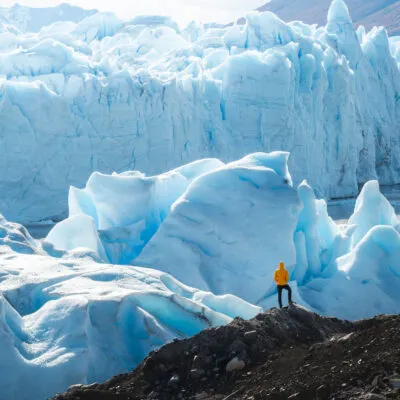
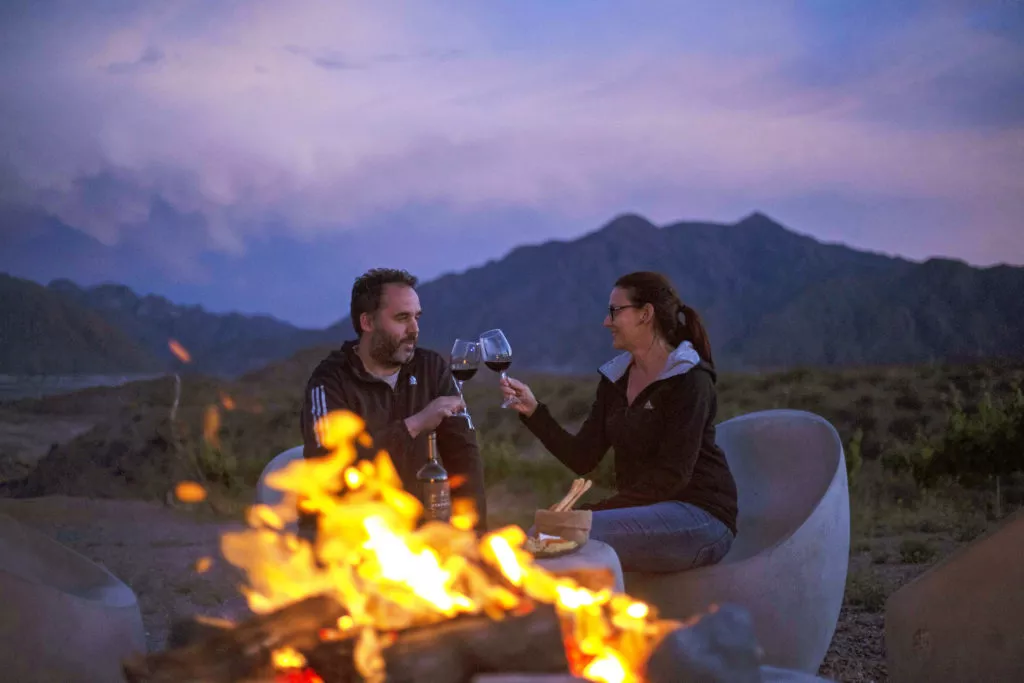
Argentine Patagonia holds the region’s defining sights: the Perito Moreno Glacier at El Calafate, one of the few advancing glaciers on earth, and the Fitz Roy massif at El Chaltén, the country’s trekking capital.
It’s a landscape of ice and granite and enormous open steppe, where the scale genuinely resets your expectations and the weather does exactly as it pleases.
For most travelers, Patagonia wants five to seven days as part of a broader trip — enough for the glaciers and the mountains without the itinerary becoming a series of long transfers.
Our Argentine Patagonia tours anchor most itineraries, and the 13-day Best of Patagonia is the fullest version for travelers who want the south in depth before heading elsewhere.
But the mistake worth avoiding is stopping here. Patagonia is the foundation of a great Argentine trip, not the whole building.
3. Buenos Aires: The Cultural Overture
Almost every Argentine journey passes through Buenos Aires, and the ones that treat it as more than an airport are richer for it.
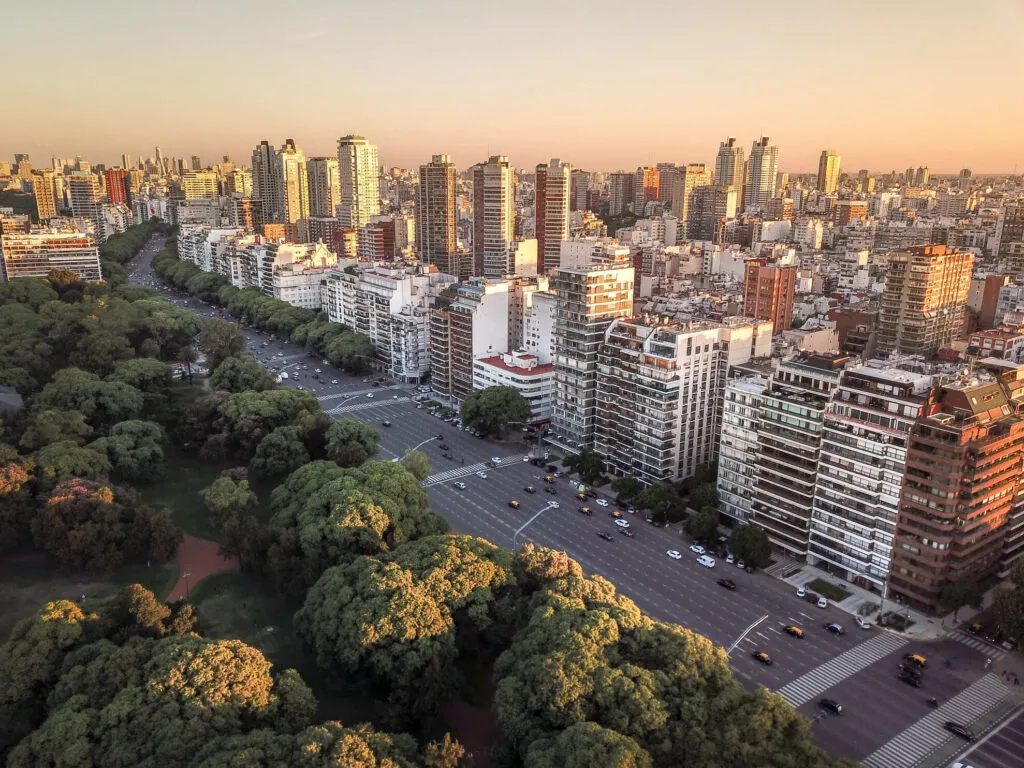
The city has European bones and South American temperament — grand boulevards and faded palaces, bookshops the size of theatres, and a nightlife that genuinely doesn’t start until late.
The default two-night stopover barely scratches it. Three nights is the honest minimum, ideally at the start, when jet lag makes a slower city day welcome rather than wasteful.
The best of Buenos Aires isn’t a checklist of sights. It’s the texture — a guided walk through its architecture, a closed-door dinner, a milonga where locals actually dance rather than perform.
Our Buenos Aires tours are built to use the city as a genuine opening act rather than a layover — the cultural counterweight to Patagonia’s wilderness.
Treat it as a place, not a transit point, and it sets the tone for everything that follows.
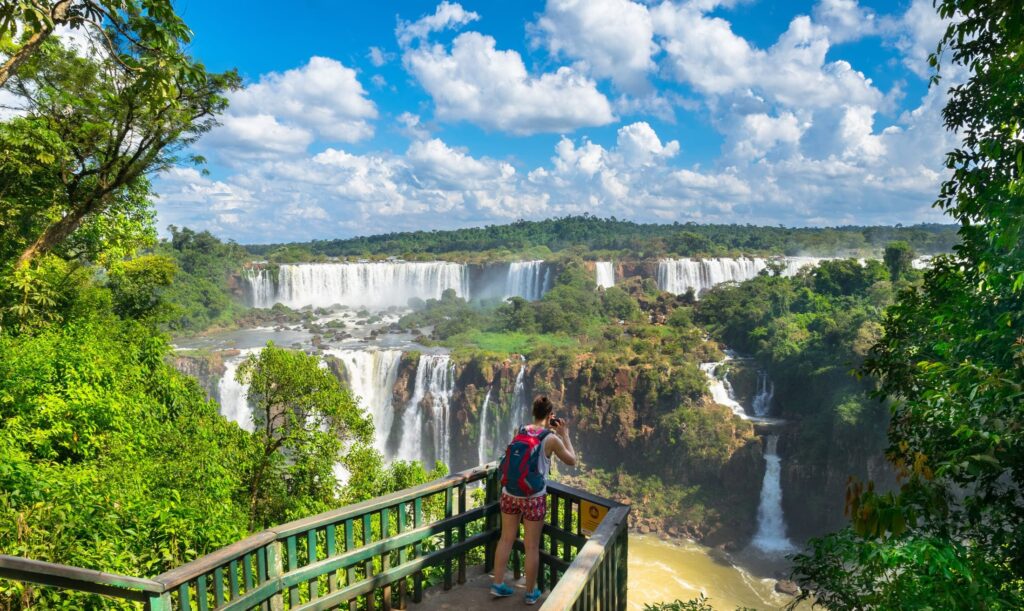
4. Iguazú Falls: The Subtropical North
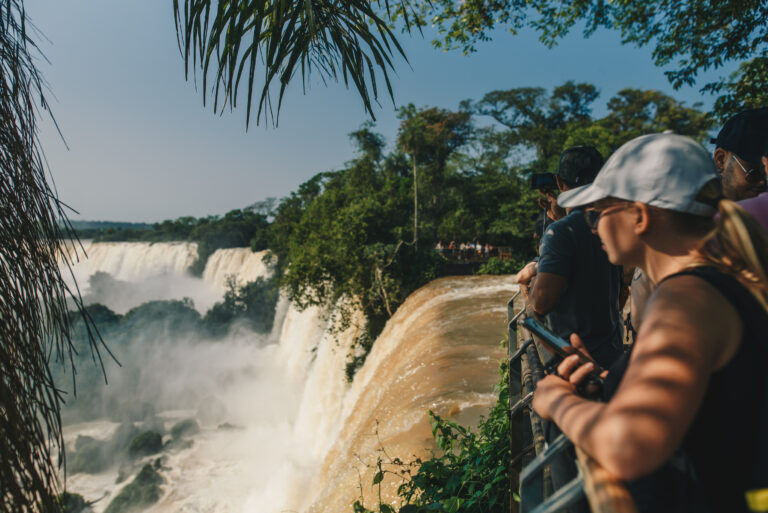
Fly north from Buenos Aires and Argentina changes entirely: the air turns humid, the forest turns emerald, and the ground begins to roar.
The Iguazú Falls are 275 individual cataracts spread across nearly three kilometres of jungle, and they make Niagara look modest. The Argentine side puts you among them; catwalks lead to the edge of the Devil’s Throat, where the noise is physical.
The smart way to see them is to stay long enough to be there before and after the day crowds — ideally two nights, and where possible with lodging inside the national park itself.
Iguazú pairs beautifully with Patagonia precisely because it’s the opposite: heat against cold, jungle against ice, colour against granite. It’s the clearest expression of Argentina’s range.
Our Iguazú Falls tours build in the timing that separates a great visit from a hot, crowded one, and they slot naturally into a wider Argentine route.
Two days here is a place. One is a photograph.
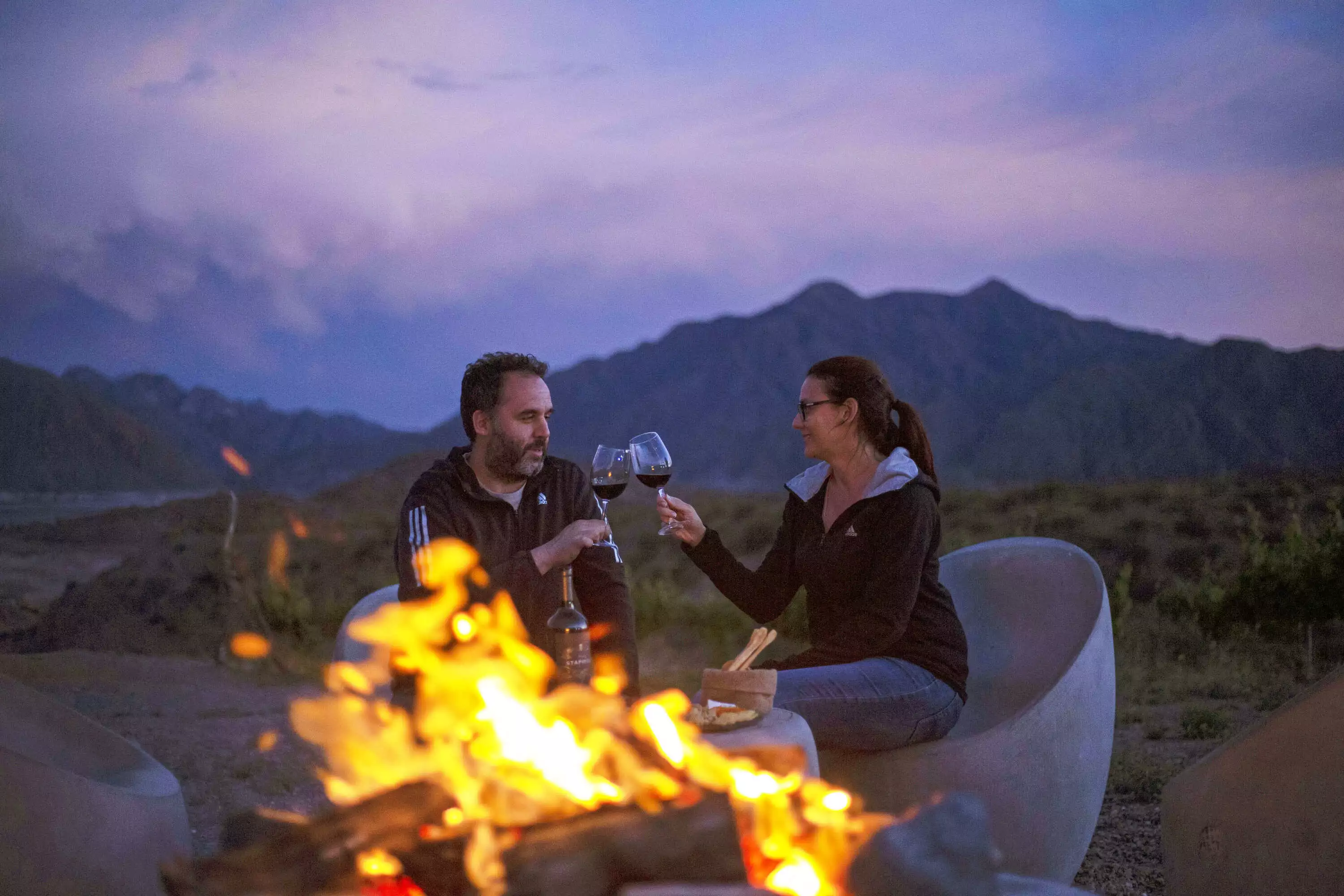
5. Mendoza and the High-Altitude Wine Country
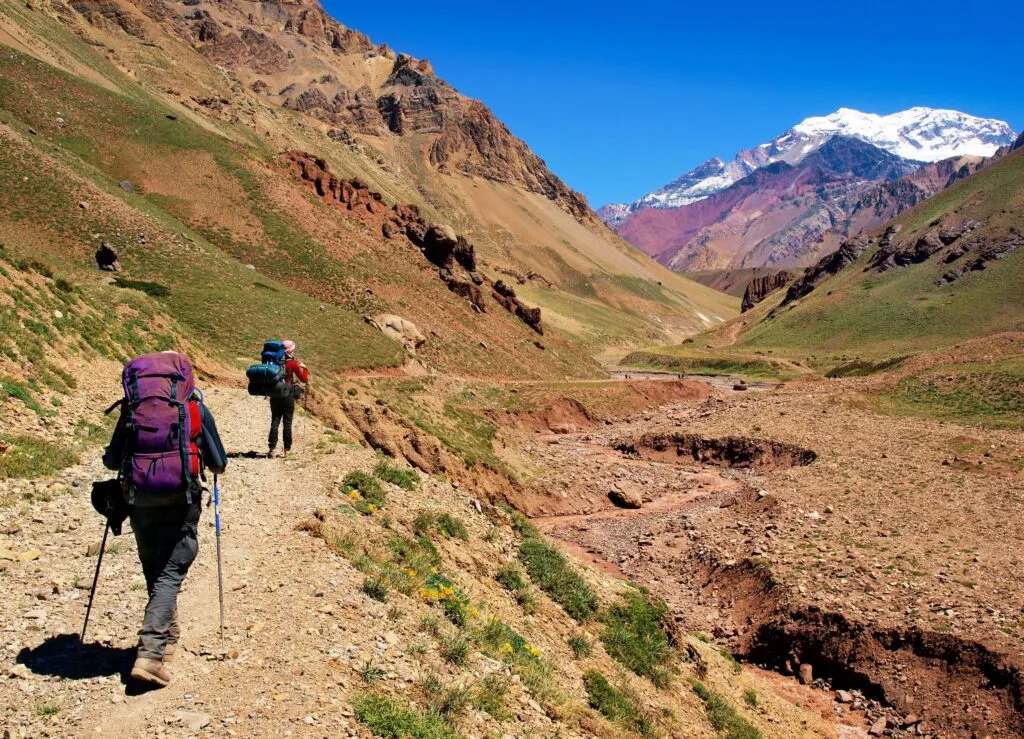
West of Buenos Aires, at the foot of the Andes, sits the region that most often becomes a trip’s unexpected favourite.
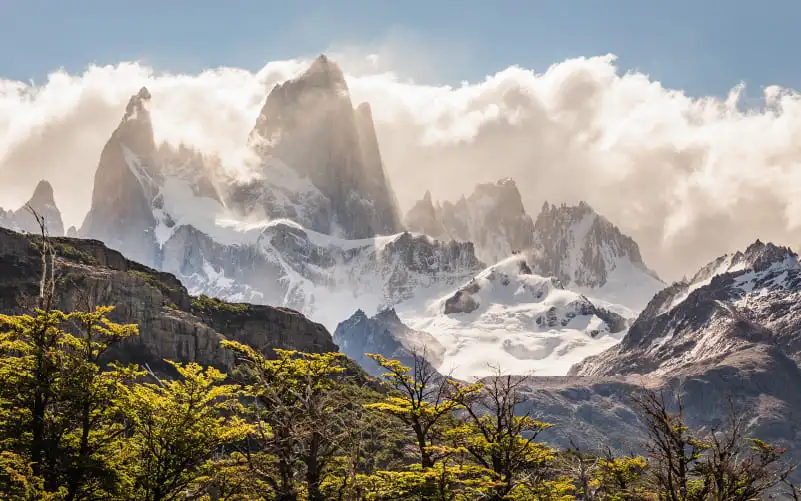
Mendoza’s vineyards climb to altitudes that would be eccentric anywhere else — some above 1,500 metres, with Aconcagua on the skyline. That altitude concentrates the fruit, which is why Argentine Malbec tastes the way it does.
The luxury tier here is unusually good: vineyard lodges among the vines, kitchens run by serious chefs, and tastings held with the winemaker rather than a host.
It’s also genuinely alpine — horseback rides into the foothills, high mountain passes, long lunches under a canopy that run comfortably into the afternoon. It’s the region that slows a trip down in the best way.
Our Mendoza wine tours are built around private bodega visits rather than a fixed tasting circuit, because the best cellars don’t take walk-ins.
After Patagonia’s severity, Mendoza is the exhale. Many travelers plan it as an afterthought and remember it as a highlight.
6. The Northwest: Salta, Jujuy and the Great Salt Flats
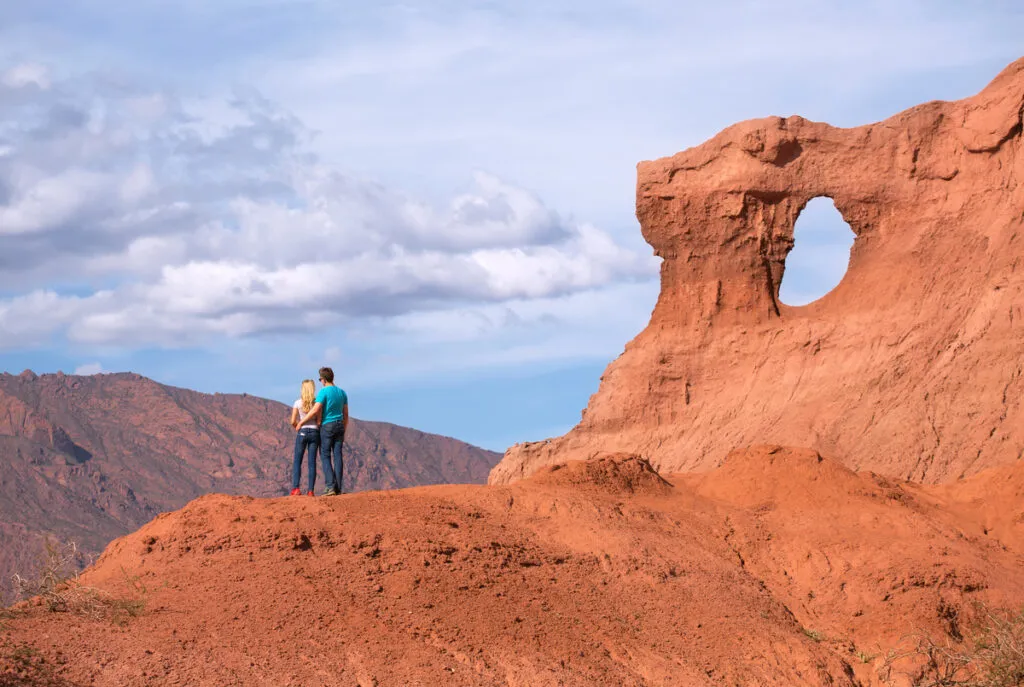
Argentina’s northwest is its least understood region and, for returning travelers, often its most rewarding.
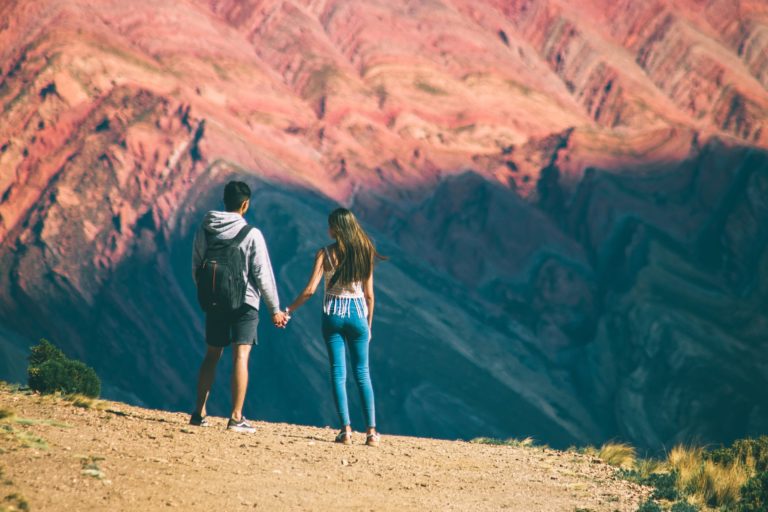
This is high desert: red-rock canyons, cactus-studded valleys, colonial towns above 2,000 metres, and the blinding white expanse of the Salinas Grandes salt flats. The culture shifts too, with the Andes pressing in and the food and accent leaning closer to Bolivia.
It’s a region best explored slowly, often by road, because the pleasure is in the driving as much as the arriving — the way the colours of the rock change through the day.
Luxury here is newer and scarcer, which is part of the appeal: small, design-driven lodges in restored colonial estates, or a glamping camp on the salt itself under an uncontested sky.
Our northern Argentina tours and the Salta and Jujuy explorations reach a side of Argentina most first-time visitors never see.
For a first trip, the Northwest is optional. For a second, it’s frequently the reason to return.
7. Bariloche and the Lake District
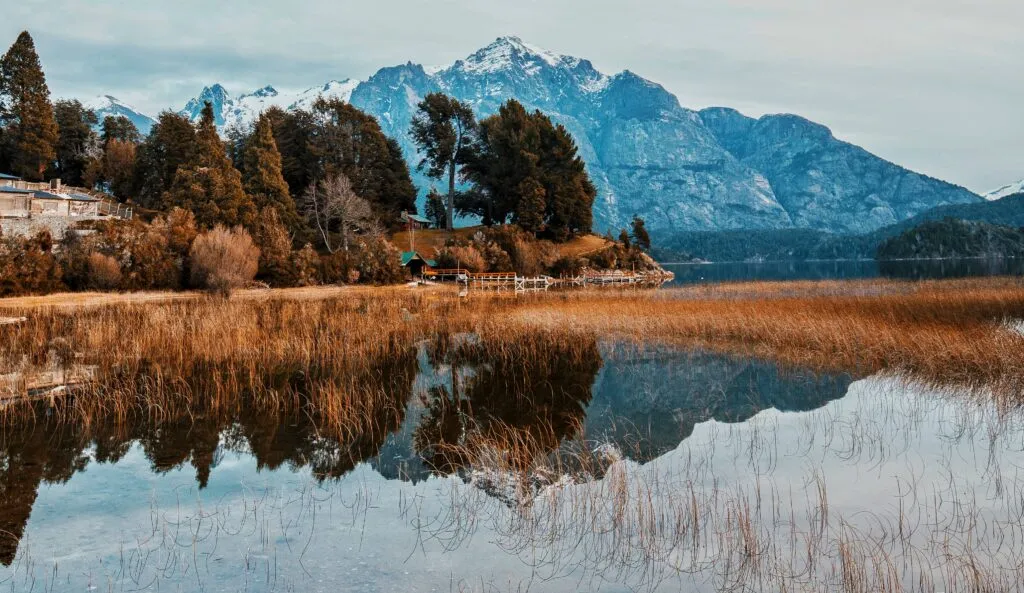
Between the deep south and the centre lies a gentler Patagonia: the Lake District, with Bariloche at its heart.
It’s a landscape of glacial lakes, forested mountains, and Swiss-style chalets, where the severity of the far south softens into something more alpine and more accessible.
This is the region that works when the rest of the group doesn’t hike. A chairlift delivers one of Argentina’s great panoramas to anyone who can sit down; a scenic road circuit does the rest; and there’s chocolate and craft beer to fill the gaps.
It’s also excellent outside the trekking season — the ski months turn it into an entirely different trip on the same map — and it’s meaningfully gentler than the deep south.
Our Bariloche and Lake District tours suit families and mixed-ability groups especially well, and they add variety to a Patagonia-heavy route.
It’s Patagonia with the volume turned down — and for many travelers, that’s exactly the balance they wanted.
8. Península Valdés and the Wildlife Coast
On the Atlantic coast, roughly midway down the country, Argentina keeps its greatest wildlife spectacle.
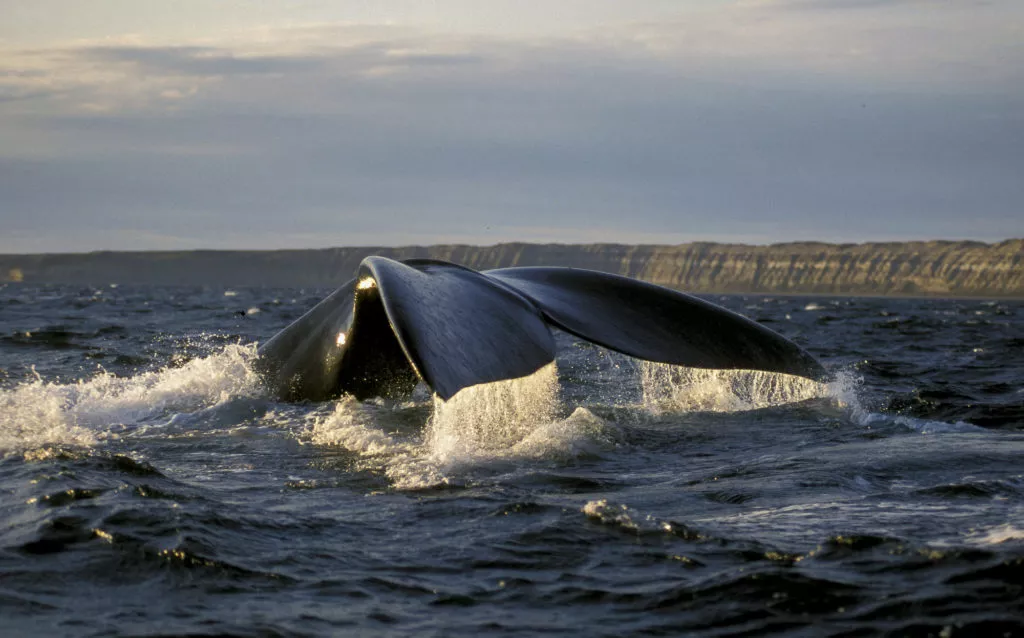
Península Valdés is a UNESCO World Heritage site and one of the finest marine wildlife stages on earth: southern right whales, Magellanic penguins, sea lions, elephant seals, and the famous orcas that beach themselves to hunt.
It’s the region that asks nothing of your fitness and rewards everyone equally. A whale surfacing beside a small boat produces the same awe in a child and a grandparent, which makes it ideal for mixed groups and families.
The timing is specific: whales run from June to mid-December, while the orca hunting spectacle peaks from February to April. Getting the dates right is the whole game here.
Our Península Valdés wildlife trips combine unusually well with the glaciers further south for travelers who want range in one journey.
It’s the softest adventure in Argentina, and often the most memorable for the youngest and oldest travelers in a group.
9. How to Combine Regions Into One Trip
Here is where good Argentine trips are made or broken, because the country is too big to see all at once and the temptation is always to try.
Every additional region costs a flight and, effectively, most of a day. Argentina’s internal distances are punishing, and an over-packed itinerary spends its best hours in airports.
The reliable approach is to anchor on Patagonia and add one or two complementary regions rather than five. Contrast, not coverage, is what makes a trip feel complete.
The table below sorts the most rewarding combinations by the time you have and the kind of trip you want.
| If you have… | Days | The combination that works |
| 7–9 days | One region | Patagonia in depth, or Buenos Aires plus Iguazú |
| 10–12 days | Two regions | Patagonia + Buenos Aires + Iguazú or Mendoza |
| 13–16 days | Three regions | Patagonia, Buenos Aires, and Mendoza or the Northwest |
| 17+ days | The grand tour | Patagonia, Iguazú, Mendoza, the Northwest and the coast |
Our north-to-south Argentina journeys and the Buenos Aires, Iguazú and classic Patagonia route show how these regions actually sequence into one coherent trip.
10. Sample Itineraries by Traveler Type
The best combination depends less on a map than on who you are, so here are the shapes that tend to work.
For the first-timer with limited days, anchor on Patagonia and add Buenos Aires — the wilderness and the culture, the two things nobody should miss, in nine or ten days.
For the couple who wants range, pair Patagonia with Mendoza: the severity of the ice balanced by the ease of the wine country, with Buenos Aires as the opening. Ten to twelve days does it beautifully.
For the family or mixed group, lean on the gentler regions: Bariloche, Península Valdés, and El Calafate, where nobody is left behind and the wildlife carries the trip.
For the returning traveler who already has the highlights, go where first-timers don’t — the Northwest, the Lake District, the wine country of the north, or the remote corners off the usual route.
Our broader Argentina highlights itinerary and full north-to-south adventure are good starting frameworks, though every one of them is reshaped around the traveler in practice.
The point of a sample itinerary isn’t to follow it. It’s to see the logic, then bend it to fit you.
11. When to Go: Timing a Multi-Region Trip
Argentina spans so much latitude that there’s no single best season — only a best season for each region, and the craft is in overlapping them.
Patagonia runs from late October to March, when the trails are open and the days stretch long. December to February is warmest and busiest; November and March bring softer light and thinner crowds.
Mendoza peaks around the March and April harvest. Iguazú and the Northwest are more comfortable in the cooler, drier months from April to September, when the subtropical heat relents.
Península Valdés bends everything to its wildlife calendar: whales from June to mid-December, orcas from February to April.
Because these windows don’t all align, a trip built across late October or March tends to catch the most regions in reasonable form at once — which is why the shoulder seasons are so valuable for multi-region travel.
The Argentina travel guide lays out the regional seasons in detail, and it’s worth a look before you commit to dates that suit one region but fight another.
12. Choosing the Right Tour for You
With this much range, the tour matters as much as the destinations, and the right one comes down to a few honest questions.
How much time do you genuinely have, counting the flights at both ends? That sets how many regions are realistic before the trip becomes a relay.
What do you want the trip to feel like — wilderness, culture, wine, wildlife, or a deliberate mix? Argentina can do all of them, but not in the same nine days.
And how do you like to travel: on a fixed group departure, or a private itinerary shaped entirely around you and reshaped when the weather intervenes?
The best Argentina tours aren’t the ones that promise the most stops. They’re the ones that match the right regions to your time, your pace, and the kind of exploring you actually enjoy.
If you’d like to see how a specific combination would come together, our travel specialists build Argentina exploration tours across every region around exactly that — Patagonia and beyond, in the shape that fits you.
Because the country is the reward here, not any single corner of it.
13. Frequently Asked Questions
What are the best Argentina tours for exploring Patagonia and beyond?
The best ones anchor on Patagonia and add one or two complementary regions rather than trying to see everything. Patagonia delivers the glaciers and granite of El Calafate and El Chaltén, while the regions beyond it supply the contrast.
Buenos Aires provides the culture, Iguazú the subtropical drama, Mendoza the high-altitude wine country, the Northwest the red-rock deserts, and Península Valdés the marine wildlife.
A trip pairing Patagonia with two of these feels like a country rather than a single landscape. The strongest tours are built around contrast and combination, sequenced so the regions flow into one coherent journey.
How many regions of Argentina can I visit in one trip?
It depends on your days, and the honest ceiling is lower than most itineraries suggest. Seven to nine days suits one region done well, such as Patagonia in depth or Buenos Aires with Iguazú.
Ten to twelve days comfortably covers two regions; thirteen to sixteen allows three at a reasonable pace; and seventeen or more opens the grand tour across Patagonia, Iguazú, Mendoza and the Northwest.
Every additional region costs a flight and most of a day, so the reliable rule is to combine two or three regions well rather than rushing five. Contrast, not coverage, makes a trip feel complete.
Is Argentina worth visiting beyond Patagonia?
Very much so. Argentina is the eighth-largest country on earth, ranging from subtropical to sub-Antarctic, and Patagonia is only its southern third.
Beyond it lie the Iguazú Falls, the high-altitude vineyards of Mendoza, the red-rock deserts of the Northwest, the European-flavoured capital of Buenos Aires, and the whale coast of Península Valdés.
The regions beyond Patagonia offer what it can’t — wine, culture, warmth and colour — and the contrast is what turns a beautiful landscape into a rich, varied journey. Most travelers who add a region or two remember them as highlights.
What is the best way to combine Patagonia with other Argentine regions?
Anchor on Patagonia for five to seven days, then add one or two regions that provide contrast rather than more of the same. Buenos Aires at the start is the near-universal opening, easing you in while jet-lagged.
From there, Mendoza pairs the ice with wine, Iguazú pairs it with subtropical heat, and the Northwest adds desert and colour. Península Valdés and Bariloche suit families and mixed-ability groups.
The key is sequencing the internal flights so you’re not backtracking, and building in enough slack that Patagonia’s weather can’t unravel the rest. A specialist handles that ordering.
When is the best time to take a multi-region Argentina tour?
There’s no single best season, because each region peaks at a different time. Patagonia runs from late October to March, Mendoza is at its best around the March and April harvest, and Iguazú and the Northwest are more comfortable from April to September.
Península Valdés follows its wildlife calendar, with whales from June to mid-December.
Because these windows don’t all align, late October and March tend to catch the most regions in reasonable form at once, which makes the shoulder seasons especially valuable for multi-region trips. Flexible dates open up better combinations.
Should I book a group tour or a private trip for exploring Argentina?
It depends on how you like to travel. A group departure on fixed dates is more economical and suits solo travelers and sociable couples who want company and a tested route.
A private itinerary costs more but is built entirely around your pace, interests and dates — and it can be rebuilt in real time when Patagonia’s weather intervenes, which matters more on a multi-region trip with connecting flights.
For families, particular interests, or specific dates, private is usually the better fit. The right answer comes down to how much control and flexibility you want across a trip with several moving parts.