- 1. Why Torres del Paine Is Harder Than It Looks
- 2. Operator or Reseller? The Distinction That Decides Everything
- 3. The Booking Chain That Catches Everyone Out
- 4. The Questions That Sort Operators Fast
- 5. Guides: Where the Quality Actually Lives
- 6. Inside the Park or Puerto Natales? Location Beats Category
- 7. Reading a Suspiciously Cheap Quote
- 8. Red Flags Worth Walking Away From
- 9. How the Right Operator Fits the Trip Together
- 10. Frequently Asked Questions
- How do I choose the best Torres del Paine tour operator?
- Do I need a tour operator to visit Torres del Paine?
- Is it better to stay inside Torres del Paine or in Puerto Natales?
- Why do Torres del Paine tours vary so much in price?
- When should I book a Torres del Paine trip?
- What questions should I ask a Torres del Paine operator before booking?
Search for a Torres del Paine operator and you’ll drown before you decide. Dozens of companies, all promising the same trek, the same towers, the same “expert local guides,” at prices that swing by hundreds of dollars for what looks like the identical itinerary.
The problem isn’t a lack of options. It’s that the options are almost impossible to tell apart from a website, and the differences that matter are precisely the ones nobody advertises.
Torres del Paine is also unusually unforgiving. It sits across a border in Chile, its refugios and campsites are run by competing companies, and its weather cancels plans without warning. A weak operator doesn’t just deliver a lesser trip here — it delivers a broken one.
So this is a practical guide to the best Torres del Paine tour operators: not a ranking of the top operators for Torres del Paine, but a way to tell the good ones apart yourself, using the questions and signals that actually separate a serious operation from a reseller with a nice logo.
In other words, this is less about which name to pick and more about how to choose a Torres del Paine operator with confidence — a method you can apply to any company you’re considering, including ours.
It’s written for the traveler who has settled on the park and now has to choose who runs the trip — the decision that quietly determines whether your days are spent on the trail or in a queue.
We’ll cover what makes Torres del Paine operationally different, the questions that sort operators fast, the booking chain that catches everyone out, and how to read a suspiciously cheap quote.
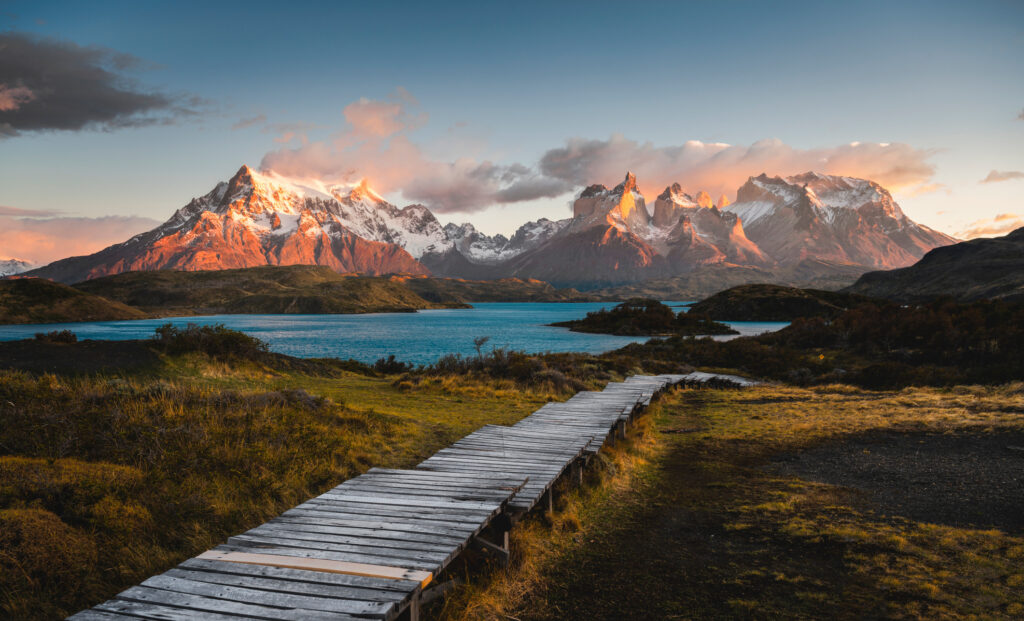
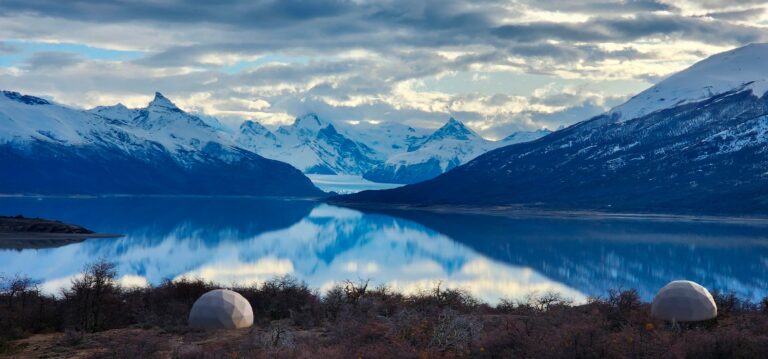
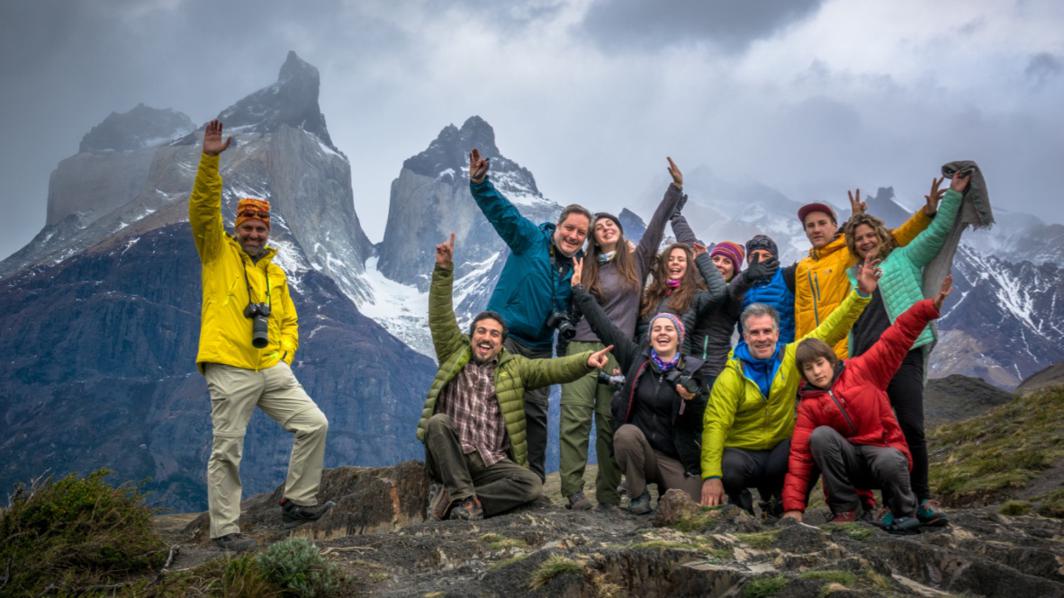
Torres del Paine concentrates the drama of Patagonia — and the logistics that make choosing an operator hard.
1. Why Torres del Paine Is Harder Than It Looks
Most travelers assume choosing an operator is a matter of comparing price and reviews. In Torres del Paine, that misses what actually goes wrong.
The park is remote, on the Chilean side of Patagonia, reached through Puerto Natales and often combined with the Argentine side across a land border. That crossing has rigid timing and few options, and a badly planned one costs you a day.
Inside the park, you can’t simply walk where you like. Every night on the trail must be spent at a designated refugio or campsite, and those are operated by different concessionaires — not one company, but several, each with its own booking system and release dates.
Then there’s the weather, which closes trails and cancels boats regularly. When that happens, the difference between a good operator and a bad one is whether someone local can rebuild your day by breakfast.
This is why the operator matters more here than at almost any destination, and why the same instincts from our checklist for choosing a travel agency apply with extra force in Torres del Paine.
Get the operator right and the park feels effortless. Get it wrong and you’ll spend the trip managing problems that should never have reached you.
2. Operator or Reseller? The Distinction That Decides Everything
The single most important difference between Torres del Paine companies is one they rarely disclose: whether they operate the trip themselves or resell it to someone else.
Some companies have their own team on the ground in Patagonia — staff in Puerto Natales, relationships with the refugios, guides they’ve worked with for years. Others market well, take your booking, and quietly resells to a local partner they may never have met.
Both can deliver a good trip when everything goes smoothly. The distinction becomes visible on the day something breaks — a cancelled flight to Punta Arenas, a closed pass, a strike.
An operator with its own presence fixes it in real time. A reseller emails a partner and waits, and if it’s a weekend, you wait too.
So the first question to ask any Torres del Paine company is blunt: do you have your own team in Chilean Patagonia, or do you work through a partner? A serious operator answers plainly. Evasion is itself the answer.
It’s the same operator-versus-reseller line we draw in our guide to the top custom travel agencies for Argentina trips, and in Torres del Paine it’s decisive rather than merely useful.
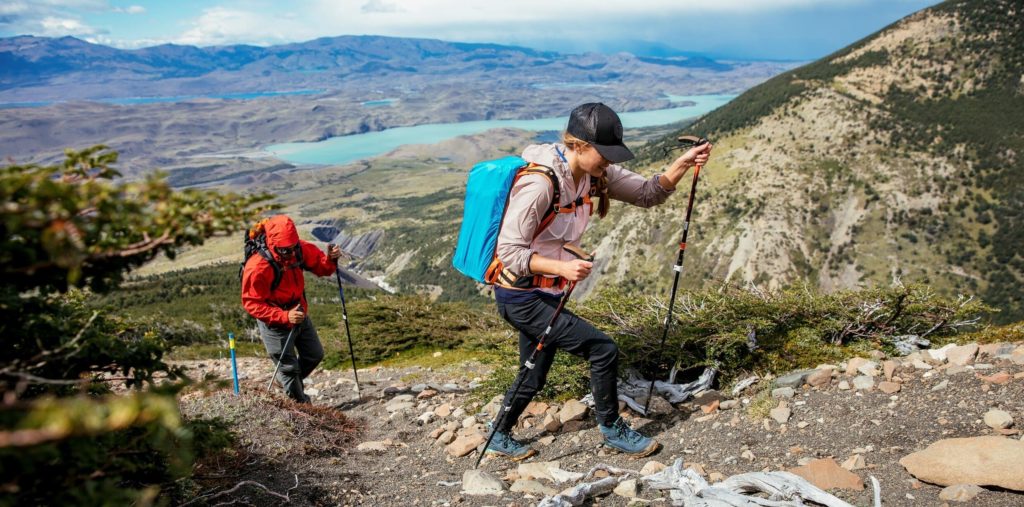
The operator you choose determines who rebuilds your day when the weather closes a trail.
3. The Booking Chain That Catches Everyone Out
Here is the operational reality that turns more Torres del Paine dreams into disappointments than any other, and it has nothing to do with fitness or budget.
You cannot just show up and trek. Every night on the W or the O must be booked in advance at a specific refugio or campsite, and the park requires proof of those reservations before it will let you start walking.
Because the sites belong to different concessionaires, assembling a single continuous route can mean booking across more than one system, each opening reservations at different times and selling out at different speeds.
Peak-season dates — December to February — go months ahead, and one missing night breaks the entire chain. The trek is a sequence; a gap means a route that doesn’t connect.
A good operator’s core value here is precisely this: they hold the relationships and the booking access to assemble that chain reliably, which is genuinely hard to do yourself from abroad.
It’s also why the length of your trip matters, since the trek is a module inside a longer itinerary — something we lay out in how long you should plan for Patagonia.
4. The Questions That Sort Operators Fast
You can filter most companies with a short list of questions, and the way they answer tells you more than any testimonial.
First: do you have your own team in Chilean Patagonia, or do you resell? You’re listening for a straight answer, not reassurance.
Second: who your guide actually is — are they employed by you or subcontracted, licensed in Chile, and how many people will they lead? In Torres del Paine the guide largely is the trip.
Third: what happens if the weather closes a trail or a boat is cancelled on day three? A good answer describes a mechanism and a local contact. A weak one describes a feeling.
Fourth: where exactly am I sleeping, by name, and is it inside the park or in Puerto Natales? Location changes the whole rhythm of the day.
Fifth — the most revealing — what would you talk me out of? An operator that has never dissuaded a traveler is an order-taker, not a specialist.
Any company that answers all five without hedging is worth your shortlist, whichever one it is.
| Ask this | A good answer sounds like | A weak answer sounds like |
| Do you operate or resell? | We have our own team in Puerto Natales | We work with trusted partners (vague) |
| Who is my guide? | Named, licensed in Chile, small group | A local English-speaking guide |
| What if the weather closes a trail? | A 24-hour local contact reroutes your day | We’ll take care of everything |
| Where do I sleep? | Named refugio, inside the park | Refugio or similar |
| What would you advise against? | A specific, honest recommendation | Whatever you like is fine |

A handful of direct questions separates a serious operator from a booking desk.
5. Guides: Where the Quality Actually Lives
Travelers obsess over hotels and barely ask about guides, which is backwards for Torres del Paine, where the guide shapes the experience more than any other single factor.
On the trail, the guide decides which route given a shifting forecast, which viewpoint will be clear, and whether today is the day the towers will emerge from cloud. The gap between a licensed generalist and a specialist who has worked this park for years is the widest quality gap you’ll encounter.
Ask whether guides are certified in Chile, whether they’re employed or subcontracted per day, and what the maximum group size is. A private naturalist and a guide shared with twenty-two strangers both appear as “guided” on a feature list.
Ask, too, whether you can request a guide by name — an operator whose guides have names it knows is one with real relationships rather than a rotating roster.
Group size is the tell most often hidden. On the narrow catwalks and busy viewpoints, a small group moves and pauses far more easily than a large one, and it determines whether you ever get a clear photograph at all.
6. Inside the Park or Puerto Natales? Location Beats Category
One decision shapes a Torres del Paine trip more than the star rating of your hotel: whether you sleep inside the park or commute in from Puerto Natales.
Staying inside means you’re on the trail at seven in the morning, before the day visitors arrive, with the great viewpoints briefly to yourself. It means late evenings on empty paths and the best light of the day.
Commuting from Puerto Natales adds one to two hours each way and puts you on the trail with everyone else. A comfortable hotel in town can’t compensate for arriving after the crowds.
This is the clearest case anywhere in Patagonia of location beats category. A simpler room inside the park delivers a better experience than a grander one outside it.
It’s the same logic that runs through what a room’s category actually includes in a Patagonia tour: in this region, location, not luxury, is what you’re really paying for.
A good operator will be honest about this trade-off and steer you toward position over polish where the two compete.

Staying inside the park buys early, crowd-free mornings that no hotel in town can match.
7. Reading a Suspiciously Cheap Quote
Put two Torres del Paine quotes side by side and one is forty per cent cheaper. Before you celebrate, understand where the gap usually hides.
Inclusions, first. Park entrance fees, the catamaran across Lake Pehoé, transfers to and from Puerto Natales, and meals are wildly inconsistent between operators. A quote that excludes them isn’t cheaper — it’s incomplete.
Guiding, second. A shared guide across a large group and a private one both read as “a guide.” The cheaper number often means the bigger group.
Lodging, third — and specifically its location. A cheap package usually answers “where am I sleeping?” with a number of kilometres from the park.
Group size, fourth, and the least advertised. It determines your pace, your vehicle, and how often you stand around waiting.
Normalise the two quotes by adding the exclusions back and matching the group size and lodging location. The gap usually shrinks or reverses. Cheap in Torres del Paine is frequently just incomplete.
8. Red Flags Worth Walking Away From
A few signals reliably predict a disappointing Torres del Paine operator, and most are visible before you pay.
No verifiable presence in Chilean Patagonia, and evasion when you ask about it. This is the one that matters on the day a trail closes.
A price quoted to the dollar before your dates are confirmed. The park’s inventory is too scarce for a fixed number to be real that early.
No named lodging in the proposal, or “refugio or similar.” It usually means the answer depends on what’s left when they get around to booking.
An itinerary that never pushes back. If you proposed something the weather or the calendar makes unwise and nobody objected, nobody is designing your trip.
Pressure tactics — countdown timers, “only one spot left today.” Genuine scarcity in Torres del Paine is a refugio with limited beds, and it’s explained calmly, not with a clock.
9. How the Right Operator Fits the Trip Together
The best Torres del Paine operators don’t just book a trek — they sequence a trip, and that sequencing is where their value concentrates.
The trek itself is a four-to-five-day module (the W) or eight-to-nine (the O), but the real itinerary includes reaching Puerto Natales, the border crossing from Argentina, and a buffer day for the weather that will, on an honest trip, break at least one plan.
A strong operator builds that buffer in rather than pretending Patagonian weather cooperates. They also pair the park with the Argentine side — El Calafate and the Perito Moreno Glacier are within reach — so a closed trail doesn’t collapse the whole trip.
Our own Torres del Paine tours and broader Chilean Patagonia trips are built on exactly that logic, with our own team handling the border, the refugio chain and the weather in real time.
For travelers weighing a group departure instead, our guide to the best places for a group trip to Patagonia is a useful companion, and our travel specialists will tell you plainly which structure fits your dates.
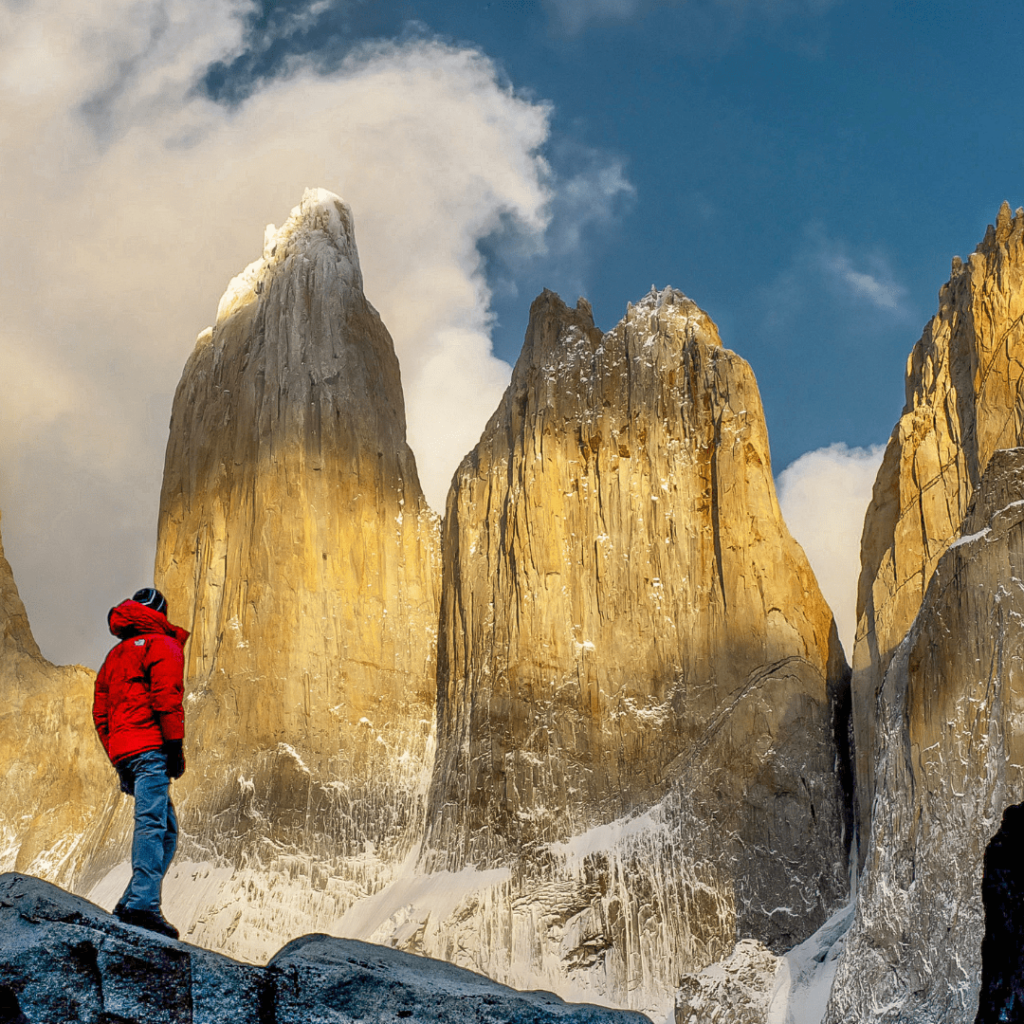
A good operator sequences the trek, the border and the buffer days so the towers are the reward, not a scramble.
10. Frequently Asked Questions
How do I choose the best Torres del Paine tour operator?
Start by asking whether the company has its own team in Chilean Patagonia or resells to a local partner — this is the single most important difference, because it determines who fixes your day when the weather closes a trail.
Then check the specifics: whether your guide is licensed in Chile and how large the group is, where exactly you’ll sleep and whether it’s inside the park, and what the plan is if a boat or trail is cancelled.
Finally, ask what they’d talk you out of. An operator that has never dissuaded a traveler is a booking desk, not a specialist. The company that answers all of this plainly is the one worth shortlisting.
Do I need a tour operator to visit Torres del Paine?
Not strictly, but it’s far harder to do well independently than most travelers expect. Every night on the trail must be reserved in advance at a designated refugio or campsite, and the park requires proof before letting you start.
Those sites belong to different concessionaires with separate booking systems that sell out months ahead, so assembling a continuous route from abroad is genuinely difficult.
A good operator holds the relationships and booking access to build that chain reliably, coordinates the border crossing and transfers, and provides local support when the weather forces a change. For most travelers, that’s worth it.
Is it better to stay inside Torres del Paine or in Puerto Natales?
Inside the park, almost always, if the experience matters more than the saving. Staying inside means you’re on the trail before the day visitors arrive, with the great viewpoints briefly to yourself and the best light of the day.
Commuting from Puerto Natales adds one to two hours each way and puts you on the trail with the crowds. A grander hotel in town can’t compensate for arriving late.
This is the clearest example in Patagonia of location beating category. A simpler room inside the park delivers a better trip than a luxurious one outside it — choose position over polish where they compete.
Why do Torres del Paine tours vary so much in price?
Usually because of what’s left out rather than what’s marked up. Park entrance fees, the catamaran across Lake Pehoé, transfers from Puerto Natales, and meals are inconsistent between operators, so a cheaper quote is often simply incomplete.
Guiding is the other big variable — a private guide and a guide shared with twenty people both appear as “guided,” and the cheaper number usually means the larger group.
Lodging location matters too, since a room inside the park costs more and is worth it. Normalise two quotes by adding the exclusions back and matching group size and location, and the gap usually shrinks.
When should I book a Torres del Paine trip?
Eight to twelve months ahead for peak dates between December and February, and earlier still if you want specific refugios or a particular guide.
The park’s inventory is genuinely scarce — the refugios and campsites are small, run by different concessionaires, and the best-located ones fill first. A single unavailable night breaks the whole trekking sequence.
Booking early isn’t urgency for its own sake. In a place with this little capacity and this much demand, it’s simply how the route you want stays intact rather than being rearranged around what’s left.
What questions should I ask a Torres del Paine operator before booking?
Ask whether they have their own team in Chilean Patagonia or resell to a partner; who your guide is, whether they’re licensed in Chile, and the maximum group size; and exactly where you’ll sleep, by name and whether inside the park.
Ask what happens if the weather cancels a boat or closes a trail, and get an answer that describes a mechanism and a local contact rather than a reassurance.
Finally, ask for the exclusions as a list — park fees, catamaran, transfers, meals — and what they’d advise against on your plan. Straight answers to all of these separate a serious operator from the rest.