- 1. Why Wildlife Is Patagonia’s Most Underrated Experience
- 2. Península Valdés: The Main Stage
- 3. Whales: The Season That Governs Everything
- 4. Orcas at Punta Norte: A Different Calendar Entirely
- 5. Penguins: The Most Reliable Wildlife in Patagonia
- 6. Pumas, Condors and the Land Animals
- 7. The Wildlife Calendar, in One Place
- 8. Combining Wildlife With the Rest of Patagonia
- 9. What Makes a Good Wildlife Operator
- 10. Planning a Wildlife-First Patagonia Trip
- 11. Frequently Asked Questions
- What are the best Patagonia wildlife tours in Argentina?
- When is the best time to see whales in Patagonia?
- What Patagonia animals can I see by season?
- Can I combine wildlife watching with trekking in Patagonia?
- Do I need to be fit for a Patagonia wildlife tour?
- Are orca sightings at Punta Norte guaranteed?
Patagonia is sold as a landscape. The glaciers, the granite, the wind — the photographs are all rock and ice and empty space.
What the photographs rarely show is that this is also one of the great wildlife regions on earth, and that a good part of it is easier to reach than any trek.
Southern right whales that surface beside small boats. Orcas that deliberately beach themselves to hunt seals, a behaviour documented in only a handful of places worldwide. Colonies of hundreds of thousands of penguins. Pumas, condors, guanacos, elephant seals.
The catch — and it’s the reason so many travelers miss all of it — is that Patagonian wildlife runs on a strict calendar, and that calendar frequently conflicts with the one everyone plans around.
The season that suits trekking is not the season that suits whales. Turn up in January expecting to see both and you’ll see one.
So this guide is organised the way the decision actually works: first the animals and where they live, then the seasons that govern them, then how to combine the best Patagonia wildlife tour experiences with the rest of a trip without the two fighting each other.
It’s written for travelers weighing the best Patagonia wildlife tours in Argentina and finding plenty of pretty descriptions and very few usable dates.
Here are the Patagonia animals to see by season, and the trips that actually reach them.
1. Why Wildlife Is Patagonia’s Most Underrated Experience
Wildlife occupies a strange position in Patagonian travel. It’s world-class, and it’s consistently treated as an afterthought.
Part of the reason is geography. The great wildlife concentrations sit on the Atlantic coast, roughly midway down the country, while the famous mountains are far to the southwest. They are not near each other.
So itineraries built around glaciers and granite skip the coast entirely, and travelers never learn what they missed.
The other reason is that wildlife doesn’t photograph as an itinerary. A mountain is always there; a whale is a matter of timing and patience, which is harder to sell in a brochure.
But for a large category of traveler, wildlife is the better experience. It asks nothing of your fitness, works for every age, and produces the moments people talk about afterwards.
A right whale surfacing a few metres from a small boat generates the same reaction in a nine-year-old and a seventy-five-year-old. Very little else on a Patagonia itinerary does that.
It’s also the answer for travelers who assume Patagonia isn’t for them because they don’t hike. Almost all of it is watched from a boat, a vehicle or a flat path.
2. Península Valdés: The Main Stage
If Patagonian wildlife has a headquarters, this is it — a UNESCO World Heritage site on the Atlantic coast, and one of the finest marine wildlife stages anywhere.
The peninsula juts into the ocean north of Puerto Madryn, creating sheltered gulfs on either side. Those gulfs are why the animals come, and why they can be watched so closely.
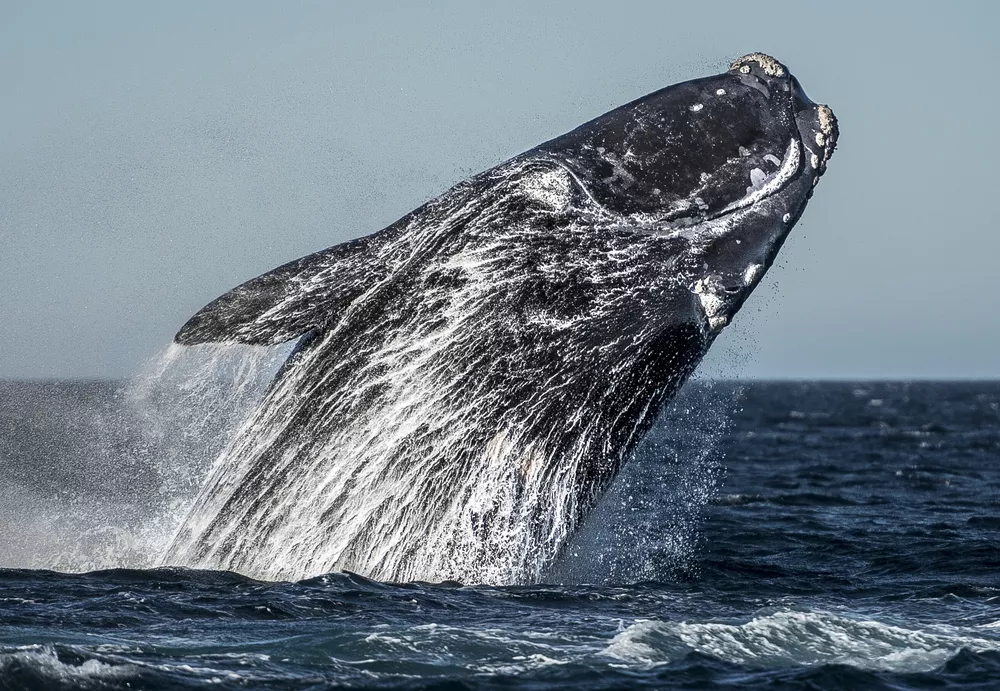
Southern right whales use the protected water as a nursery, arriving to calve and raise their young. They are enormous, curious, and often approach boats of their own accord.
Around the coastline you’ll also find southern elephant seals — the only continental breeding colony in the world — plus sea lion colonies, Magellanic penguins, and the guanacos and rheas that roam the interior steppe.
What makes Valdés exceptional is density. Several major species in one accessible area, most of them viewable without any physical demand at all.
Our Península Valdés wildlife trips are built around the peninsula and the coast, and they’re structured around the animals’ calendar rather than a fixed template.
3. Whales: The Season That Governs Everything
The southern right whale is Patagonia’s headline act, and its calendar is the single most important fact in this article.
Whales are present in the gulfs of Península Valdés from roughly June to mid-December, with the peak between September and November when mothers and calves are most numerous and most active.
Notice what that means. The whale season is largely over by the time Patagonia’s trekking season hits its stride in January.
That conflict is the reason so many travelers see none of this. A classic December-to-February Patagonia trip lands almost entirely outside the whale window.
The overlap — the only period when whales and the southern trekking season coexist — runs from late October to mid-December. If you want both in one trip, those are your dates, and there is no flexibility in them.
The watching itself is done from small boats that approach respectfully and then let the whales decide. Frequently they come to the boat, roll alongside, and surface close enough that you can hear them breathe.
It is, by common consent among our travelers, one of the two or three most memorable hours of any Patagonia trip.
4. Orcas at Punta Norte: A Different Calendar Entirely
At the northern tip of Península Valdés, a small number of orcas perform one of the most extraordinary hunting behaviours in the natural world.
They intentionally strand themselves — driving up onto the shingle beach to seize young sea lions, then working their way back into the water. This behaviour is documented in only a handful of locations globally, and Punta Norte is the most reliable.
Its season is completely different from the whales’: roughly February to April, peaking in the weeks when sea lion pups are entering the water.
So Valdés effectively has two wildlife seasons that barely overlap. Whales from June to mid-December, orcas from February to April.
This matters because travelers often assume one visit covers everything. It doesn’t — you are choosing which spectacle you came for.
Orca watching also demands patience and luck in a way whale watching doesn’t. The hunts depend on tide, timing and the animals’ willingness, and no operator can promise them.
For travelers who want the certainty of a sighting, whales in the spring are the better bet. For those chasing something rare, the orcas are worth the gamble.
5. Penguins: The Most Reliable Wildlife in Patagonia
If whales are the drama and orcas are the gamble, penguins are the sure thing — and the volume genuinely surprises people.
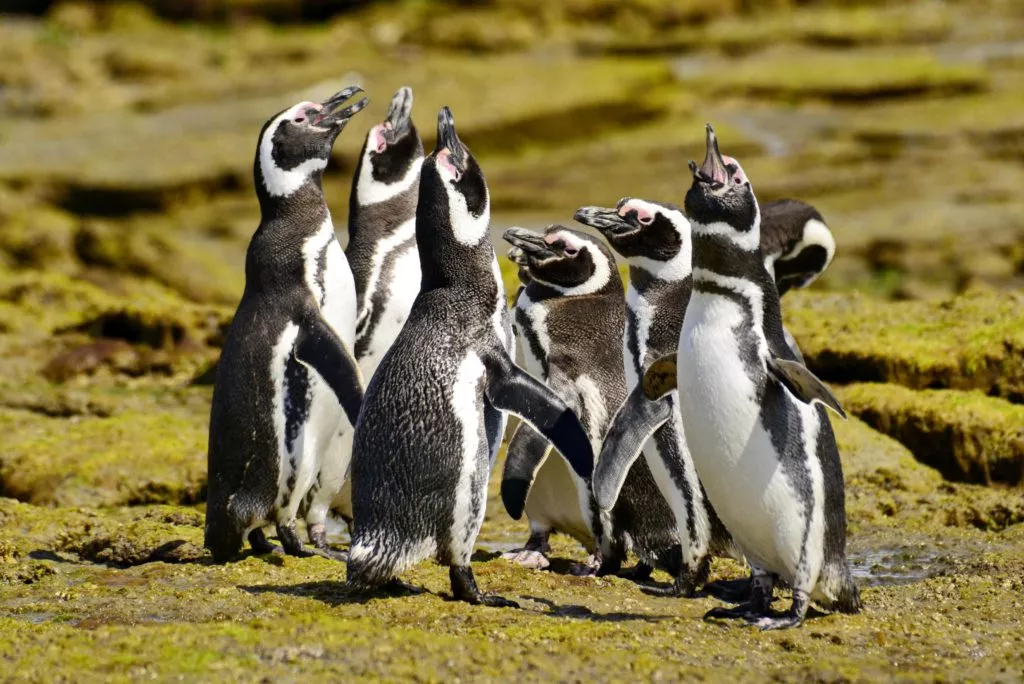
Magellanic penguins arrive on the Patagonian coast in vast numbers to breed, and the colonies are among the largest on the continent. Punta Tombo, south of Puerto Madryn, is the most famous, holding hundreds of thousands of birds.
Their season runs from roughly September to March or April. They arrive to nest in spring, chicks hatch through the summer, and the colonies empty as autumn approaches.
Crucially, that window overlaps almost entirely with the classic Patagonia travel season, which makes penguins the one major wildlife experience that fits any summer itinerary.
The viewing is also the easiest of any species here. Flat, well-marked paths run directly through the colony, with birds nesting on either side, entirely unbothered by visitors.
There are further colonies at Isla Magdalena near Punta Arenas and along the Beagle Channel at Ushuaia, so penguins can be worked into a southern itinerary even if you never reach the Atlantic coast.
Our penguin-focused trips cover the main colonies, and they slot into a broader route more easily than any other wildlife experience.
6. Pumas, Condors and the Land Animals
Not all of Patagonia’s wildlife is marine, and the land species are concentrated where you may already be going.
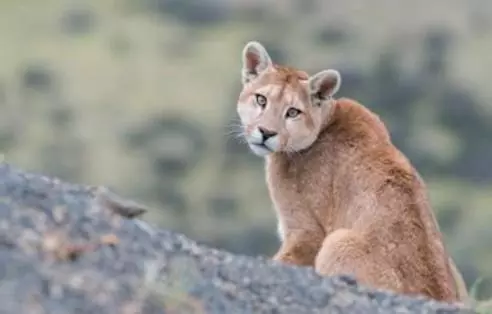
Torres del Paine, on the Chilean side, has become one of the best places on earth to see wild pumas. Protection from hunting inside the park has made them notably less fearful, and dedicated puma tracking with specialist guides now has a high success rate.
The best puma season is the southern winter and shoulder months — roughly April to October — when the cats are more active in daylight and the vegetation is lower. This is the reverse of the trekking calendar.
Andean condors, with wingspans approaching three metres, are seen throughout Patagonia and are a near-certainty around El Chaltén and the Torres del Paine massif.
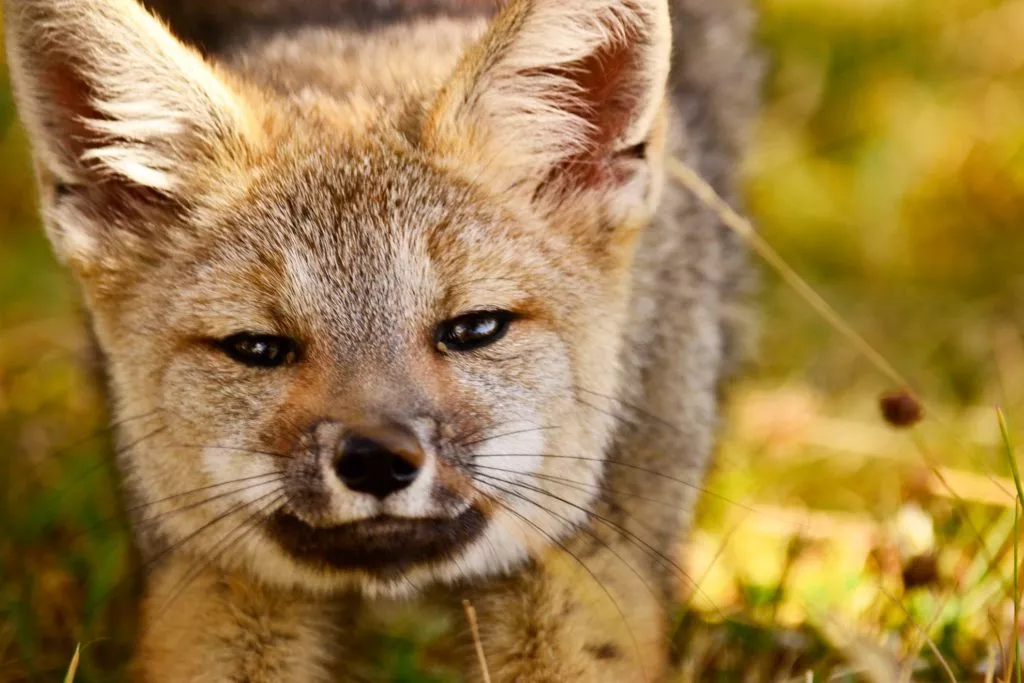
Guanacos — the wild relatives of the llama — are everywhere on the steppe, in herds that make the emptiness feel populated. Rheas, foxes, armadillos and huemul deer fill out the picture.
The land wildlife is, in a sense, the free part. You’ll see condors and guanacos on almost any Patagonia itinerary without booking a thing.
Pumas are the exception: seeing them reliably requires a dedicated trip with specialist trackers, in the right season.
7. The Wildlife Calendar, in One Place
Everything above, compressed. This table is the single most useful thing in this article, because it’s the part that decides your dates.
| Animal | Season | Where and what to know |
| Southern right whales | June to mid-December (peak Sep–Nov) | Península Valdés; close boat encounters; conflicts with peak trekking |
| Orcas (beach hunting) | February to April | Punta Norte; rare behaviour; needs patience and luck |
| Magellanic penguins | September to March/April | Punta Tombo, Isla Magdalena, Beagle Channel; overlaps summer season |
| Elephant seals | Spring, peak Sep–Nov | Península Valdés; the only continental breeding colony |
| Sea lions | Year-round | Valdés and the Beagle Channel; easy to combine |
| Pumas | April to October (winter/shoulder) | Torres del Paine; needs a specialist tracking trip |
| Condors and guanacos | Year-round | Throughout Patagonia; seen on almost any itinerary |
The pattern worth noticing: the marine spectacles cluster outside the peak trekking months, while penguins and the land species fit inside them.
8. Combining Wildlife With the Rest of Patagonia
This is where planning gets genuinely difficult, and where most wildlife ambitions quietly die.
Península Valdés sits on the Atlantic coast, roughly 1,500 kilometres from El Calafate. It is a separate flight, not a side trip, and it needs three to four days of its own.
So adding wildlife to a Patagonia itinerary is a real decision with a real cost in days, not a small detour.
The version that works: budget nine to eleven days minimum for a trip that includes both the coast and the glaciers, and travel in the late-October-to-mid-December window when whales and the southern season overlap.
The version that doesn’t work: a January trip with two days tacked on at Puerto Madryn. The whales will have gone, and you’ll have spent the days for a colony of penguins you could have seen more easily near Ushuaia.
If your dates are fixed in peak summer, the honest advice is to skip Valdés and get your wildlife from the penguin colonies and the Beagle Channel in the south instead.
Our broader wildlife and nature trips are built around those constraints, and they sequence the coast and the mountains so neither is wasted.
9. What Makes a Good Wildlife Operator
Wildlife tours vary more in quality than almost any other kind of Patagonia travel, and the differences are checkable in advance.
Guiding is the first and largest. There is an enormous gap between a driver who takes you to a viewpoint and a naturalist who can read the animals’ behaviour, anticipate movement, and explain what you’re watching.
Group size is the second, and it’s decisive on boats. A whale-watching vessel with twelve people is a fundamentally different experience from one with sixty, and it determines whether you get a rail position at all.
Responsible practice is the third, and it’s not only ethical but practical. Operators who respect approach distances and let animals set the terms get better encounters, because unpressured whales come closer.
Timing is the fourth and most overlooked. A good operator schedules around tides, light and animal activity, not around a convenient departure time.
And honesty is the fifth. No operator can promise an orca hunt. One who guarantees sightings is either lucky or lying, and the second is more common.
Ask about naturalist qualifications, maximum group sizes, and what happens if conditions cancel a boat. The answers separate the serious from the rest quickly.
10. Planning a Wildlife-First Patagonia Trip
If wildlife is your priority rather than an add-on, the whole trip inverts — and it becomes considerably easier to plan.
Start with the animal you most want to see and work backwards. That single choice fixes your dates, and everything else follows.
Whales mean September to November. Orcas mean February to April. Pumas mean the southern winter. Penguins are flexible, which is why they combine with everything.
A wildlife-first trip also opens up months that trekking-led travelers avoid entirely. September and October on the Atlantic coast are superb, quiet and considerably better value, even though the southern trails are only just opening.
The trip shape that works best pairs the coast with either the glaciers or Ushuaia and the Beagle Channel, over nine to twelve days, at a pace that leaves time for the animals to appear.
Because that’s the other thing wildlife demands: patience. An itinerary that allows only one boat trip has one chance at the weather. Two days in a place gives the animals a second opportunity to cooperate.
If you know which animal you want to see, our travel specialists can tell you immediately whether your dates allow it — and if they don’t, which alternative is genuinely worth the trip.
11. Frequently Asked Questions
What are the best Patagonia wildlife tours in Argentina?
The strongest wildlife experiences centre on Península Valdés, a UNESCO World Heritage site on the Atlantic coast that combines southern right whales, elephant seals, sea lions, penguins and steppe wildlife in one accessible area.
Punta Tombo, to the south, holds one of the continent’s largest Magellanic penguin colonies, and Punta Norte on the peninsula offers the rare spectacle of beach-hunting orcas.
Further south, the Beagle Channel at Ushuaia adds penguins and sea lions, while Torres del Paine in Chile has become one of the world’s best places to track wild pumas with specialist guides.
When is the best time to see whales in Patagonia?
Southern right whales are present at Península Valdés from roughly June to mid-December, with the peak between September and November when mothers and calves are most numerous and most active.
This is the single most important date in Patagonian wildlife planning, because it conflicts with the classic trekking season. A December-to-February Patagonia trip falls almost entirely outside the whale window.
The only period when whales and the southern trekking season overlap is late October to mid-December. If you want both in one trip, those are your dates, and there is no flexibility in them.
What Patagonia animals can I see by season?
Southern right whales run June to mid-December, peaking September to November. Orcas hunting on the beaches at Punta Norte appear February to April. Magellanic penguins are present from September through March or April.
Elephant seals peak in spring, around September to November, while sea lions, condors and guanacos are visible year-round throughout the region.
Pumas in Torres del Paine are best tracked in the southern winter and shoulder months, roughly April to October — the reverse of the trekking calendar. Penguins are the one major species that overlaps the peak summer travel season.
Can I combine wildlife watching with trekking in Patagonia?
Yes, but it requires deliberate planning, because Península Valdés sits on the Atlantic coast around 1,500 kilometres from El Calafate. It’s a separate flight needing three to four days of its own, not a side trip.
Budget nine to eleven days minimum for a trip covering both the coast and the glaciers, and travel between late October and mid-December, the only window where whales and the southern season overlap.
If your dates are fixed in peak summer, skip Valdés and take your wildlife from the penguin colonies and the Beagle Channel in the south instead — you’ll see more for far fewer travel days.
Do I need to be fit for a Patagonia wildlife tour?
No, and this is one of wildlife’s great advantages over the rest of a Patagonia itinerary. Almost all of it is watched from a boat, a vehicle, or a flat, well-marked path.
Whale and orca watching happen from vessels. Penguin colonies like Punta Tombo have level walkways running directly through the nesting grounds. Steppe wildlife is largely seen from the road.
It makes wildlife the ideal choice for families, multigenerational groups, and any traveler who assumed Patagonia wasn’t for them because they don’t hike. The experiences are among the region’s most memorable regardless of fitness.
Are orca sightings at Punta Norte guaranteed?
No, and any operator who suggests otherwise should be treated with caution. The beach-hunting behaviour depends on tides, timing, the presence of sea lion pups, and the animals’ own willingness on the day.
It’s one of the rarest predatory behaviours documented anywhere, which is precisely why it can’t be scheduled. Travelers who see it describe it as extraordinary; those who don’t have still spent time in a remarkable place.
If you want the certainty of a close encounter, whale watching between September and November is far more reliable. The orcas are best approached as a gamble worth taking rather than a guaranteed highlight.