Looking for Argentina Travel tips? Here’s traveling tip 101: Antes de viajar a Argentina, es importante saber el lunfardo que se habla en el país. In case you don’t know Spanish and didn’t understand what was said above, there’s no need to worry. We are saying, before traveling to Argentina, it’s important to know lunfardo (the slang of Argentina).
Argentine Spanish has its own rhythm, expressions, and vocabulary that can sound very different from the Spanish taught in textbooks. From the famous “che” used to get someone’s attention to everyday lunfardo expressions born in Buenos Aires, these words are an essential part of local conversations and culture.
Learning a few Argentine slang words can help travelers better understand conversations, connect with locals, and feel more comfortable during their trip. Whether you are ordering food, chatting with Argentinians, watching a football match, or exploring the streets of Buenos Aires, you will quickly hear expressions that are unique to the country.
In this guide, you will discover the most common Argentine slang phrases, their meanings, how they are used, and the cultural context behind some of the words you will hear while traveling through Argentina.

What Is Argentine Slang (Lunfardo)?
Argentine slang, often associated with lunfardo, is a collection of informal words and expressions that are deeply connected to the country’s culture, especially in Buenos Aires. While some lunfardo terms originated among working-class communities in the late 19th century, many of them became part of everyday Argentine Spanish and are now commonly used across different regions.
Lunfardo developed in Buenos Aires during a period of intense immigration, particularly from Italy and other European countries. This cultural mix influenced the way people spoke, adding new words, pronunciations, and expressions to Rioplatense Spanish.
Today, not every slang word used in Argentina is technically lunfardo, but the term is often used to describe the informal language Argentinians use in daily conversations. You will hear it in cafés, restaurants, football stadiums, and among friends.
Some examples of Argentine slang that have become part of everyday speech include:
- Laburo → work (from Italian influence).
- Bondi → bus.
- Pibe / Piba → boy or girl.
- Morfi → food.
- Quilombo → mess or complicated situation.
Understanding these expressions is not only useful for communication but also a way to connect with Argentine culture. Along with vocabulary, Argentine Spanish also includes unique features such as voseo (using “vos” instead of “tú”) and distinctive pronunciation patterns.
For more useful language tips before your trip, explore our guide to Argentine Spanish.
Everyday Slang Words
Argentine slang is best learned through context. Many expressions you will hear in Argentina are informal, friendly, and commonly used in everyday conversations, from ordering food and chatting with locals to asking for directions or making plans.
Below are some of the most common Argentine slang words and phrases that travelers are likely to hear during their visit.
Greetings & Everyday Expressions
Che
Meaning: Hey, mate, or a way to get someone’s attention.
Pronunciation: Similar to “cheh.”
Example:
Che, ¿todo bien?
“Hey, how are you?”
One of the most recognizable Argentine expressions, che is used constantly in informal conversations. It can be used when calling someone, starting a sentence, or simply adding a friendly tone.
Boludo / Boluda
Meaning: Dude, mate, or idiot (depending on the context).
Pronunciation: boh-LOO-doh.
Example:
Che, boludo, mirá esto.
“Hey dude, look at this.”
The meaning of boludo depends completely on the relationship and tone. Among friends, it is often a casual way to address someone, similar to “dude” or “buddy.” However, with strangers or in a serious situation, it can sound offensive.
Dale
Meaning: Okay, sure, let’s go, or come on.
Pronunciation: DAH-leh.
Example:
Dale, nos encontramos a las ocho.
“Sure, let’s meet at eight.”
You will hear dale constantly in Argentina. It can express agreement, encouragement, or enthusiasm depending on the situation.
Re
Meaning: Very, really, or extremely (used as an intensifier).
Pronunciation: Reh.
Example:
Está re lindo.
“It is really beautiful.”
Argentinians often place re before adjectives to emphasize them:
- re bueno → really good.
- re caro → very expensive.
- re fácil → very easy.
Tranqui
Meaning: Relax, calm, no worries.
Pronunciation: TRAN-kee.
Example:
Tranqui, no pasa nada.
“Don’t worry, it’s okay.”
A shortened version of tranquilo, this expression is commonly used to reassure someone or describe a relaxed situation.
Food & Daily Life
Laburo
Meaning: Work or job.
Pronunciation: lah-BOO-roh.
Example:
Estoy en el laburo.
“I’m at work.”
One of the most common lunfardo words still used today, laburo comes from Italian influence and is a typical example of how immigration shaped Argentine Spanish.
Bondi
Meaning: Bus or public transportation.
Pronunciation: BON-dee.
Example:
Tomo el bondi hasta Palermo.
“I take the bus to Palermo.”
Originally a lunfardo term, bondi is now one of the most common words Argentinians use for a bus.
Morfi
Meaning: Food or something to eat.
Pronunciation: MOR-fee.
Example:
Vamos a buscar algo de morfi.
“Let’s get something to eat.”
A very informal expression usually used among friends.
Birra
Meaning: Beer.
Pronunciation: BEER-rah.
Example:
¿Vamos a tomar una birra?
“Shall we have a beer?”
A casual word you will often hear when Argentinians make plans to meet friends.
Facturas
Meaning: Sweet pastries, usually eaten for breakfast or an afternoon snack.
Pronunciation: fak-TOO-rahs.
Example:
Compré facturas para el desayuno.
“I bought pastries for breakfast.”
Important for travelers: in Argentina, facturas usually refers to pastries from a bakery, not invoices or bills.
Common Argentine Expressions
Buena onda
Meaning: Good vibes, friendly attitude.
Pronunciation: BWEH-nah ON-dah.
Example:
El guía tiene muy buena onda.
“The guide has great energy.”
A very Argentine way to describe someone positive, friendly, or easygoing.
Mala onda
Meaning: Bad vibes, unfriendly attitude.
Pronunciation: MAH-lah ON-dah.
Example:
Ese lugar tiene mala onda.
“That place has bad vibes.”
The opposite of buena onda, used to describe people, places, or situations.
Quilombo
Meaning: Mess, chaos, complicated situation.
Pronunciation: kee-LOM-boh.
Example:
Hay un quilombo con el tránsito.
“There is a mess with traffic.”
Originally connected to historical and regional meanings, today quilombo is commonly used in Argentina to describe a confusing or chaotic situation.
Al toque
Meaning: Immediately, right away.
Pronunciation: al TOH-keh.
Example:
Te respondo al toque.
“I’ll answer you right away.”
A very common phrase meaning something will happen quickly.
These expressions are some of the most useful examples of Argentine Spanish phrases to know before traveling. Using even a few of them can make everyday interactions feel more natural and help you connect with locals.

Football & Social Phrases
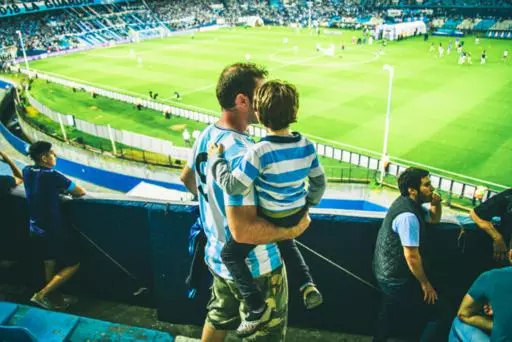
Football is much more than a sport in Argentina: it is a central part of local culture and everyday conversations. Whether you are watching a match in a bar, visiting a stadium, or simply chatting with Argentinians, you will quickly hear expressions connected to football, passion, and social life.
Understanding these phrases will help you follow conversations and experience one of Argentina’s biggest cultural traditions.
Football Vocabulary
Aguante
Meaning: Support, encouragement, or showing loyalty to someone or something.
Pronunciation: ah-GWAN-te.
Example:
¡Aguante Argentina!
“Go Argentina!” / “Argentina all the way!”
You will often hear aguante at football matches, but it is also used more broadly to show support for a person, team, place, or idea.
Hincha
Meaning: Fan or supporter.
Pronunciation: EEN-cha.
Example:
Soy hincha de Boca.
“I am a Boca fan.”
In Argentina, a hincha is not just someone who watches football; it often implies a strong emotional connection with a team.
La cancha
Meaning: The stadium or football field.
Pronunciation: la CAN-cha.
Example:
Vamos a la cancha el domingo.
“We are going to the stadium on Sunday.”
While cancha can simply mean “field” in Spanish, in Argentina it commonly refers to attending a football match.
Crack
Meaning: Someone excellent, a star, or a very talented person.
Pronunciation: crack.
Example:
Messi es un crack.
“Messi is a star.”
This word is commonly used to praise athletes, but it can also describe anyone who is exceptionally good at something.
Goleada
Meaning: A big win with many goals.
Pronunciation: go-le-AH-da.
Example:
Fue una goleada histórica.
“It was a historic victory.”
A useful word to understand football conversations, especially after an important match.
Social Expressions You Will Hear Often
Vamos
Meaning: Let’s go, come on, or a celebration of excitement.
Pronunciation: VA-mos.
Example:
¡Vamos Argentina!
“Let’s go Argentina!”
Depending on the context, vamos can express encouragement, celebration, or motivation.
Genio
Meaning: Genius, great person, or someone admired.
Pronunciation: GEH-nee-oh.
Example:
Gracias, sos un genio.
“Thanks, you are amazing.”
A friendly way to compliment someone, often used in everyday interactions.
Maestro
Meaning: Master, expert, or a friendly way to praise someone.
Pronunciation: ma-ES-tro.
Example:
Gracias, maestro.
“Thanks, legend.”
Despite its literal meaning, Argentinians often use maestro casually with people they appreciate, including service workers or strangers who have helped them.
Sos un capo
Meaning: You are great / you are a legend.
Pronunciation: sos un CA-po.
Example:
Me ayudaste mucho, sos un capo.
“You helped me a lot, you’re a legend.”
A very Argentine expression used to show appreciation or admiration.
Football and social expressions are a big part of how Argentinians communicate. Learning a few of these phrases will not only help you understand conversations but also give you a glimpse into the passion, humor, and friendliness that are part of everyday life in Argentina.
For more cultural tips before your trip, discover our guide to Argentine customs travelers should know.
Words to Be Careful With
Argentine slang is one of the most expressive aspects of local culture, but some words can change meaning completely depending on the context, tone, and relationship between speakers. Expressions that sound friendly among friends may be inappropriate with strangers or in formal situations.
Here are some Argentine words and phrases that travelers should use carefully.
Boludo / Boluda
Meaning: Dude, friend, or idiot (depending on the situation).
One of the most famous examples of Argentine slang, boludo can be confusing for visitors. Among close friends, it is often used affectionately:
Che, boludo, ¿todo bien?
“Hey dude, how are you?”
However, when said to someone you do not know well or with an aggressive tone, it can become offensive. When in doubt, it is better to avoid using it until you understand the local context.
Coger
Meaning in Argentina: To have sex.
This is one of the most important words for Spanish speakers to know before visiting Argentina. While coger means “to take” or “to grab” in many Spanish-speaking countries, in Argentina it has a sexual meaning.
Instead, travelers should usually use:
- Tomar → to take (a taxi, bus, drink).
- Agarrar → to grab or take.
Example:
Instead of:
Voy a coger un taxi.
Say:
Voy a tomar un taxi.
Concha
Meaning: A vulgar expression referring to female anatomy.
Although this word can appear in some regional expressions or phrases, it is generally considered vulgar in Argentina. A common phrase you may hear is:
La concha de la lora.
This is an expression of frustration or surprise, but it is considered strong language and is not appropriate in formal situations.
Negro / Negra
Meaning: A nickname or term of affection in some contexts.
In Argentina, negro or negra can sometimes be used as a friendly nickname among couples, family members, or close friends, regardless of someone’s actual appearance.
However, because meanings depend heavily on the relationship and context, travelers should avoid using it themselves unless they understand how it is being used.
Use Slang According to the Situation
A good rule for travelers is to first listen and observe how locals use informal expressions. Argentine Spanish is very warm and expressive, but the same word can sound friendly, humorous, or disrespectful depending on who says it and how it is said.
For more tips on understanding local communication, including gestures and expressions, check our guide to Argentine hand gestures.
Frequently Asked Questions
What does “che” mean in Argentina?
In Argentina, “che” is an informal expression used to get someone’s attention, similar to “hey” or “mate” in English. It can also be used in a friendly way when speaking with someone, as in “Che, ¿todo bien?” (“Hey, how are you?”). It is one of the most recognizable Argentine slang words.
What is lunfardo?
Lunfardo is a collection of informal words and expressions that developed in Buenos Aires in the late 19th century, influenced by immigration and local culture. Many lunfardo terms, such as laburo (work) and bondi (bus), became part of everyday Argentine Spanish.
How do Argentines say cool?
Argentinians use several expressions to say something is cool or great. Common options include “buenísimo” (excellent), “genial” (great), “copado” (cool or nice), and “una masa” (awesome, very informal). The best choice depends on the situation and how casual the conversation is.
Is Argentine Spanish hard to understand?
Argentine Spanish can be challenging at first because of its unique pronunciation, voseo (using vos instead of tú), and many local expressions. However, once travelers become familiar with common slang words and the Argentine accent, everyday conversations become much easier to follow.