- 1. The Real Challenge Is Isolation, Not Crime
- 2. Planning for the Emptiness
- 3. Where to Base Yourself
- 4. Hiking Alone: What’s Sensible and What Isn’t
- 5. Getting Around Alone
- 6. The Single Supplement, and How to Avoid It
- 7. Independent, Guided or Group: Choosing Your Style
- 8. How Long to Give It, and When to Go
- 9. Frequently Asked Questions
- Is Patagonia good for solo travel?
- Is it safe to hike alone in Patagonia?
- What is the best base for a solo traveler in Patagonia?
- How can solo travelers avoid the single supplement in Patagonia?
- Should a solo traveler book a guided trip or travel independently in Patagonia?
- When is the best time for solo travel in Patagonia?
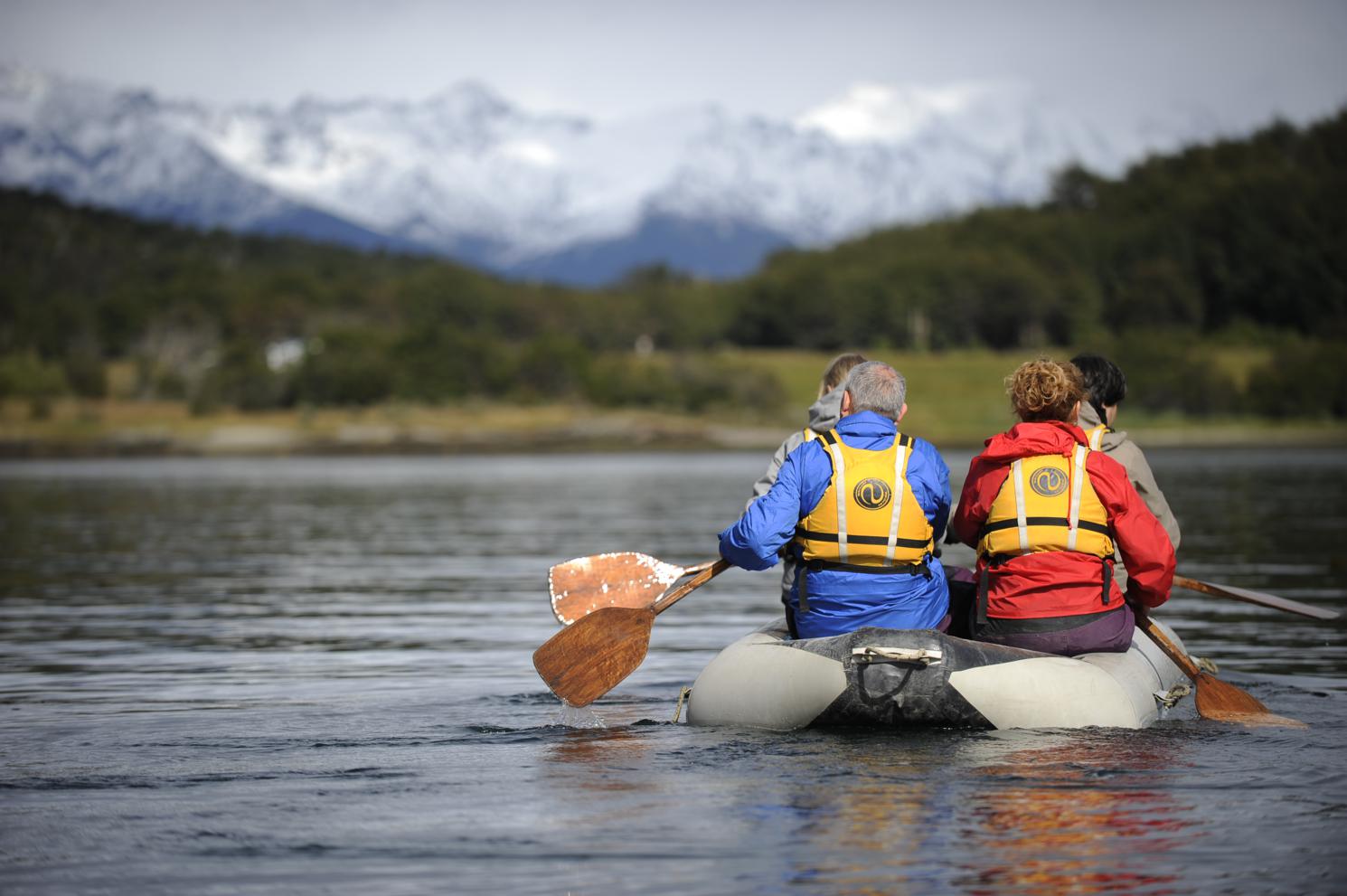
Patagonia turns out to be one of the great places to travel alone, and the travelers who do it rarely expected to enjoy it as much as they do.
The reason is partly the landscape and partly the culture: this is a region of independent travelers from everywhere, where a solo hiker walking into a café in muddy boots attracts precisely no attention, and where the trailheads and hostel kitchens generate conversation whenever you want it.
But solo travel here is not the same as solo travel in a European city, and the advice that applies there is largely irrelevant here. Patagonia’s real challenge is not who you’ll meet — it’s the emptiness, the distance and the weather.
So this is a complete guide to solo travel in Patagonia for independent travelers: what to actually plan for, how the logistics work alone, where to base yourself, and how to get the balance of solitude and company right.
It’s written for the person deciding whether to go alone, and for the one who has already decided and wants to do it well — the difference between the two being entirely a matter of preparation.
The short version, before the detail: Patagonia is straightforward for a solo traveler who plans for the remoteness rather than the crowd. Here are the Patagonia solo traveler tips that actually matter — the essentials of solo Patagonia planning and what to know before you go.
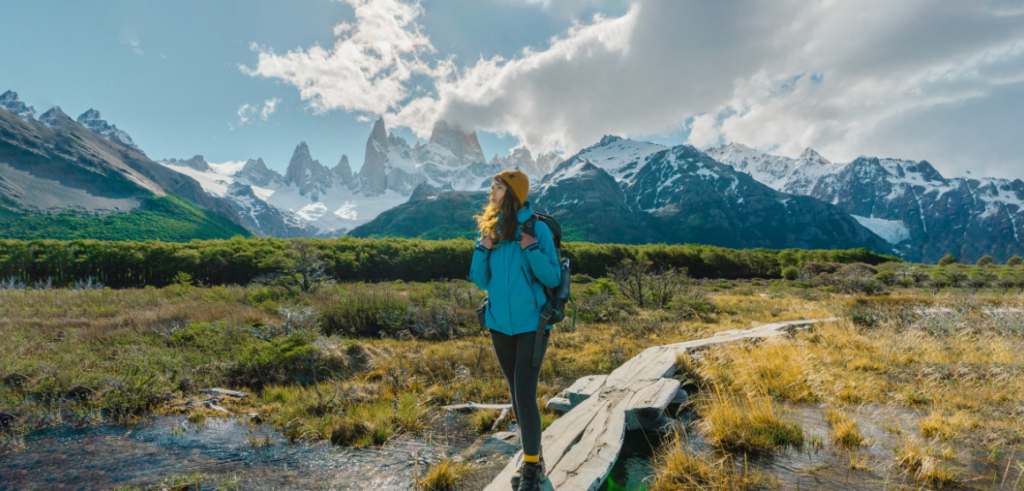
Patagonia is one of the most rewarding places in South America to travel alone — and one that rewards preparation more than caution.
1. The Real Challenge Is Isolation, Not Crime
The most useful thing to understand about solo travel in Patagonia is that the usual worries don’t apply, and a different set does.
Argentina and Chile are among the safer countries in South America, and Patagonia is among the safer regions within them. The towns that serve travelers — El Calafate, El Chaltén, Puerto Natales, Ushuaia — are small, tourism-dependent, and entirely used to solo visitors of every nationality.
What actually requires planning is isolation, not crime. Patagonia is enormous and nearly empty. There are trails where the next hiker is a long way behind you, roads with no traffic for an hour, and valleys with no signal at all.
In that context the question isn’t who might harm you — it’s who would know if something went wrong. A twisted ankle three hours from a trailhead is a real problem when nobody is expecting you back.
This reframes the whole idea of solo preparation here. The competent solo traveler in Patagonia is not the cautious one, avoiding busy streets after dark. It’s the prepared one, who told someone the plan and packed for the weather.
Big cities are the exception. Buenos Aires or Santiago, where most Patagonia trips begin, warrant ordinary big-city awareness — but the region itself is not where that risk lives.
2. Planning for the Emptiness
Because the risk is remoteness, the protocol for a solo traveler is simple, specific, and worth following without exception.
Tell your accommodation your route and your expected return time each day. In a region this empty, someone knowing where you’ve gone is worth more than any other precaution.
Register at park offices where required, start early, and carry more warmth and food than the morning suggests. And set a turnaround time before you leave — a fixed hour at which you turn back regardless of how close the summit feels.
Download offline maps for every area before you lose signal, because large parts of Patagonia have no mobile signal and you cannot rely on live navigation. Buy an eSIM before you arrive for the places that do have coverage.
Confirm your travel insurance includes genuine medical evacuation cover and doesn’t exclude your activities — the broader pre-trip checklist in how to prepare for a trip applies with extra weight when you’re travelling alone.

Solo safety in Patagonia is about a plan and a turnaround time, not about avoiding crowds.
3. Where to Base Yourself
Your choice of base shapes a solo trip more than almost any other decision, because it determines how easily you can fill your days without organising transport.
El Chaltén is the standout for solo travelers. Every trail starts at the edge of the village, so you need no vehicle and no organised tour to have a full, spectacular day — and it’s small, walkable, and full of independent travelers.
El Calafate is larger and more town-like, with good infrastructure and easy access to the Perito Moreno Glacier through well-organised excursions, which suits solo travelers who’d rather join something than arrange it.
Puerto Natales is the gateway to Torres del Paine and a natural gathering point for trekkers, with a strong hostel culture where solo travelers meet easily. Ushuaia is a proper small city, good for boat trips and wildlife rather than long solitary walks.
The principle across all of them: bases where activities begin on foot are far easier alone than bases where everything requires a transfer. It’s why El Chaltén is so beloved by solo travelers and why remote lodges, however beautiful, can feel constraining without a car or a group.
4. Hiking Alone: What’s Sensible and What Isn’t
Most solo travelers come to Patagonia to walk, so this deserves specifics rather than blanket caution.
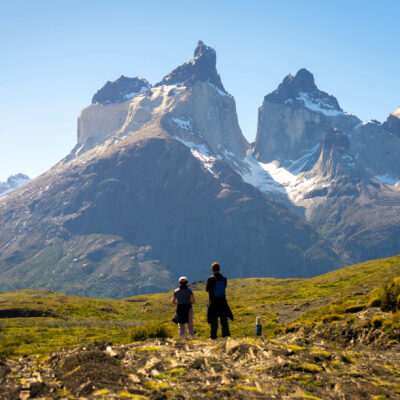
Plenty of trails are entirely reasonable alone. The day hikes around El Chaltén are well marked, popular enough that you’ll meet others regularly, and start straight from town. The busier routes in Torres del Paine are similar — in high season you’re rarely alone for long.
What warrants more thought is the remote end: long exposed routes, early-season conditions, anything involving a mountain pass, or trails where you might not see another person for hours.
For those, the protocol matters most, and a private guide costs less than most people assume while removing the risk entirely on the days it counts. A hybrid works well — independent days on the popular trails, a guide for the demanding ones.
Weather is the variable that catches people out. Patagonia can turn from sunshine to sleet in an hour, and being alone removes your margin for a bad decision. The willingness to turn around is the most important skill a solo hiker brings.
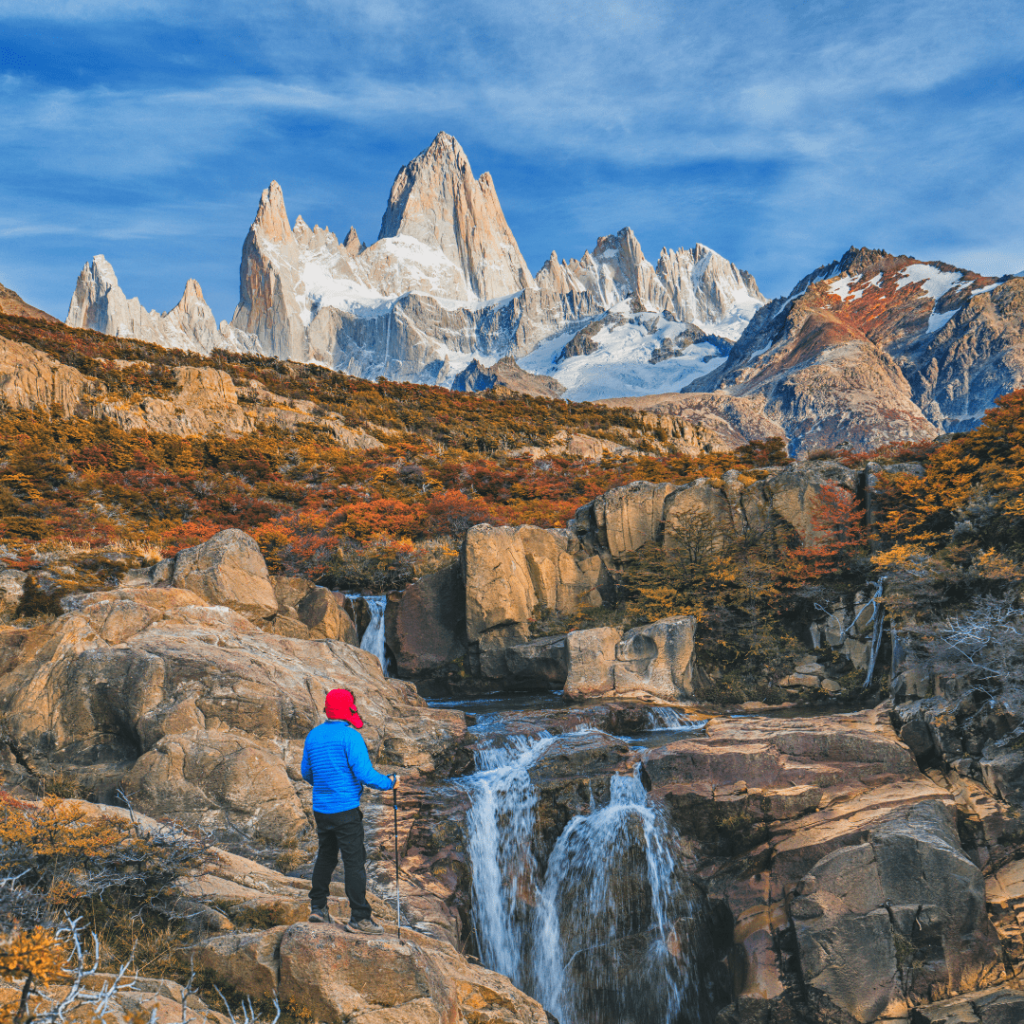
Many Patagonia trails are well suited to solo hiking — the judgement is knowing which ones aren’t.
5. Getting Around Alone
Transport is where solo logistics in Patagonia actually bite, and it’s the most underestimated part of planning.
Distances are long and public transport is thin. The El Calafate–El Chaltén road takes about three hours; reaching Torres del Paine from Argentina takes five to seven with a border crossing. Scheduled buses connect the main towns and are safe and comfortable, but infrequent, so a missed connection can cost a day.
Self-driving gives freedom but carries the isolation risk in its purest form: long empty roads, gravel sections, and limited signal. It’s entirely doable, but a breakdown alone is a genuine inconvenience rather than a minor one.
Shared transfers arranged through an operator are the middle path, and they’re what most solo travelers use for the long legs — you get the connection without the logistics or the risk.
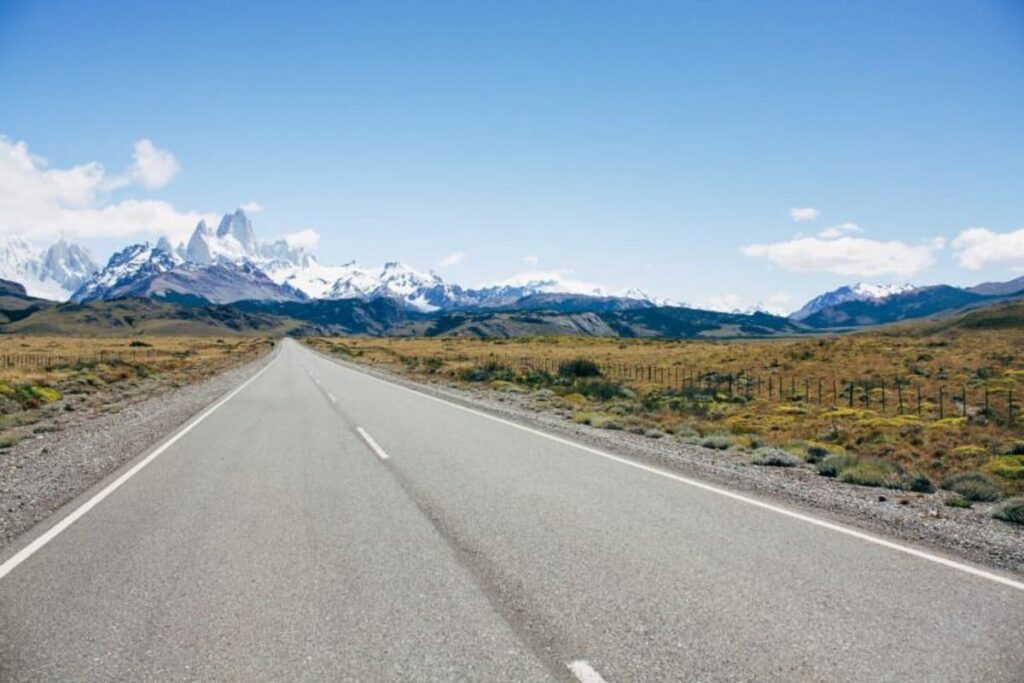
Self-driving gives freedom but carries the isolation risk in its purest form — plan the empty legs deliberately.
Two habits worth adopting: build buffer time around every connection, and download offline maps before you leave a town with signal. Never rely on coverage you haven’t verified.
6. The Single Supplement, and How to Avoid It
The one cost that disproportionately affects solo travelers isn’t transport or activities — it’s the single supplement, and it catches people out.
Because most accommodation and tours are priced on two people sharing, travelling alone often carries a surcharge for a room to yourself. Across a two-week trip, it’s the biggest single difference between solo and paired travel.
There are two ways around it. Hostels and guesthouses in the main towns often have single or dorm options that avoid the supplement entirely, and Patagonia’s hostels are unusually good — well run, popular with independent travelers of all ages, and the easiest place to meet people.
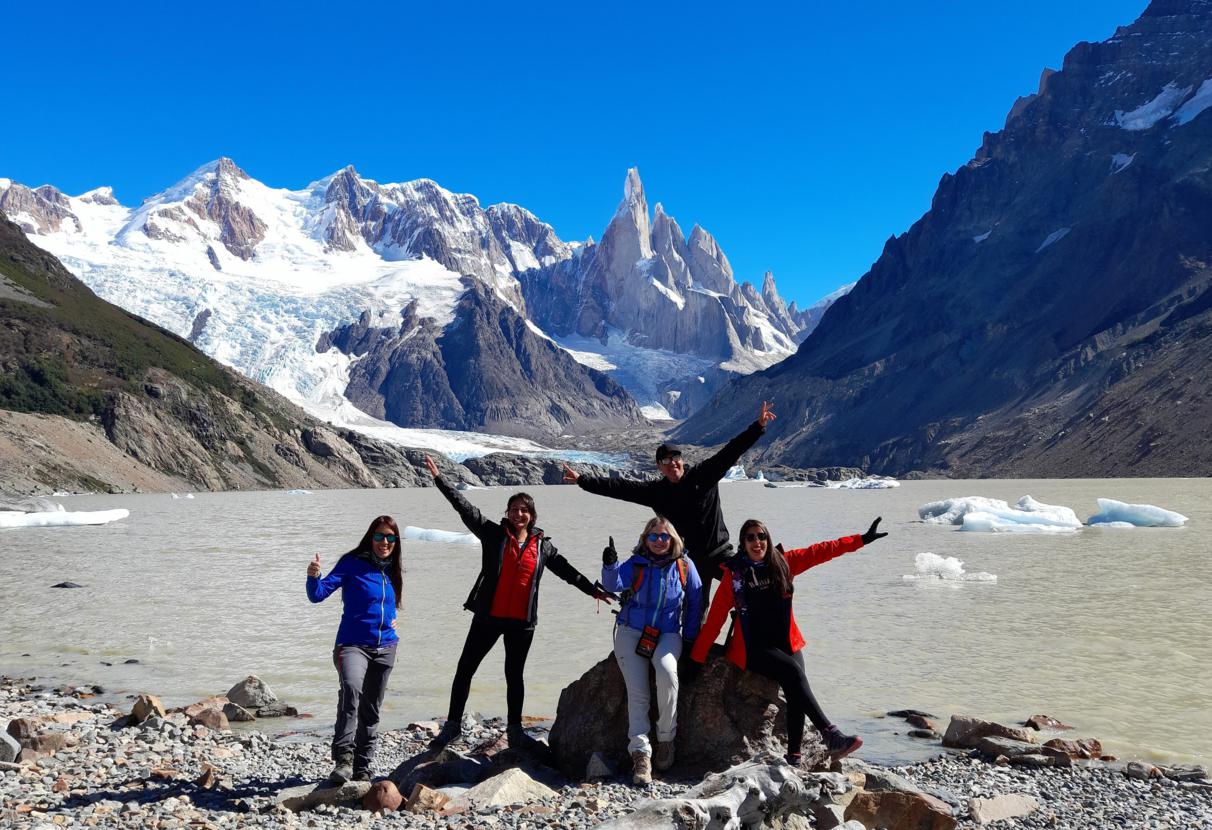
The other is a group departure, where sharing a room removes the supplement. Because group tours in Patagonia are made up overwhelmingly of solo travelers, this is less of a compromise than it sounds.
We cover how those departures work in group tours available in Patagonia, and where they go in our guide to the best places for a group trip to Patagonia.
7. Independent, Guided or Group: Choosing Your Style
Solo travel in Patagonia isn’t one thing, and the right structure depends on how much you want to organise versus how much you want handled.
Fully independent travel — booking your own transport, lodging and trails — gives maximum freedom and suits confident travelers who enjoy the logistics. The trade-off is the effort and the exposure on the remote days.
Privately guided travel keeps your solo freedom while removing the risk and the planning: your own pace, your own dates, and a guide who handles the weather and the transfers. It costs more but suits travelers who want independence without the logistics.
A group departure trades some control for company, a fixed price, and zero organising — and it removes the single supplement. For solo travelers who want the social side, it’s often the best value.
Many solo travelers end up mixing all three: independent days in El Chaltén, a guide for Torres del Paine, and a group for a specific excursion. The structure should fit the trip, not the other way around.
| Style | Best for | The trade-off |
| Fully independent | Confident travelers who enjoy logistics | More effort and exposure on remote days |
| Privately guided | Solo freedom without the planning or risk | Higher cost per day |
| Group departure | Company, value and no organising | Fixed dates and pace; removes the single supplement |

Fully independent, privately guided, or a small group — the right style depends on how much you want to organise.
8. How Long to Give It, and When to Go
Timing and length matter more for solo travelers than for groups, because both affect how much company is around and how much margin you have.
On season: December to February is often the best choice for a solo traveler, even though it’s the busiest period. More people on the trails means more company, easier transport connections, and more margin if something goes wrong. November and March are quieter and cheaper, but emptier and less predictable — a trade worth making consciously.
On length: give it nine to eleven days minimum. Solo travel absorbs long transfer days less comfortably than paired travel, so a compressed itinerary means more hours alone in vehicles and fewer on the trails.
How the days actually add up across El Calafate, El Chaltén and Torres del Paine is something we lay out in how long you should plan for Patagonia.
If you’d like a second opinion on whether your plan is realistic to do alone, our travel specialists will tell you honestly — including which days would be better with a guide and which are perfectly fine on your own — and our Patagonia tours can be shaped around a solo traveler rather than a couple.
The travelers who do this well aren’t the ones who worried most. They’re the ones who planned for the emptiness rather than for the crowd.
9. Frequently Asked Questions
Is Patagonia good for solo travel?
Very much so — it’s one of the best places in South America to travel alone. The towns that serve travelers are small, safe and full of independent visitors, and the trailheads and hostel kitchens make company easy to find whenever you want it.
The key is understanding that Patagonia’s real challenge is isolation, not crime. The usual solo-travel worries about busy streets barely apply; what matters is the emptiness, the distance and the weather.
Plan for the remoteness — tell someone your route, carry the right gear, set a turnaround time — and Patagonia is as straightforward for a solo traveler as it is spectacular.
Is it safe to hike alone in Patagonia?
On many trails, yes. The day hikes around El Chaltén are well marked, popular enough that you’ll meet others regularly, and start straight from town, as are the busier sections of Torres del Paine in high season.
What warrants more caution is the remote end — long exposed routes, early-season conditions, mountain passes, or trails where you might not see anyone for hours.
Follow the protocol regardless: register where required, tell your accommodation your route and return time, start early, carry more warmth and food than you expect to need, and set a turnaround time. For the hardest routes, a private guide removes the risk entirely.
What is the best base for a solo traveler in Patagonia?
El Chaltén, without much competition. Every trail starts at the edge of the village, so you need no vehicle and no organised tour to have a full day in the mountains, and it’s small, walkable and full of independent travelers.
El Calafate suits solo travelers who prefer joining well-organised excursions, and Puerto Natales is a natural gathering point for trekkers heading into Torres del Paine.
The general rule is to choose bases where activities begin on foot. Remote lodges are beautiful but can feel constraining alone, since there’s nowhere to walk to and no easy way to change your plans.
How can solo travelers avoid the single supplement in Patagonia?
Two ways. Hostels and guesthouses in the main towns often have single or dorm options that avoid the supplement entirely, and Patagonia’s hostels are unusually good — well run and popular with independent travelers of all ages.
The other is joining a group departure, where sharing a room removes the supplement. Because Patagonia group tours are made up overwhelmingly of solo travelers, you’re among the people the trip was designed for rather than the odd one out.
The single supplement is the biggest cost difference between solo and paired travel, so it’s worth asking about upfront and planning around deliberately.
Should a solo traveler book a guided trip or travel independently in Patagonia?
It depends on how much you want to organise. Fully independent travel gives maximum freedom and suits confident travelers who enjoy the logistics, with the trade-off of more effort and more exposure on remote days.
Privately guided travel keeps your solo freedom while removing the planning and the risk — your pace, your dates, and a guide who handles the weather and transfers. A group departure trades some control for company and removes the single supplement.
Many solo travelers mix all three across one trip: independent days in El Chaltén, a guide for the harder sections, and a group for a specific excursion. The structure should fit the trip rather than the reverse.
When is the best time for solo travel in Patagonia?
December to February is often the best choice for solo travelers, even though it’s the busiest period. More people on the trails means more company, easier transport connections, and more margin if something goes wrong.
November and March are quieter, cheaper and beautiful in their own way, but the trails are emptier and the weather less predictable — a trade worth making consciously when travelling alone.
Give the trip nine to eleven days minimum, since solo travel absorbs long transfer days less comfortably than paired travel. A compressed itinerary means more hours alone in vehicles and fewer on the trails.