- 1. What the W Trek Actually Is
- 2. What the O Circuit Actually Is
- 3. The Core Differences, Side by Side
- 4. Difficulty: How Much Harder Is the O?
- 5. The Season Constraint That Decides for Many People
- 6. Booking: The Part That Catches Everyone Out
- 7. Comfort: Refugios, Camping and the Lodge-Based Alternative
- 8. Which Should You Choose?
- 9. What You Miss by Choosing the W
- 10. Fitting the Trek Into a Wider Patagonia Trip
- 11. Frequently Asked Questions
- What is the difference between the W Trek and the O Circuit?
- Is the O Circuit much harder than the W Trek?
- When can you hike the O Circuit in Torres del Paine?
- Do I need to book refugios and campsites in advance?
- Can you do the O Circuit in either direction?
- Can I see Torres del Paine without doing a multi-day trek?
Almost everyone who decides to trek Torres del Paine arrives at the same fork within a day of starting to research it.
There are two great routes through the park. One is famous, four or five days long, and walked by tens of thousands of people each season. The other takes eight or nine days, loops the entire massif, and sees a fraction of the traffic.
The W Trek and the O Circuit. And the choice between them is genuinely consequential — it determines how long you’re away, how hard the trip is, when you can go, and how far ahead you need to book.
What makes it harder is that the two aren’t really competitors. The O Circuit contains the W. Every O hiker walks the entire W route as part of the loop, plus a remote back section that the W never touches.
So the real question isn’t which route is better. It’s whether the back section — three or four extra days, one serious mountain pass, and considerably more solitude — is worth what it costs you in time, fitness and planning.
This Torres del Paine circuit comparison lays out both routes honestly: distances, days, difficulty, seasons, booking realities, and who each one genuinely suits.
It’s written for the traveler weighing W trek or O circuit in Patagonia and not finding a straight answer — including the option most guides forget to mention, which is doing neither and still seeing the park’s best views.
Let’s start with what each route actually is.
1. What the W Trek Actually Is
The W Trek takes its name from its shape. Traced on a map, the route zigzags into three valleys on the southern face of the Paine massif, forming a rough W.
Those three arms are the park’s greatest hits, and that’s not marketing — it’s geography. Each one leads to something extraordinary.
The eastern arm climbs to the Base of the Towers, the three granite spires the park is named for, best reached early enough to catch them lit at sunrise.
The middle arm ascends the French Valley, a natural amphitheatre ringed by hanging glaciers that periodically avalanche with a sound like distant thunder.
The western arm runs to Grey Glacier, where the Southern Patagonian Ice Field spills into a lake full of icebergs.
It covers roughly 80 kilometres over four to five days, with a well-developed network of refugios and campsites along the route, and it’s the most trekked trail in Chilean Patagonia by a wide margin.
Our five-day W Circuit trek follows that classic sequence — Base Las Torres, the French Valley, then Grey Glacier — with the logistics and refugio bookings handled in advance.
2. What the O Circuit Actually Is
The O Circuit — also called the Paine Circuit or simply the O — is the full loop around the Paine massif, and it’s a substantially bigger undertaking.
It covers roughly 120 to 130 kilometres over eight to nine days, with around 5,000 metres of cumulative ascent.
Critically, the O includes the entire W. You walk the same three valleys, the same towers, the same French Valley, the same Grey Glacier — plus the back side of the massif that the W never reaches.
That back section is the whole point. It runs through Serón, Dickson and Los Perros — remote, quiet camps on the northern flank, where the crowds simply vanish and the landscape feels genuinely wild.
Its centrepiece is the John Garner Pass, the highest and hardest point of the trek, which drops you onto a viewpoint over the Grey Glacier and the ice field beyond that many hikers describe as the finest view in Patagonia.
One rule that surprises people: the O must be walked counter-clockwise. The direction is mandatory, enforced by the park, and it exists for safety on the pass and to manage traffic on a narrow trail.
3. The Core Differences, Side by Side
Before getting into the nuance, here is the comparison in the terms that actually drive the decision.
| W Trek | O Circuit | |
| Days on trail | 4–5 | 8–9 |
| Distance | Around 80 km | Around 120–130 km |
| Route shape | Three valleys, out and back | Full loop around the massif |
| Includes the W? | Yes, it is the W | Yes — the O contains the entire W |
| Hardest section | The climb to Base Las Torres | John Garner Pass |
| Direction | Either way | Counter-clockwise only, mandatory |
| Season | Roughly October to April | 1 November to 31 March only |
| Crowds | Busy, especially in peak season | Quiet on the back section |
| Comfort options | Refugios throughout; lodge-based versions exist | Basic camps on the back side |
Read that table and the shape of the decision becomes clear. The O isn’t a harder version of the W — it’s the W plus a wilder, more committing four days.
4. Difficulty: How Much Harder Is the O?
Meaningfully harder, and not only because of the distance.
The W is demanding but forgiving. Days run roughly five to nine hours, the trails are well maintained, refugios sell hot meals, and if a day goes badly you’re rarely far from help or a bed.
The O changes the equation in three ways. It’s twice as long, which means cumulative fatigue rather than a single hard day. The back section is remote, with fewer facilities and no easy exit.
And then there’s the John Garner Pass — a long, steep climb, frequently in snow, wind or both, followed by a punishing descent that hikers consistently rate the toughest day of the trek.
You don’t need technical skills for either route. No ropes, no crampons, no mountaineering experience. What the O demands is endurance, self-sufficiency, and the ability to keep going on day six when your legs have opinions.
A useful test: if you’ve comfortably done multi-day treks before and enjoyed the fifth day, the O will suit you. If your longest hike was a full day and it hurt, start with the W.
There is no shame in the W. It contains the park’s three greatest sights, and the vast majority of trekkers who walk it come home entirely satisfied.
5. The Season Constraint That Decides for Many People
Here’s the practical detail that quietly settles the debate for a lot of travelers, and it’s often buried in the small print.
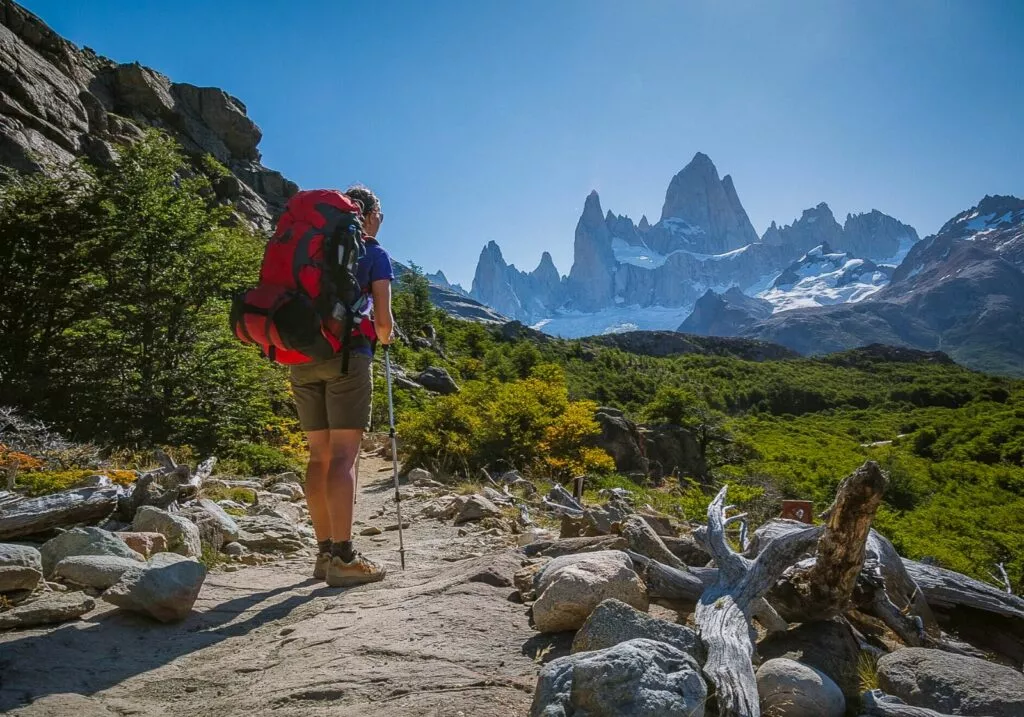
The O Circuit is only open from 1 November to 31 March. Outside that window it is closed, without exception, because the back section becomes genuinely dangerous — snow on the pass, high rivers, and camps that aren’t staffed.
The W has a considerably longer season, running roughly from October into April, and lodge-based versions of the route can operate at the margins when the full trek can’t.
So if your travel dates fall in October or April, the decision is made for you. The O simply isn’t available.
Within the O’s window, the sub-seasons differ too. November brings clear views and quiet trails, but often lingering snow on the John Garner Pass.
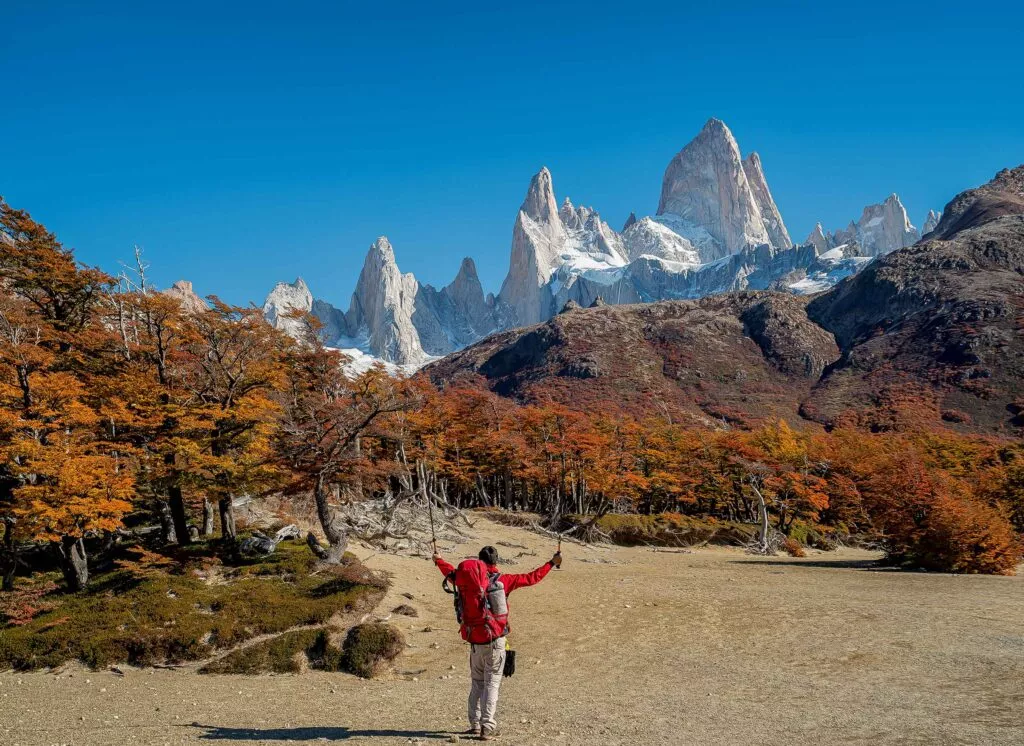
December to February is peak: long days, warmer temperatures, the strongest winds of the year, and campsites that book out entirely. March brings golden autumn colour, cooler air, fewer hikers and better availability.
For the O specifically, many experienced trekkers consider March the sweet spot — the pass is clear, the crowds have thinned, and the light is at its best.
6. Booking: The Part That Catches Everyone Out
Whichever route you choose, this is the section that most often turns a dream trek into a disappointment, and it has nothing to do with fitness.
You cannot simply turn up and walk either route. Every night on the trail must be spent at a designated refugio or campsite, every one of those must be reserved in advance, and the park requires proof of your bookings before it will let you start.
The refugios and camps are operated by different concessionaires, which means you may be booking across more than one system to assemble a single continuous itinerary.
And they sell out. Peak-season dates for the most popular camps are frequently gone many months ahead, and the O has a tighter squeeze because the back-side camps are small and there are fewer of them.
Get one night wrong and the whole chain breaks — the trek is a sequence, and a missing link means a route that doesn’t connect.
This is the strongest practical argument for booking the trek as an organised trip rather than assembling it yourself, particularly for the O.
Our Torres del Paine tours and Patagonia hiking trips handle that sequencing, which removes the single most common reason people don’t end up trekking at all.
7. Comfort: Refugios, Camping and the Lodge-Based Alternative
Accommodation on the trail is where the two routes diverge most in daily experience.
On the W, the refugio network is genuinely good. You can walk the entire route sleeping in bunk rooms with hot showers and cooked dinners, carrying only a daypack — which transforms the trek from an expedition into a demanding but comfortable walk.
That option barely exists on the O’s back section. Serón, Dickson and Los Perros are simpler, more remote, and more camping-oriented, so you carry more and expect less.
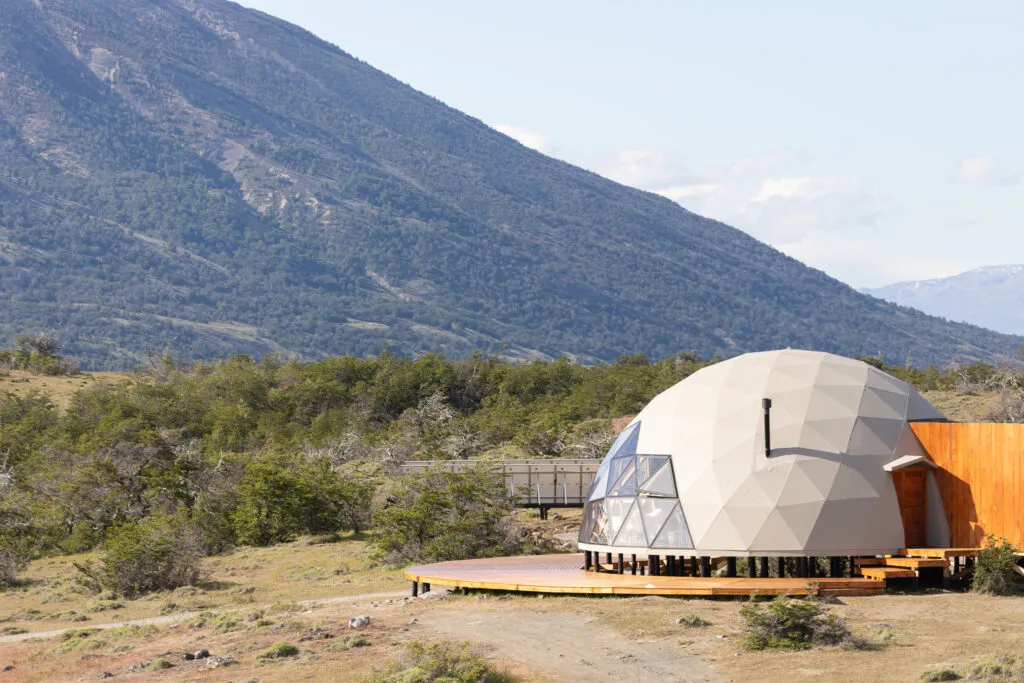
There’s also a third route that most comparisons ignore entirely: the lodge-based version, where you stay at a hotel inside or near the park and hike the W’s best sections as day walks.
You sleep in a proper bed every night, carry nothing, and still reach the base of the towers, the French Valley viewpoints and Grey Glacier — the three things that make the trek famous.
For a large number of travelers, this is quietly the right answer. It delivers the park’s greatest views without the logistics, the weight or the bunk rooms.
Anyone choosing between W and O purely because they assume those are the only options should know this third path exists.
8. Which Should You Choose?
Strip it down and the decision comes to four questions, in this order.
How many days do you have? The O needs eight or nine on the trail, which realistically means twelve to fourteen for the whole Patagonia trip once you add transfers and a weather buffer. If you can’t give it that, choose the W.
When are you travelling? If your dates fall outside 1 November to 31 March, the O is closed and the question answers itself.
How much multi-day trekking have you actually done? The O rewards experience and punishes optimism, particularly on the pass.
And what are you there for? If it’s the iconic views, the W delivers all three. If it’s solitude and the feeling of a genuine expedition, only the back section provides it.
| Choose the… | If you are… |
| W Trek | A first-time Patagonia trekker; short on days; travelling in the shoulder months; wanting refugios and hot meals |
| O Circuit | An experienced multi-day trekker; travelling Nov–Mar; with 12–14 days total; seeking solitude over comfort |
| Lodge-based hiking | Wanting the park’s best views without carrying a pack or sleeping in bunks |
9. What You Miss by Choosing the W
In the interest of an honest comparison, it’s worth being clear about what the W leaves out — because it isn’t nothing.
You miss the back side of the massif entirely: Serón’s open valleys, Dickson’s glacier-fed lake, and the forested climb toward Los Perros. This is the quiet Patagonia the photographs rarely show.
You miss the John Garner Pass, and with it the view down onto the Grey Glacier and the Southern Patagonian Ice Field — a moment that O hikers describe with a kind of reverence the W simply doesn’t produce.
And you miss the particular satisfaction of a full circuit, of returning to where you started having walked around an entire mountain range.
What you don’t miss is any of the park’s three headline sights. The towers, the French Valley and Grey Glacier are all on the W, and the O adds to them rather than improving on them.
So the W is not a compromise version. It’s the complete highlights package, and the O is the highlights package plus a wilderness expedition attached to the front of it.
Framed that way, most travelers find the choice easier than they expected.
10. Fitting the Trek Into a Wider Patagonia Trip
Neither route exists in isolation, and this is where planning tends to go wrong.
The trek itself is not the whole trip. You need to reach Puerto Natales, get into the park, get out again, and leave a buffer day for the weather — which in Patagonia is not optional padding but a realistic allowance.
So the W is best understood as a four-to-five-day module inside an eight-to-ten-day trip, and the O as an eight-to-nine-day module inside a twelve-to-fourteen-day one.
Most travelers combine the trek with the Argentine side, since El Calafate and the Perito Moreno Glacier sit within reach across the border, and El Chaltén offers world-class day hiking with no reservations required.
That combination also provides a useful safety valve: if the weather closes the trail, the rest of the trip continues rather than collapsing.
Our Argentine Patagonia tours and Chilean Patagonia tours are routinely built to sit either side of a trek, so the crossing is a formality rather than a lost day.
If you’re unsure which route your dates and fitness actually allow, our travel specialists will tell you plainly — including when the answer is the W, or neither.
11. Frequently Asked Questions
What is the difference between the W Trek and the O Circuit?
The W Trek is a roughly 80-kilometre route over four to five days, zigzagging into three valleys on the southern face of the Paine massif — the Base of the Towers, the French Valley, and Grey Glacier.
The O Circuit is a full loop around the massif, roughly 120 to 130 kilometres over eight to nine days, and it includes the entire W route plus a remote back section through Serón, Dickson and Los Perros.
So they aren’t alternatives in the usual sense: the O contains the W. The real question is whether the extra three or four days of wilderness are worth the additional time, fitness and planning.
Is the O Circuit much harder than the W Trek?
Yes, meaningfully. The O is roughly twice the distance with around 5,000 metres of cumulative ascent, and the fatigue compounds across eight or nine consecutive days rather than four or five.
The back section is remote, with fewer facilities and no easy exit, and its centrepiece — the John Garner Pass — is a long, steep climb often in snow or high wind, followed by a demanding descent that most hikers rate the hardest day.
Neither route needs technical skills or equipment. The O simply demands endurance and self-sufficiency. If you’ve enjoyed multi-day treks before, it will suit you; if not, the W is the better choice.
When can you hike the O Circuit in Torres del Paine?
The O Circuit is open only from 1 November to 31 March. Outside that window it closes entirely, because the back section becomes dangerous — snow on the John Garner Pass, high river levels, and unstaffed camps.
The W Trek has a longer season, running roughly from October into April, so travelers with shoulder-month dates often find the decision made for them.
Within the O’s window, November can still have snow on the pass, December to February is peak season with the strongest winds and fully booked camps, and March offers autumn colour, thinner crowds and better availability.
Do I need to book refugios and campsites in advance?
Yes, and this catches more people out than the difficulty does. Every night on either route must be spent at a designated refugio or campsite, each must be reserved in advance, and the park requires proof of those bookings before you start.
The sites are run by different concessionaires, so a single continuous itinerary may mean booking across more than one system.
Peak-season dates sell out many months ahead, and the O is tighter still because its back-side camps are small and few. One missing night breaks the whole sequence, which is why many trekkers book the route as an organised trip.
Can you do the O Circuit in either direction?
No. The O Circuit must be walked counter-clockwise, and the direction is mandatory rather than a recommendation. The park enforces it.
The rule exists for safety and traffic management — it governs how hikers approach the John Garner Pass and keeps movement consistent on narrow sections of the back-side trail.
It also shapes the trek’s rhythm: you walk the quiet, remote northern section first and finish along the busier W valleys, which many hikers find a satisfying progression from wilderness to the park’s famous viewpoints.
Can I see Torres del Paine without doing a multi-day trek?
Absolutely, and it’s the option most comparisons overlook. A lodge-based trip lets you stay at a hotel in or near the park and hike the W’s best sections as day walks, returning to a proper bed each night.
You still reach the Base of the Towers, the French Valley viewpoints and Grey Glacier — the three sights that make the park famous — without carrying a pack, sleeping in bunk rooms, or booking a chain of refugios.
For travelers short on time, unsure of their fitness, or simply uninterested in camping, this delivers the park’s greatest views with far less logistical friction.