- 1. Argentina as the Hub: Why Most Trips Start Here
- 2. How Multi-Country Tours Work: The Two Ways One Is Built
- 3. Crossing from Argentina into Chile
- 4. Crossing from Argentina into Brazil at Iguazú
- 5. Reaching Peru and Bolivia: The Flights North
- 6. Who Books the International Flights Between Countries?
- 7. Visas and Entry Requirements, Country by Country
- 8. Luggage, Logistics and the Things That Trip People Up
- 9. How Long a Multi-Country Trip Actually Takes
- 10. Seasons: The Constraint That Shapes Everything
- 11. Who Holds It All Together
- 12. Frequently Asked Questions
- How do multi-country South America tours work with Argentina?
- Do I need separate visas for a multi-country South America trip?
- Who books the flights between countries on a multi-country tour?
- How many days do I need for a multi-country trip through Argentina?
- What is the biggest operational risk on a multi-country trip?
- When is the best time for a multi-country South America trip?
It’s a fair question, and a surprisingly hard one to get answered honestly.
You’ve decided South America deserves more than one country, and Argentina is on the list — probably at the centre of it. What you can’t find is a plain explanation of how the thing actually works.
How do you get from Buenos Aires to Machu Picchu? Do you need separate visas? Who books the flights between countries? What happens at the borders, and who’s responsible when a connection breaks?
These are operational questions, and most travel content skips straight past them to the pretty photographs. That’s a mistake, because on a multi-country trip the operations are the trip. Get them wrong and the whole thing frays.
So this is the mechanical answer to how multi-country South America tours work in Argentina — the plumbing, not the poetry.
We’ll use Argentina as the hub, because for most travelers it is one: Buenos Aires is one of the continent’s main gateways, and a great many South American itineraries begin or end there.
Then we’ll work outward — the border crossings, the internal flights, the visas, the luggage, the seasons, and the single most important question of all, which is who actually holds the trip together when you’re moving between countries.
Understanding the Argentina multi-country tour logistics before you book is the difference between a seamless journey and an expensive series of disconnected trips. Here’s how it’s really done.
1. Argentina as the Hub: Why Most Trips Start Here
Before the mechanics, the geography of it, because it explains everything that follows.
Buenos Aires is one of South America’s primary international gateways. Direct flights arrive from North America, Europe and across the region, which is why so many multi-country itineraries are built to begin or end there.
That makes Argentina a natural anchor. You land in Buenos Aires, use it as a base to acclimatise and explore, and then radiate outward to the other countries from a hub with good connections.
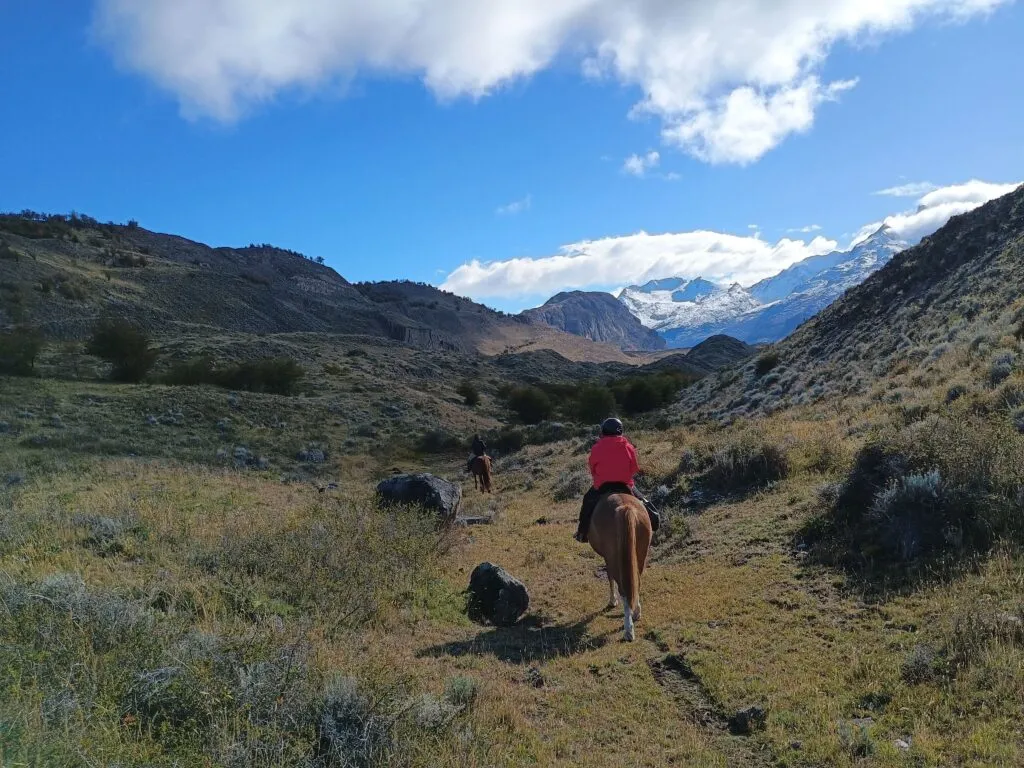
It also has two of the continent’s marquee sights inside its own borders — Patagonia and the Iguazú Falls — which means Argentina rarely functions as a mere transit point. It earns real days of its own.
And crucially, Argentina shares borders or short flights with the countries travelers most often combine: Chile alongside it the length of the Andes, Brazil at Iguazú, and Bolivia and Peru a manageable hop north.
This is why our multi-country South America tours so often use Argentina as the spine, with Buenos Aires as the point of arrival and the other countries built around it.
2. How Multi-Country Tours Work: The Two Ways One Is Built
Understanding how multi-country tours work in planning terms starts here: there are essentially two structures, and knowing which you’re being sold matters enormously.
The first is the single-operator model. One company designs and runs the entire trip across every country, with its own teams or trusted partners in each, and one point of contact who owns the whole thing end to end.
The second is the assembled model, where different countries are booked through different, unconnected providers — sometimes without you fully realising it — and stitched together at the seams.
The difference is invisible while everything goes smoothly. It becomes very visible the moment a flight cancels and you need someone to rebuild the connection between country two and country three.
Under the single-operator model, one team fixes it. Under the assembled model, each provider points at the other, and you become the coordinator of your own emergency.
This is the single most important operational fact about multi-country travel, and it’s the one most worth asking about directly before you book.
Everything else in this article — flights, borders, visas — is easier under the first model and harder under the second.
3. Crossing from Argentina into Chile
Argentina and Chile is the most common pairing, because Patagonia straddles both, and the crossing is usually done overland rather than by air.
The classic route links El Calafate on the Argentine side with Torres del Paine on the Chilean side — a five-to-seven-hour journey with a land border in the middle.
Operationally, this is a coordinated transfer, not something you improvise. A vehicle takes you to the border, you clear Argentine exit formalities, cross, then clear Chilean entry, and continue on the other side.
Two details matter. Chile requires a free agricultural declaration completed online within seventy-two hours of entry, and you cannot carry fresh fruit, meat, seeds or plants across.
And on entry you’re handed a small tourism card — the Tarjeta Única Migratoria — which exempts foreign visitors from the nineteen per cent VAT on hotels when paying in US dollars. Keep it; it’s worth real money.
Because the timing is rigid and the crossings are few, this leg is where good coordination earns its keep. Our Argentina and Chile combined tours are built around exactly this crossing so the border becomes a formality rather than a lost day.
4. Crossing from Argentina into Brazil at Iguazú
The Argentina-Brazil combination usually happens at one remarkable place: the Iguazú Falls, which sit on the border between the two countries.
The falls have an Argentine side and a Brazilian side, and they are genuinely different experiences — the Argentine side puts you among the cataracts, while the Brazilian side gives the panoramic view.
Seeing both means crossing an international border for the day, which is routine here but still a formal crossing with passport control.
The operational wrinkle is the visa. From April 2025, citizens of the United States, Canada, Australia and Japan need a visa to enter Brazil, which changes the calculation of whether to cross for the Brazilian side.
For some travelers the Argentine side alone is enough. For others, the full experience — and onward travel to Rio — justifies arranging the visa in advance.
This is exactly the kind of detail a good operator flags early rather than at the border. Our Buenos Aires, Iguazú and Rio itineraries build the crossing and its requirements into the plan from the start.

5. Reaching Peru and Bolivia: The Flights North
Peru and Bolivia are too far from Argentina to reach overland in any sensible way, so these legs are flown — and that changes the logistics.
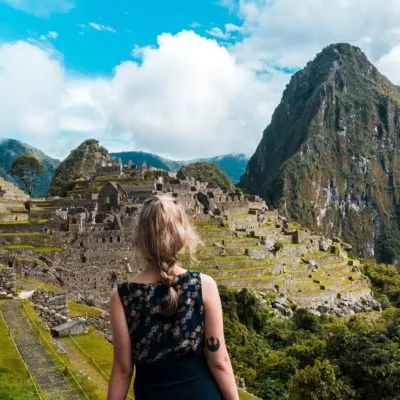
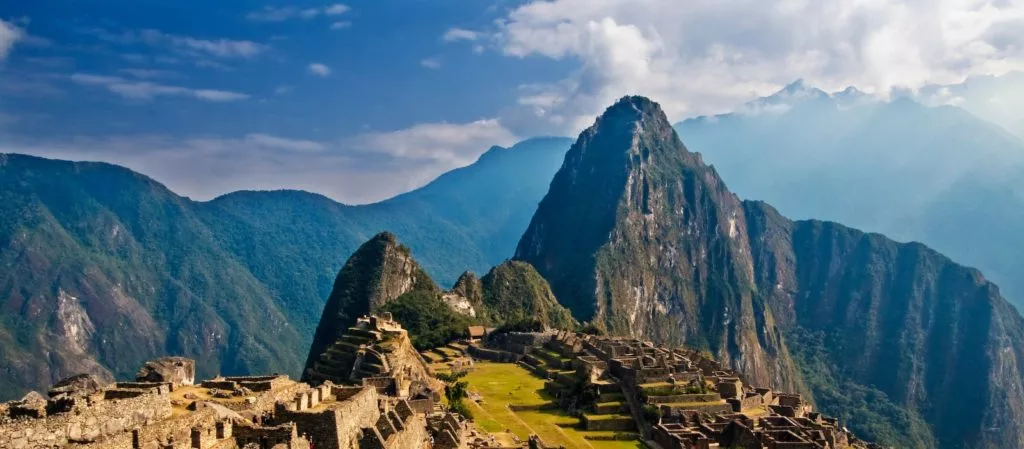
Buenos Aires connects by air to Lima, and from Lima you fly on to Cusco, the gateway to Machu Picchu. It’s two flights, and the connection timing matters.
Bolivia is reached by air too, often via a northern Argentine hub, and it comes with one non-negotiable requirement: yellow fever vaccination is mandatory for entry.
The altitude is the real operational challenge here, and it’s why sequencing matters more on these routes than on any other. Cusco sits at roughly 3,400 metres and La Paz higher still.
Arriving at altitude straight from sea-level Buenos Aires on day one is a decision, not a detail — a badly ordered itinerary can cost you your first two days to altitude sickness.
A well-built route stages the ascent and books the internal flights as one connected sequence. Our Patagonia and Machu Picchu journeys and Argentina, Chile and Bolivia routes are built with the altitude and the flight logic in mind.
6. Who Books the International Flights Between Countries?
This is one of the most practical questions, and the answer separates a real tour from a loose collection of bookings.
In a properly run multi-country trip, the operator books the internal South American flights — Buenos Aires to Lima, El Calafate transfers, the hop to Cusco — as part of the itinerary, sequenced to connect.
This matters because regional flight schedules are thinner than travelers expect, and the right connection is often not the obvious one. Getting it wrong means a missed day or an unplanned overnight.
What the operator typically does not book is your international flight into and out of South America — the long-haul legs from home. Those are usually yours to arrange, though a good operator will tell you exactly which cities to fly into and out of.
The important coordination point is the open-jaw ticket. On a multi-country trip you often fly into one city and out of another — into Buenos Aires, say, and home from Lima — and booking your long-haul flights to match saves a wasted backtrack.
A good operator tells you this before you buy your international tickets, not after. If nobody mentions your arrival and departure cities early, that’s a sign the coordination isn’t as tight as it should be.

7. Visas and Entry Requirements, Country by Country
Each border is its own jurisdiction, and the rules differ, which is why multi-country trips need checking country by country rather than once.
Argentina requires no tourist visa for most North American, British and European travelers — just a passport and the usual supporting items.
Chile is similar for most nationalities, with the agricultural declaration on entry. Brazil, as of April 2025, requires a visa for US, Canadian, Australian and Japanese citizens.
Bolivia requires yellow fever vaccination and, for some nationalities, a visa. Peru is generally visa-free for the travelers we most often work with.
The table below is an orientation, not a substitute for checking your own nationality against current rules, which change.
| Country | Visa (US/UK/EU) | The operational detail that matters |
| Argentina | Not required | Proof of onward travel and accommodation can be asked for |
| Chile | Not required | Free agricultural declaration within 72h; keep the tourism card |
| Brazil | Required (from Apr 2025) | Arrange in advance if crossing for the Brazilian side or Rio |
| Peru | Not required | No major entry hurdle; altitude is the real issue |
| Bolivia | Yellow fever mandatory | Vaccination certificate required; some nationalities need a visa |
A single operator running the whole trip should brief you on every one of these before you fly, as one coordinated document rather than five separate scrambles.
8. Luggage, Logistics and the Things That Trip People Up
The small operational details cause more multi-country grief than the big ones, and they’re easy to plan around once you know them.
Baggage allowances vary by carrier and are often lower on regional flights than on your international one — a case that flew from London without comment can incur an excess fee on a domestic Argentine or Peruvian leg.
Currencies change at every border. Argentine pesos, Chilean pesos, Brazilian reais, Peruvian soles, Bolivian bolivianos — five countries, five currencies, and US dollars useful throughout but not universally.
Altitude, again, on the northern legs. And connection buffers: a multi-country trip with tight same-day flight connections is fragile, and a good itinerary builds in slack.
Then there’s the quiet one — pace. The temptation is to add one more country because it’s “right there” on the map. It rarely is, and each border costs the better part of a day.
The most common multi-country mistake is not a logistical failure but an ambition one: too many countries in too few days, which turns a journey into a series of airports.
9. How Long a Multi-Country Trip Actually Takes
Time is the real constraint, and the honest numbers are longer than most itineraries imply, because every border consumes roughly a day.
Two countries work well in twelve to fourteen days — Argentina and Chile across Patagonia, or Argentina and Peru with Buenos Aires, Patagonia and Machu Picchu.
Three countries realistically need eighteen to twenty-one days if you want rest days rather than a relay. Four, or anything including Antarctica, wants twenty-four days or more.
| Countries | Days | Example route through Argentina |
| 2 | 12–14 | Argentina + Chile (both sides of Patagonia); or Argentina + Peru |
| 2 | 14–16 | Argentina + Brazil: Buenos Aires, Iguazú and Rio |
| 3 | 18–21 | Argentina, Chile and Peru, with rest days built in |
| 3–4 / Antarctica | 24+ | The full journey, unhurried, with weather slack |
The reliable rule is to subtract a country and add nights. Our South America Essentials route across Brazil, Argentina and Peru exists at three weeks for exactly this reason — it doesn’t try to compress what can’t be compressed.
10. Seasons: The Constraint That Shapes Everything
Multi-country South America has a scheduling problem that single-country trips don’t: the regions peak at different, sometimes conflicting, times.
Patagonia’s season runs from late October to March. The Peruvian highlands are driest and best from May to September — the near-opposite window.
That direct conflict is why so many bucket-list routes combining Patagonia and Machu Picchu end up compromised in one place or the other.
The Brazilian coast is best avoided at the peak of the southern summer heat, while the Amazon and the Pantanal follow their own wet and dry rhythms entirely.
There is no month that is ideal everywhere, which is exactly why the shoulder seasons matter. November and March tend to catch the most regions in reasonable form at once.
Choosing dates that work across your specific combination of countries is one of the harder pieces of the puzzle, and one of the clearest arguments for planning with someone who does it routinely.
11. Who Holds It All Together
Everything in this article converges on a single point, so it’s worth stating plainly.
A multi-country trip is a chain, and a chain is only as strong as its connections. The flights, the borders, the transfers between countries — these are the links, and they’re where trips break.
The value of a single operator running the whole journey isn’t convenience. It’s that when one link fails — a cancelled flight, a closed border, a strike — one team owns the problem and rebuilds the chain, in real time, across countries.
With an assembled trip, nobody owns the connections. The Argentine provider handles Argentina, the Peruvian provider handles Peru, and the gap between them is your problem at the worst possible moment.
This is the operational case for the single-operator model, and it’s stronger on a multi-country trip than on any single-country one, precisely because there are more links to break.
It’s the model our multi-country journeys are built on, and if you’d like to understand how a specific combination would actually be sequenced, our travel specialists can walk you through the mechanics before anything is booked.
12. Frequently Asked Questions
How do multi-country South America tours work with Argentina?
Argentina usually functions as the hub. You arrive in Buenos Aires — one of the continent’s main international gateways — spend real days there and in Patagonia or Iguazú, and then radiate outward to the other countries by coordinated land crossings or internal flights.
Chile is typically reached overland across Patagonia; Brazil at the Iguazú border; Peru and Bolivia by air to the north.
In a well-run tour, a single operator books the internal flights, coordinates the border crossings, and briefs you on the visa and entry requirements for each country as one connected plan rather than five separate ones.
Do I need separate visas for a multi-country South America trip?
It depends on your nationality and which countries you combine, which is why multi-country trips need checking border by border. Argentina, Chile and Peru are generally visa-free for US, UK and EU travelers.
Brazil, however, has required a visa for US, Canadian, Australian and Japanese citizens since April 2025, and Bolivia requires mandatory yellow fever vaccination plus, for some nationalities, a visa.
A good operator provides a single briefing covering every country on your route before you fly. Always confirm your own nationality against current rules, as entry requirements change with some frequency.
Who books the flights between countries on a multi-country tour?
In a properly run tour, the operator books the internal South American flights — such as Buenos Aires to Lima and onward to Cusco — as part of the itinerary, sequenced so the connections actually work.
What you normally arrange yourself is the long-haul international flight into and out of the continent, though the operator should tell you exactly which cities to use.
The key detail is the open-jaw ticket: multi-country trips often fly into one city and out of another, so book your international flights to match. A good operator flags this before you buy, not after.
How many days do I need for a multi-country trip through Argentina?
Two countries work well in twelve to fourteen days — Argentina and Chile across Patagonia, or Argentina and Peru taking in Buenos Aires, Patagonia and Machu Picchu.
Three countries realistically need eighteen to twenty-one days if you want rest days rather than a relay between airports, and four countries or an Antarctica extension wants twenty-four or more.
Every border effectively costs a day once you count the flight, the transfer and the arrival, so the reliable rule is to subtract a country and add nights rather than cramming more in.
What is the biggest operational risk on a multi-country trip?
The connections between countries — the international flights, border crossings and transfers — because those are the links where trips break, and there are more of them than on a single-country journey.
The risk multiplies when the trip is assembled from unconnected providers, because nobody owns the gaps between countries. When a flight cancels, each provider points at the other and you become your own coordinator.
The mitigation is a single operator running the whole journey, so that when one link fails, one team rebuilds the chain in real time across borders. It’s the strongest operational argument for how these trips should be structured.
When is the best time for a multi-country South America trip?
There’s no month that suits the whole continent, which is the central challenge. Patagonia runs from late October to March, while the Peruvian highlands are best from May to September — nearly opposite windows.
That conflict is why routes combining Patagonia and Machu Picchu are often compromised in one place unless carefully planned.
November and March are usually the best compromises, catching the most regions in reasonable form at once. Choosing dates that work across your specific combination of countries is one of the strongest reasons to plan with a specialist.