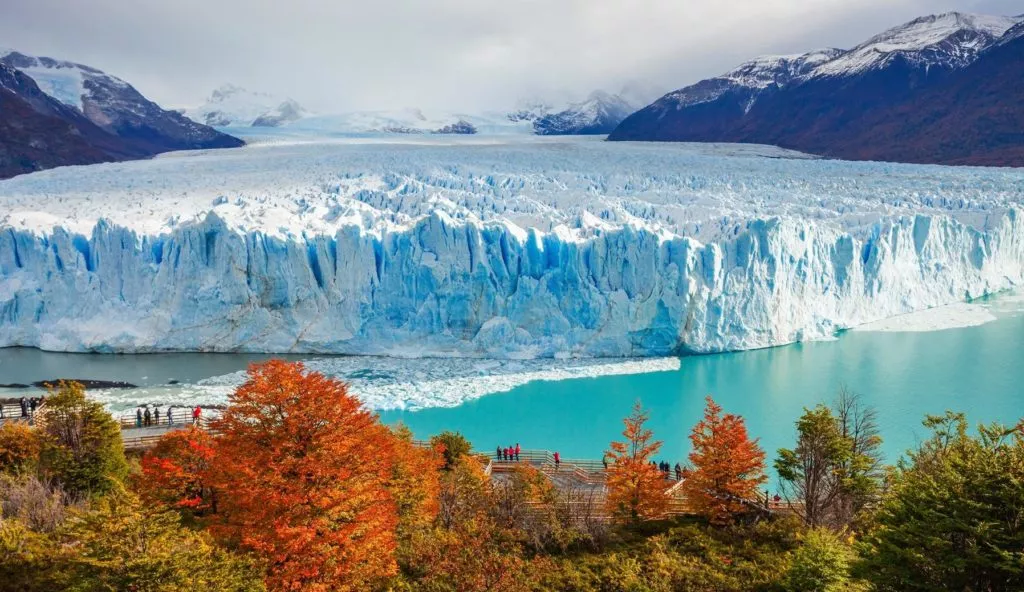
Patagonia rewards the traveler who chooses the right company more than almost any destination on earth.
There is no shortage of companies willing to sell you a trip to Patagonia. There is a real shortage of ways to tell them apart. Every one of them promises the same glaciers, the same granite towers, the same “expert local guides,” and from a homepage they are almost impossible to distinguish.
That matters more here than almost anywhere, because Patagonia is unforgiving. It is enormous and remote, its weather cancels plans without warning, and its best lodges and guides are booked through relationships rather than booking sites. A weak company doesn’t just deliver a lesser trip — it delivers a broken one.
So this is an honest look at the best tour companies for traveling to Patagonia, and how to tell the good ones apart. A word of transparency first: Say Hueque is one of the companies discussed below, and this is our blog. Rather than pretend to be a neutral referee, we’ve tried to be straight about what each company actually is and who it genuinely suits.
We’ll start with what separates a great Patagonia operator from a merely expensive one, then look at three companies that approach the region in very different ways — a direct specialist operator, a marketplace of local agents, and a continent-wide custom operator.
The aim isn’t to crown a winner. It’s to help you understand which kind of company fits the trip you actually want, so you can choose with confidence — whether that’s us or not.
1. What Actually Separates a Great Patagonia Company
Before the names, the criteria — because the differences that matter are the ones nobody advertises.
The first is ground presence. There is a meaningful difference between a company with its own team in Patagonia and one that quietly resells your trip to a local partner it has never met. It becomes visible on the day something breaks — a cancelled flight, a closed pass — when one fixes your day in real time and the other emails someone and waits.
The second is sequencing. Patagonia’s distances are punishing and its internal flights limited, so the order of a route determines how much of your trip you spend in transit. A well-sequenced twelve days can deliver more than a badly sequenced eighteen.
The third is flexibility. The weather will break at least one plan on any honest itinerary, and the difference between an inconvenience and a ruined week is whether someone local can rebuild the day by lunchtime.
And the fourth is honesty about fit — a good company tells you when your trip sits outside its expertise rather than booking it anyway. These are the same tests we apply in our checklist for what to look for in a travel agency, and they matter with extra force in Patagonia.
2. Say Hueque — The Patagonia Specialist
We’ll go first, and try to earn it rather than assert it. Say Hueque has spent more than two decades designing trips across Argentine and Chilean Patagonia, with Patagonia as its centre of gravity rather than one region among many.
The defining feature is that the company operates with its own teams on the ground rather than passing travelers to partners it doesn’t control. That is what makes it possible to rebuild a day when a flight cancels or the wind closes a trail — the single most valuable thing a Patagonia company can offer.
Everything is tailor-made. There are no fixed departures to slot you into, which matters disproportionately in a region where your dates determine what is even possible. Routes are built around your pace, your interests and your fitness, and reshaped as the weather demands.
The range spans the whole region, from the Argentine Patagonia tours around El Calafate and El Chaltén to the Chilean Patagonia tours in Torres del Paine, and the accommodation spans every level, as we explain in our guide to Patagonia accommodation tiers.
The honest limit: if your trip’s core is somewhere we don’t specialise — Colombia, Ecuador, the Galápagos — with Patagonia as an afterthought, we are not the obvious choice, and we’d tell you so. Say Hueque is the right answer when Patagonia is the reason you’re going.

Say Hueque operates with its own teams across Argentine and Chilean Patagonia rather than reselling to partners.
3. TravelLocal — A Marketplace of Local Agents
TravelLocal takes a fundamentally different approach, and it’s worth understanding the distinction before comparing it to a direct operator.
It is not itself a Patagonia operator. It is a booking platform that connects travelers directly with vetted local travel companies across more than 80 destinations — “global travel, local experts,” in its own words — letting you plan your trip with a local agent and book through the platform’s protection.
For travelers who like the idea of dealing with a local company but want the reassurance of a booking intermediary and its reviews, the model has genuine appeal. You get local knowledge with a layer of platform security on top.
The trade-off is the one every marketplace carries: TravelLocal is the intermediary, not the operator, so the quality of your Patagonia trip depends on which local company you’re matched with, and that varies. You can see their approach at travellocal.com.
It suits travelers who want to shop a local agent through a trusted platform rather than deal with an operator directly — a different preference from those who want one accountable team, as we discuss in our guide to the top custom travel agencies for Argentina trips.
Now you can choose your type of trip:
Type of trip




4. South America Adventures — The Continent-Wide Operator
South America Adventures rounds out the three with another distinct model: a custom operator whose reach spans the entire continent rather than concentrating on the Southern Cone.
The company designs custom itineraries across South America, with the stated ambition of knowing “every corner” of the continent and revealing the unexpected. For a traveler whose Patagonia trip is really part of a wider South American journey, that breadth is a genuine advantage.
Where a specialist concentrates its knowledge in a few regions, an operator like this spreads it across many — which is exactly right for a trip that combines Patagonia with, say, Peru or the Amazon, and less pointed for one that lives entirely in the far south.
You can explore their range at southamericaadventures.travel. The choice between breadth and depth is the real one here, and it depends less on the company than on the shape of your trip — a theme we develop in our guide to the best companies for multi-country tours in South America.
How the Three Compare
None of these companies is objectively best. They’re built differently, and the right one depends on the shape of your trip rather than a ranking.
| Company | Model | Strongest for |
| Say Hueque | Direct operator, own teams in-country | Trips centred on Argentine and Chilean Patagonia |
| TravelLocal | Marketplace of vetted local agents | Booking a local company through a trusted platform |
| South America Adventures | Continent-wide custom operator | Patagonia as part of a wider South America trip |
The short version: if Patagonia is the trip and on-the-ground support matters most, choose the specialist. If you want a local agent through a platform, choose the marketplace. If Patagonia is one leg of a continental journey, breadth may serve you better.
How to Choose the Right One for You
Strip away the branding and the decision comes down to a few honest questions.
Is Patagonia the heart of your trip, or one region among several? A specialist rewards the former; a continent-wide operator or marketplace may suit the latter.
How much does on-the-ground support matter to you? In a region where the weather regularly rewrites plans, a company with its own team fixes problems a marketplace can only relay.
And do you want one accountable team from first enquiry to last transfer, or the reassurance of a booking platform? Neither is wrong — they answer different preferences.
Whichever way you lean, ask any company the same hard questions: do you have your own team in Patagonia, what happens if the weather closes a trail, and what would you talk me out of? The answers sort the serious from the rest. If you’d like to run them past us, our travel specialists answer them before anyone mentions a price, and the Patagonia travel guide is a good place to picture the region first.
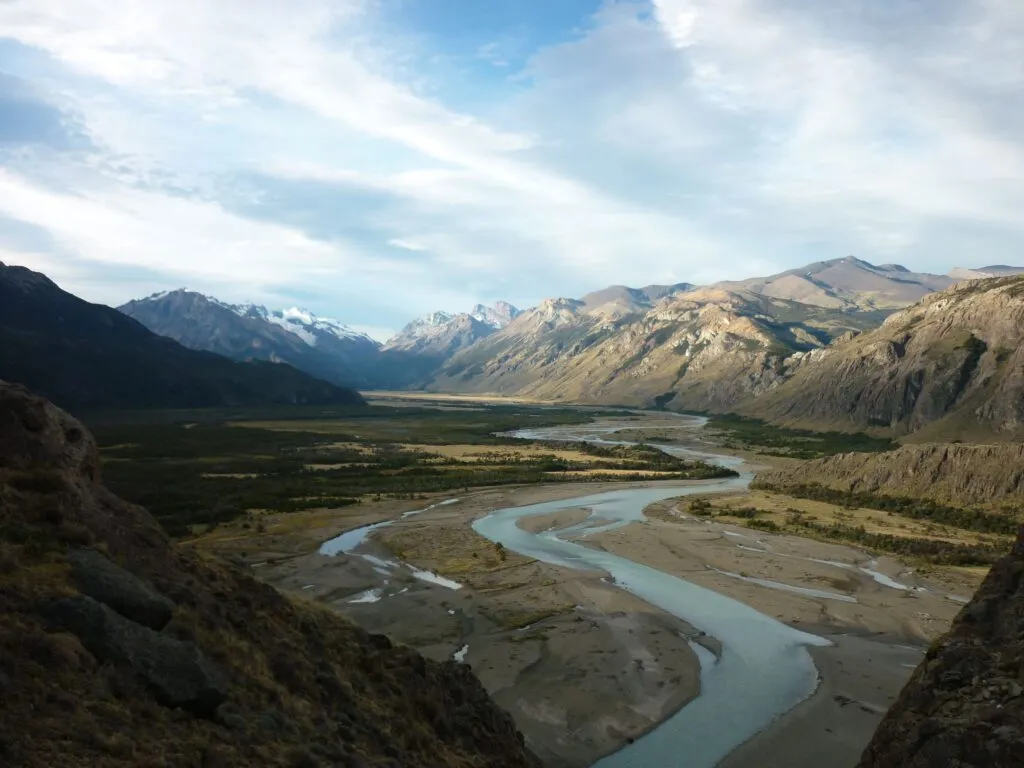
The right company depends on whether Patagonia is your whole trip or one chapter of a bigger journey.
5. FAQs about The Best Tour Companies for Traveling to Patagonia
There is no single best company — only the best one for the shape of your trip. For a journey centred on Argentine and Chilean Patagonia, a specialist operator with its own teams on the ground, such as Say Hueque, offers the strongest support when the weather rewrites plans.
For travelers who prefer to book a local agent through a trusted platform, a marketplace like TravelLocal fits, while a continent-wide operator like South America Adventures suits a Patagonia trip that’s part of a wider South America journey.
The right choice depends on whether Patagonia is the heart of your trip or one leg of a bigger one, and on how much you value one accountable team over a booking intermediary.
Because Patagonia is unforgiving in ways that expose a company’s weaknesses. It is enormous and remote, its internal flights are limited, and its weather cancels excursions without warning.
The best lodges and guides are booked through relationships months ahead, not through booking sites, so a company’s access and sequencing determine whether your trip works at all.
And when something breaks — as it will — the difference between a good company and a bad one is whether someone local can rebuild your day by lunchtime. That is why the operator matters more here than at almost any destination.
For Patagonia specifically, usually yes. A specialist concentrates its knowledge, relationships and on-the-ground teams in a few regions, which is exactly what a weather-dependent, logistically demanding destination rewards.
A big global platform offers reach and choice, but it is an intermediary, and the quality of your trip depends on which underlying company you’re matched with.
If Patagonia is the reason you’re traveling, the depth of a specialist tends to matter more than the breadth of a platform. If it’s one stop on a longer trip, the calculation shifts.
Arrange comprehensive travel insurance before departure and confirm what overseas medical treatment, evacuation and pre-existing conditions are covered. If you take prescription medication, bring an adequate supply and the appropriate documentation. It is also useful to know how to contact local assistance at each stage of your journey.
It depends on what you value. A marketplace connects you with a local agent through a platform that adds reviews and booking protection, which reassures travelers who want local knowledge with an intermediary’s safety net.
A direct operator with its own teams is accountable for the whole trip and can rebuild your day in real time when something breaks — which happens often in Patagonia.
For a region this remote and weather-dependent, many travelers prefer the single accountable team of a direct operator; for simpler trips, a marketplace is perfectly reasonable.
Eight to twelve months ahead for peak dates between December and February, and earlier still for specific lodges or guides. Patagonia’s best properties are small and fill first, so late booking usually means compromise rather than savings.
A good company will tell you honestly whether your dates and ambitions fit together, and will book the scarce inventory — lodges, internal flights, guides — as one connected sequence.
Booking early isn’t urgency for its own sake; in a region with this little inventory and this much demand, it’s simply how the trip you want stays intact.
No. Patagonia is famous for trekking, but hiking is only one way to experience it. Your itinerary can combine walks appropriate to your fitness level with boat trips, glacier viewpoints, scenic drives, wildlife experiences and plenty of downtim
It can be. Solo travelers can combine independent time with guided excursions, shared activities, private transfers and local assistance. This creates a comfortable middle ground: plenty of freedom and privacy without having to handle every logistical detail alone.