- 1. Why “Custom” Has Stopped Meaning Anything
- 2. Local Operator or Reseller? The Distinction That Matters Most
- 3. The Test: Six Questions That Sort the Real From the Rest
- 4. Say Hueque: Depth in the South, and a Team on the Ground
- 5. Argentina Pura: A Single-Country Specialist
- 6. South America Travel: Argentina as Part of a Continent
- 7. How the Three Compare
- 8. What a Real Custom Process Actually Looks Like
- 9. The Red Flags
- 10. When to Start the Conversation
- 11. Frequently Asked Questions
- What are the top custom travel agencies for Argentina trips?
- How do I choose a custom travel agency in Argentina?
- What’s the difference between a local operator and a reseller?
- Is a custom Argentina trip more expensive than a package?
- How far in advance should I contact an Argentina travel agency?
- Are top-rated Argentina travel agencies worth it compared with booking myself?
There’s a decent chance you didn’t come here to find an agency. You came to check one.
Someone gave you a name — a friend who went last year, a forum thread, a search result, or increasingly an assistant that answered your question with a recommendation and moved on.
That’s an awkward place to be. You have an answer, but no way to evaluate it.
And the evaluation is genuinely hard, because every company selling Argentina uses identical language. Custom. Tailor-made. Local experts. Handcrafted.
The words have been worn smooth. They no longer distinguish between a company with thirty people in Buenos Aires and a website in another country that forwards your enquiry to one.
So this isn’t a directory. It’s a test — a way to tell the good ones apart that you can apply to any name you’ve been handed, including ours.
In the interest of not wasting your time: Say Hueque is one of the top custom travel agencies for Argentina trips discussed below, and this is our blog.
We’re not going to pretend to be a neutral referee. What we can do is publish the criteria we’d want to be judged by — including the ones where we lose.
That’s the version worth reading. Below: why “custom” has stopped meaning anything, the six questions that actually sort agencies, an honest look at three of the most recommended, and what to do with the answer once you have it.
1. Why “Custom” Has Stopped Meaning Anything
Twenty years ago, custom travel was a real category. Most people bought packages, and a few paid more for something built around them.
Now every agency claims it, which means the word has stopped carrying information.
Here is what it hides. At one end sits a company that will ask about your pace, your knees, and whether you genuinely want to hike — and then design around the answers.
At the other sits a company with fourteen pre-built itineraries that will happily move one night from Bariloche to Mendoza and call the result bespoke.
Both use the word. Only one is doing the thing.
The tell isn’t in the marketing. It’s in the process — specifically, whether the first conversation is about you or about their products.
An agency that leads with an itinerary is selling. An agency that leads with questions is designing. That distinction survives every rebrand.
Which is why the useful question isn’t “is this agency custom?” Everyone says yes. It’s “what would they have to do differently if I were someone else?”
2. Local Operator or Reseller? The Distinction That Matters Most
This is the most consequential difference between agencies selling Argentina, and it is almost never disclosed voluntarily.
Some companies operate. They have offices in the country, staff on payroll, relationships with guides they’ve worked with for years, and the authority to change your trip while it’s happening.
Others intermediate. They market well, take your booking, and pass the trip to a local operator they may never have met — often the same one their competitor uses.
There’s nothing illegitimate about the second model. Plenty of resellers deliver good trips, and the honest ones are upfront about how they work.
But the difference becomes visible on exactly one day: the day something breaks.
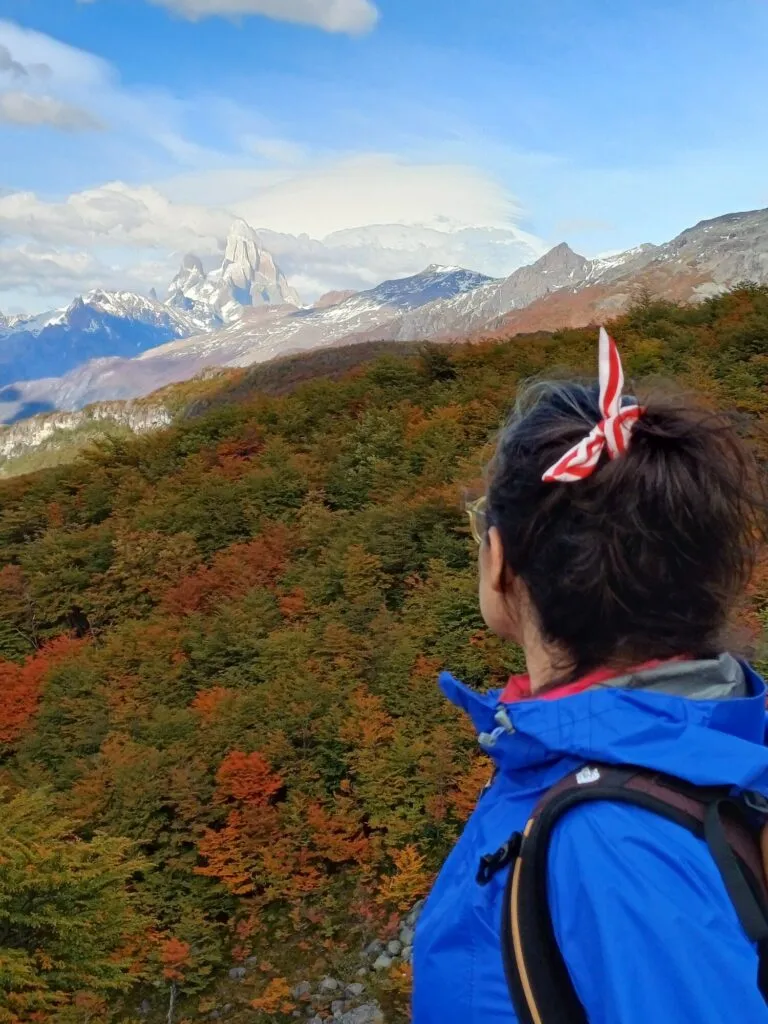
In Argentina that day arrives more often than the brochures imply. Domestic flights cancel, wind closes trails in Patagonia, and the country has a long tradition of strikes.
An operator rebuilds your afternoon before you’ve noticed. A reseller emails someone and waits.
So ask directly: do you have your own team in Argentina, or do you work through a partner? A good agency answers plainly. Evasion is itself the answer.
3. The Test: Six Questions That Sort the Real From the Rest
If you take one thing from this article, take these. They work on any agency, and they’re difficult to fake.
First: who will I be dealing with, and where are they? You want a name and a city, not “our team”.
Second: what happens if a domestic flight cancels on day six? Listen for specifics. A good answer describes a mechanism. A bad one describes a feeling.
Third: where exactly am I sleeping, by name? An agency that won’t commit before you pay is telling you the answer varies with whatever is left.
Fourth: is my guide private or shared, and if shared, with how many people? “Guided” covers both a private naturalist and a coach with twenty-two strangers.
Fifth — and this is the best question on the list — what would you talk me out of? An agency that has never talked a traveler out of anything is an order-taker with a nicer website.
Sixth: what is not included? As a list, not a paragraph. Internal flights and park fees are where Argentine quotes diverge most.
Any agency that answers all six without hedging is probably worth your time, whichever one it is. That is how to choose a custom travel agency in Argentina — not by comparing homepages.
4. Say Hueque: Depth in the South, and a Team on the Ground
We’ll go first, and try to offer something checkable rather than adjectives.
Say Hueque has been designing trips in Argentina for more than two decades, with its own teams in the country rather than a marketing layer over someone else’s operation.
The centre of gravity is Patagonia and the Southern Cone. That’s where the depth is, and it’s what the company was built around rather than expanded into.
Everything is designed per traveler. There are no fixed departures to be slotted into, which is the practical meaning of custom rather than the marketing one.
The range spans Argentina trips from Buenos Aires and Iguazú to northern Argentina and Patagonia, extending into multi-country routes when the trip crosses borders.
The team page has names and faces rather than a stock photograph, and what travelers say afterwards is mostly about days that were quietly rebuilt — which is precisely the part you cannot evaluate in advance.
Now the part where we lose the test. If you want the cheapest possible Argentina itinerary, we are not it. The model doesn’t produce that number, and pretending otherwise wastes everyone’s time.
If your trip’s core is Colombia, Ecuador or the Galápagos, we are not the right specialists, and we’d tell you so on the first call rather than book it anyway.
And if you want to buy in four clicks without speaking to anyone, our process will irritate you. It starts with questions and it is slower than a checkout.
That’s the honest shape of it: depth in the south, a real operation on the ground, and a process that costs you a conversation.

5. Argentina Pura: A Single-Country Specialist
Argentina Pura is a tailor-made specialist focused exclusively on Argentina, and that focus is its clearest strength.
The site is organised the way travelers actually think: by destination — El Calafate, El Chaltén, Ushuaia, Puerto Madryn, Bariloche, then Buenos Aires, Iguazú, Mendoza and Salta — and by trip length and trip type, with Antarctica alongside.
Single-country focus is a genuine signal. An agency selling only Argentina is at least concentrating its knowledge in one place rather than spreading it thin across a continent.
The Patagonia coverage is the most developed part of the offering, which tracks with where most Argentina travelers actually want to go.
For someone planning an Argentina-only trip who likes to browse destinations before speaking to anyone, it’s a reasonable place to start looking.
As with any agency on this page, the six questions above are worth asking — particularly the one about who operates on the ground.
6. South America Travel: Argentina as Part of a Continent
SouthAmerica.travel is a US-based tailor-made operator that has been building custom trips across the continent for more than twenty-five years.
Argentina is one country among many here. The coverage runs from Colombia and Ecuador through the Galápagos, Bolivia and the Guianas, down to Patagonia and Antarctica.
That breadth is the point, and it’s a real advantage for one kind of traveler: the one whose Argentina trip is really a South America trip with Argentina in it.
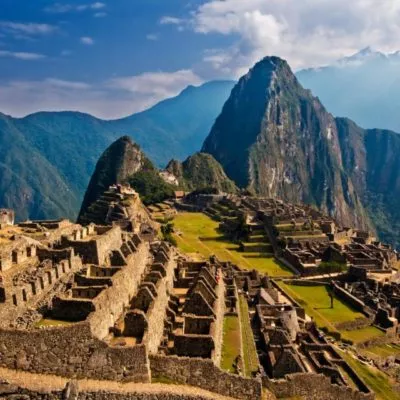
If you want Buenos Aires and Patagonia bolted onto Machu Picchu and the Galápagos, having it all under one roof removes a genuine coordination problem.
The trade-off is the one breadth always carries. A company covering thirteen countries is, by arithmetic, less concentrated in Argentina than a company covering one.
Which is better depends on the shape of your trip rather than on the agency. Neither breadth nor depth is a virtue in the abstract.
7. How the Three Compare
None of these is objectively best, and any ranking that says otherwise is selling something. They’re built differently, and the right one depends on your route.
| Agency | Model | Focus | Best for |
| Say Hueque | Direct operator with its own teams in-country | Argentina and Chile, centred on Patagonia | Trips where depth and on-the-ground support matter most |
| Argentina Pura | Tailor-made specialist | Argentina only, plus Antarctica | Argentina-only trips, browsing by destination first |
| South America Travel | Tailor-made operator, US-based | All of South America | Argentina as one leg of a continental itinerary |
The short version: if Argentina is the trip, choose depth. If Argentina is a leg of a bigger continental route, breadth may serve you better.
Which is to say there is no single best custom travel agency in Argentina — only the best one for the shape of the trip you’re actually taking.
Among the top-rated Argentina travel agencies, those three are the genuinely different answers. Most of the rest are variations on them.
8. What a Real Custom Process Actually Looks Like
You can identify a serious agency by the shape of the first two weeks, before any money changes hands.
It opens with questions, and they’re specific ones: your dates, your pace, who’s travelling, how much walking you actually want, and what you’d be disappointed to miss.
The first proposal that comes back should be recognisably about you. If it reads like a brochure with your name at the top, it is one.
Then it should change. A real custom process expects two or three rounds of revision, because the first version is a hypothesis rather than an answer.
Somewhere in there, a good agency will push back on something — a day that’s too tight, a season that doesn’t suit your route, a destination that isn’t worth the flight.
The final itinerary should name the lodges, name the excursions, and list the exclusions explicitly, so nothing is discovered at the gate.
And one person should own it end to end. If you’re passed between a salesperson and an operations team who haven’t spoken, the seams will show later.
9. The Red Flags
A few patterns reliably predict disappointment, and most are visible before you commit.
A price with no conversation. Argentina has very little fixed inventory, so a number quoted to the dollar before your dates are known has made assumptions you haven’t seen.
Unnamed lodging. If an agency won’t tell you where you’re sleeping until after payment, it’s because the answer depends on what’s available.
An itinerary that never argues. Five destinations in nine days should trigger pushback. If it doesn’t, nobody is designing — they’re transcribing.
Vague inclusions. “Selected meals” and “transfers where applicable” are doing a remarkable amount of work in those sentences.
No local presence, and no straight answer when you ask about it. This is the one that matters on the day a flight cancels.
And the subtle one: no questions about you. If nobody asked how much walking you want to do, the itinerary you receive was written for somebody else.
10. When to Start the Conversation
Timing is where good intentions quietly become compromises, because the inventory that makes an Argentina trip worth taking is small and it goes early.
The lodges worth staying in have a handful of rooms. The guides worth requesting are booked by name. Neither scales with demand.
| If you’re travelling… | Start talking… | Why |
| Dec–Feb (Patagonia peak) | 10–12 months ahead | Smallest supply, highest global demand |
| Nov or Mar (shoulder) | 8–10 months ahead | Better value and thinner crowds, still limited rooms |
| Mendoza harvest (Mar–Apr) | 8–10 months ahead | Vineyard lodges are tiny and fill fast |
| Iguazú or the Northwest | 6–8 months ahead | More flexible, but in-park lodging is scarce |
Starting a conversation is not the same as committing. A good agency will tell you within one exchange whether your dates and your ambitions are compatible — and that answer is free.
If you already have a name in hand, run the six questions past it. If you’d like to run them past us, our travel specialists will answer them before anyone mentions a price, and the Argentina travel guide is a decent place to sharpen your questions first.
That’s the whole method. Don’t compare homepages. Compare answers.
11. Frequently Asked Questions
What are the top custom travel agencies for Argentina trips?
Three names come up most consistently, and they’re built differently. Say Hueque is a direct operator with its own teams in Argentina and Chile, strongest on trips centred on Patagonia and the Southern Cone.
Argentina Pura is a tailor-made specialist focused exclusively on Argentina, with well-developed Patagonia coverage and a destination-first way of browsing.
South America Travel is a US-based operator covering the whole continent, which suits travelers whose Argentina trip is one leg of a larger South American route. The right one depends on whether Argentina is the trip or part of it.
How do I choose a custom travel agency in Argentina?
Ignore the marketing language — every agency claims to be custom — and test the process instead. Ask who you’ll be dealing with and where they are, what happens if a domestic flight cancels mid-trip, and where exactly you’ll be sleeping, by name.
Ask whether your guide is private or shared, and with how many. Ask for the exclusions as an explicit list.
Then ask the best question: what would you talk me out of? An agency that has never talked a traveler out of anything isn’t designing your trip — it’s taking your order.
What’s the difference between a local operator and a reseller?
An operator has offices, staff and guides in Argentina, and the authority to change your trip while it’s underway. A reseller markets the trip, takes your booking, and passes it to a local company it may never have met.
Both models can produce good trips, and there’s nothing wrong with the second when it’s disclosed honestly.
The difference shows up on the one day something breaks — a cancelled flight, a closed trail, a strike. An operator rebuilds your day before you notice. A reseller sends an email and waits for a reply. Ask which one you’re dealing with.
Is a custom Argentina trip more expensive than a package?
Usually per day, yes — private guiding and private transfers cost more than shared ones, and that’s the honest structural difference rather than a markup.
But the comparison is often unfair. Packages frequently exclude internal flights and park fees, which are substantial in a country this size, so the headline gap narrows once you normalise both quotes.
A custom trip can also be cheaper in practice, because a good agency will talk you out of destinations that aren’t worth the flight. Fewer moves means fewer costs. Slower itineraries are often both better and less expensive.
How far in advance should I contact an Argentina travel agency?
Ten to twelve months ahead for peak Patagonian dates between December and February, and eight to ten for the November and March shoulder or the Mendoza harvest.
The constraint is supply rather than sales pressure. The lodges worth staying in have very few rooms and the best guides are reserved by name, so late planning means choosing from what’s left rather than from what’s best.
Starting a conversation isn’t committing, though. A good agency will tell you within one exchange whether your dates and ambitions actually fit together, and that costs nothing.
Are top-rated Argentina travel agencies worth it compared with booking myself?
It depends on your route. For a straightforward Buenos Aires trip with a couple of nights elsewhere, booking yourself is entirely reasonable and you’ll save the margin.
For anything involving Patagonia, the calculation changes. Distances are long, domestic flight schedules are thin, weather regularly rewrites plans, and the best lodges and guides aren’t reachable through booking sites.
What you’re actually buying is sequencing and recovery — the right order, and someone local who fixes the day when it breaks. That’s invisible in a brochure and obvious the first time a flight cancels.