- 1. Why Multi-Country South America Is a Different Problem
- 2. What Actually Separates a Good Multi-Country Operator
- 3. Say Hueque: Deep Regional Specialists
- 4. South America Travel: The Broadest Continental Coverage
- 5. kimkim: The Marketplace Model
- 6. How the Three Compare
- 7. The Classic Multi-Country Routes, and What Each Demands
- 8. The Red Flags in a Multi-Country Itinerary
- 9. How Many Countries You Can Realistically Combine
- 10. When to Go, and When to Book
- 11. Frequently Asked Questions
- What are the best companies for multi-country tours in South America?
- What should I look for in a multi-country tour operator in South America?
- How many countries can I realistically combine in one trip?
- Is it better to book one operator or arrange each country separately?
- When is the best time for a multi-country South America trip?
- How far in advance should I book a multi-country South America tour?
By the time most travelers reach this question, the hard part is supposedly over. You’ve decided South America deserves more than one country, and you’ve roughly settled on which ones.
Then the search begins, and it produces several hundred companies who all say the same three words: custom, tailor-made, expert.
They cannot all be right, and the differences between them are almost invisible from a homepage.
What makes this harder is that a multi-country trip is not simply a bigger version of a single-country one. It is a different problem, with different failure modes, and it exposes weaknesses that a one-country itinerary politely hides.
An operator can be excellent in Peru and hopeless the moment your route crosses into Chile. Most will never tell you that.
So this is an honest look at the best companies for multi-country tours in South America — who they are, how they actually differ, and which kind of traveler each one genuinely suits.
A word of transparency first: Say Hueque is one of the companies discussed below. This is our blog, and pretending otherwise would be insulting.
What we’ve tried to do instead is be straight about where we’re strong, where we’re not, and where another company is the better answer. That’s more useful to you than a sales pitch, and it’s the only version of this article worth writing.
Below: why the continent is harder to combine than it looks, the criteria that separate serious multi-country tour operators in South America from the rest, and a plain comparison of the three companies most often shortlisted.
1. Why Multi-Country South America Is a Different Problem
Look at a map and South America seems combinable. Lima and Buenos Aires sit on the same continent; how far apart can they be?
About five hours in the air, as it turns out, with limited direct routes and a schedule that thins out considerably once you leave the main corridors.
The continent is bigger than it photographs. Brazil alone is larger than the contiguous United States, and the distances between headline sights are measured in flights, not drives.
Then there is altitude. Cusco sits at roughly 3,400 metres, and the order in which you arrive there determines whether your first two days are spent exploring or lying down.
Seasons make it harder still. Patagonia’s window runs from late October to March, which is precisely when the Peruvian highlands are wettest and the Inca Trail closes for maintenance in February.
A route that works beautifully in November can be actively unpleasant in January, and no amount of budget fixes it.
Add border crossings with rigid timing, and you have a trip where the sequencing matters more than the ingredients.
This is exactly where operators separate. Anyone can list five countries. Very few can put them in the right order.

2. What Actually Separates a Good Multi-Country Operator
Strip away the marketing and four things distinguish a company that can genuinely build across borders.
Ground presence, first. There is a meaningful difference between a company with its own teams in the countries you’re visiting and one that quietly resells to a local partner it has never met.
The second is sequencing. Altitude, seasons, flight availability, and border timing all interact, and getting them wrong costs days rather than dollars.
The third is who answers at midnight. Multi-country trips have more moving parts, which means more chances for one to break — a cancelled domestic leg, a closed pass, a strike.
The question isn’t whether something goes wrong. It’s whether someone local rebuilds your day before you’ve finished breakfast.
The fourth is honesty about scope. The best operators will tell you when your trip’s centre of gravity sits outside their expertise. The weakest will book it anyway.
One more, less obvious: continuity. On a route through three countries, you want one person who owns the whole trip — not three handoffs and a shrug in the middle.
3. Say Hueque: Deep Regional Specialists
We’ll start with ourselves, and try to earn it rather than assert it.
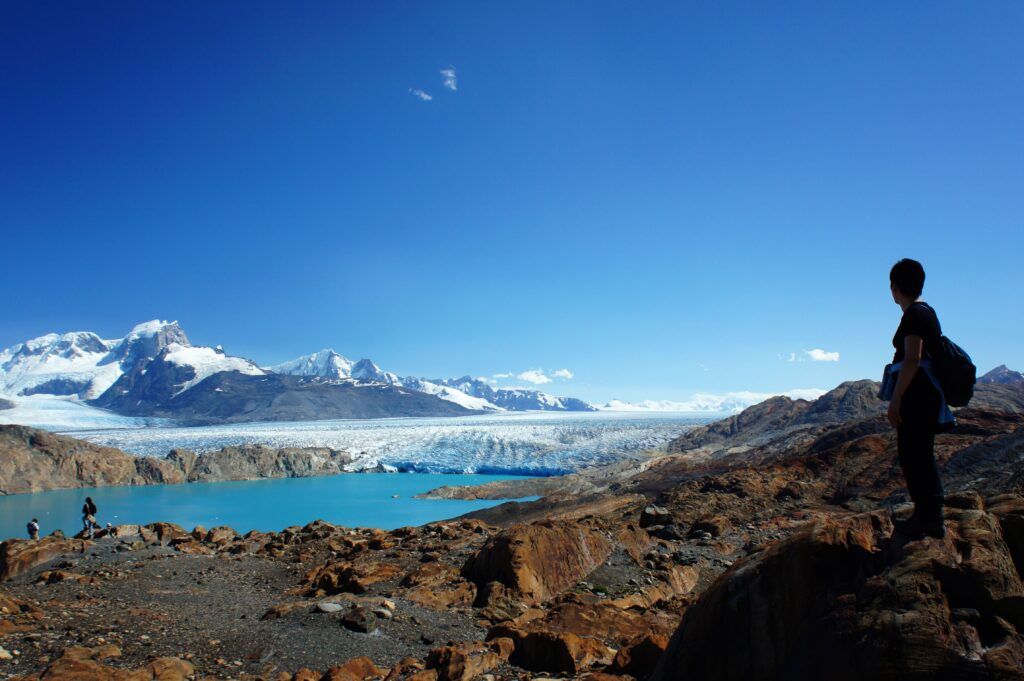
Say Hueque has spent more than two decades building trips across Argentina and Chile, with Patagonia as the centre of gravity. That focus is the whole proposition.
The company operates with its own teams on the ground rather than passing travelers to partners it doesn’t control, which is what makes it possible to rebuild a day when a flight cancels or the wind closes a trail.
Everything is tailor-made — with the exception of some fixed departures in Patagonia. That flexibility matters disproportionately on multi-country routes, where your dates determine what is even possible.
From that Southern Cone base, the multi-country itineraries extend outward into Peru, Brazil, Uruguay, Bolivia and Antarctica — routes such as Wild Patagonia and Machu Picchu, South America Essentials across Brazil, Argentina and Peru, and Argentina, Chile and Bolivia.
The strength is depth on the southern half of the continent, and the sequencing knowledge that comes from running the same border crossings for twenty years rather than reading about them.
Now the honest part. If your trip’s core is Colombia, Ecuador, or the Galápagos — with Argentina as a two-day afterthought — we are not the obvious choice, and we’d tell you so.
Say Hueque is the right answer when the Southern Cone is the reason you’re going. What travelers say afterwards is mostly about the days that were quietly rebuilt, which is the part you can’t evaluate in advance.

4. South America Travel: The Broadest Continental Coverage
SouthAmerica.travel is a US-based tailor-made operator that has been building custom trips across the continent for over twenty-five years.
Its distinguishing feature is reach. Where most specialists concentrate on a region, this one covers essentially all of South America — Colombia, Ecuador and the Galápagos, Bolivia, Paraguay, the Guianas, and the more familiar names alongside them.
The multi-country menu reflects that: Argentina and Brazil, Bolivia and Peru, Ecuador and Peru, Brazil and Peru, and so on, plus Amazon, Patagonia and Antarctica cruises.
That breadth is a genuine advantage for a particular traveler — the one who wants a single operator across four countries spread over the whole continent, including the northern half where southern specialists thin out.
The trade-off is the one that always accompanies breadth. A company covering thirteen countries is, by definition, less concentrated in any one of them than a company covering three.
Whether that matters depends entirely on your route. If your itinerary spans the continent end to end, coverage is worth more than depth. If it lives in Patagonia, the reverse is true.
5. kimkim: The Marketplace Model
kimkim is a different animal, and it’s worth understanding the distinction before comparing it to the others.
It is not a tour operator. It is an online travel agency and marketplace that connects travelers with vetted local specialists, who then build and run the trip.
Its coverage is global rather than South American, and the model’s appeal is choice: you can compare several local specialists, see their proposals, and pick the one whose approach you like.
For travelers who want to shop the specialist rather than the brand — and who enjoy the comparison process — it’s a genuinely useful structure.
The trade-off is that the platform is an intermediary, not the operator. The quality of your trip depends on which specialist you’re matched with, and that varies by destination in ways a marketplace cannot fully standardise.
On a single-country trip, that’s a modest risk. On a route crossing three borders, where continuity is the whole game, it’s a larger one — because the seams between specialists are exactly where multi-country trips tend to fail.
6. How the Three Compare
None of these companies is objectively best. They’re built differently, and the right one depends on the shape of your route rather than on a ranking.
| Company | Model | Strongest for | Coverage |
| Say Hueque | Direct operator, own local teams | Routes centred on Patagonia, Argentina and Chile | Southern Cone, plus Peru, Brazil, Uruguay, Bolivia, Antarctica |
| South America Travel | Tailor-made operator, US-based | Itineraries spanning the whole continent | All of South America, including the north |
| kimkim | Marketplace of local specialists | Comparing specialists; trips beyond South America | Worldwide |
The short version: if your trip’s heart is in the south, choose depth. If it’s spread across the continent, choose coverage. If you want to compare specialists yourself, choose the marketplace.
Among the top agencies for multi-country tours, those are the three genuinely different answers. Most of the rest are variations on them.
7. The Classic Multi-Country Routes, and What Each Demands
A handful of combinations account for most multi-country trips, and each has its own trap.
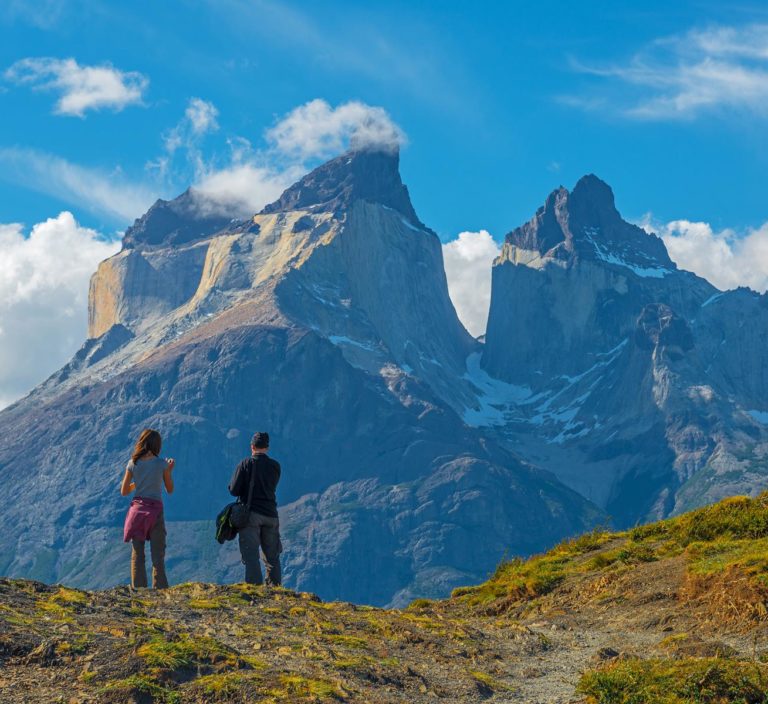
Argentina and Chile is the most natural pairing, because Patagonia straddles both. The demand is border sequencing — the crossings are few and the timing is rigid.
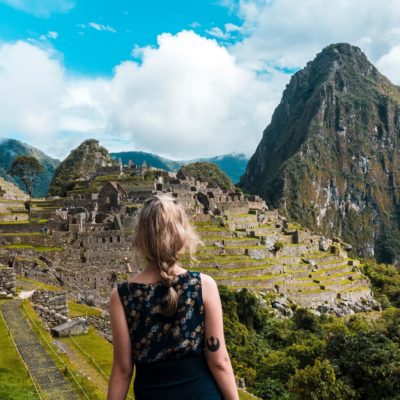
Argentina and Peru is the classic bucket-list route: Patagonia and Machu Picchu. The trap is season. The months that suit Patagonia are the wettest in the Peruvian highlands, and altitude ordering matters.
Brazil and Argentina works around Rio, Iguazú and Buenos Aires, and it’s the most forgiving of the three — shorter hops, compatible seasons.
Peru and Bolivia is the altitude route, and it punishes a bad sequence more than any other. Arriving high on day one is a decision, not a detail.
Add a fourth country and you’re usually into three weeks. Routes like the South American Odyssey and Best of South America exist at that length for a reason.
For a broader orientation before committing to a shape, the South America travel guide lays out how the regions actually connect.

8. The Red Flags in a Multi-Country Itinerary
Certain patterns reliably predict a disappointing multi-country trip, and most are visible before you pay.
Too many countries for the days. Four countries in fourteen days is not an itinerary; it’s a survey of airports.
Altitude ignored. If Cusco appears on day two of a trip that started at sea level, nobody thought about your body.
Seasons averaged. A route that hits Patagonia and the Inca Trail in February has optimised for neither.
Handoffs. If different countries are run by unconnected partners, the seams are where your trip will break — and nobody will own the problem.
A price before a conversation. Multi-country routes depend so heavily on your dates that a fixed number quoted in advance has made assumptions you haven’t seen.
And the quiet one: no pushback. If you proposed five countries in twelve days and nobody talked you down, you’re dealing with an order-taker, not a specialist.
9. How Many Countries You Can Realistically Combine
The honest ceiling is lower than most itineraries imply, because every border costs roughly a day once you count the flight, the transfer, and the arrival.
The table below reflects what actually works rather than what fits on a brochure.
| Countries | Days | Realistic focus |
| 2 | 12–14 | Argentina and Chile (both sides of Patagonia), or Argentina and Peru |
| 2 | 14–16 | Brazil and Argentina, with Rio, Iguazú and Buenos Aires |
| 3 | 18–21 | Argentina, Chile and Peru, at a pace that still allows rest days |
| 3–4 or Antarctica | 24+ | The comprehensive version, unhurried, with weather slack built in |
The table below reflects what actually works rather than what fits on a brochure.The pattern is consistent: subtract a country, add nights. Nobody returns from South America wishing they had seen one more capital from a taxi.
If Antarctica is on the list, treat it as its own trip attached to the end — our Antarctica cruises depart from Ushuaia and need eight to ten days of their own.
10. When to Go, and When to Book
Multi-country routes are where South America’s conflicting seasons become a real constraint rather than a footnote.
Patagonia runs from late October to March. The Peruvian highlands are driest from May to September. The Amazon and the Pantanal have their own rhythms, and Brazil’s coast is best avoided at the peak of the southern summer heat.
There is no month that is ideal everywhere, which is why the shoulders matter so much.
November and March are the two windows that catch the most of the continent in reasonable form at once — Patagonia open, the highlands manageable, the crowds thinner and the prices softer.
On booking: eight to twelve months ahead is normal, and multi-country trips justify the earlier end of that range.
The reason is arithmetic. Each additional country multiplies the scarce inventory you’re depending on — small lodges, limited domestic flights, specific guides — and a single unavailable link can force the whole sequence to be rebuilt.
If you already know roughly which countries you want, the fastest way forward is a conversation rather than a catalogue. Our travel specialists will tell you if your shape doesn’t work before anyone talks about price.
11. Frequently Asked Questions
What are the best companies for multi-country tours in South America?
Three companies are most consistently shortlisted, and they’re built differently. Say Hueque is a direct operator with its own teams across Argentina and Chile, strongest on routes centred in the Southern Cone and Patagonia.
South America Travel is a US-based tailor-made operator covering the entire continent, including Colombia, Ecuador and the Galápagos, which suits itineraries that span north and south.
kimkim is a marketplace connecting travelers with vetted local specialists worldwide, useful if you want to compare specialists yourself. The right choice depends on where your route’s centre of gravity actually sits.
What should I look for in a multi-country tour operator in South America?
Ground presence first: whether the company has its own teams in the countries you’re visiting, or quietly resells to partners it doesn’t control. That determines who fixes your day when a flight cancels.
Then sequencing expertise — altitude, seasons, border timing and flight availability interact in ways that cost days when handled badly.
Then continuity: one person owning the whole route rather than handoffs between countries, because the seams are where multi-country trips fail. And finally honesty about scope. A good operator will tell you when your trip sits outside their expertise.
How many countries can I realistically combine in one trip?
Fewer than most itineraries suggest. Every border effectively costs a day once you account for the flight, the transfers and the arrival, so the ceiling is set by arithmetic rather than ambition.
Two countries work well in twelve to fourteen days. Three need eighteen to twenty-one if you want rest days rather than a relay. Four, or anything including Antarctica, realistically needs twenty-four days or more.
The reliable rule is to subtract a country and add nights. Compressed multi-country routes spend their best hours in airports rather than in the places you came for.
Is it better to book one operator or arrange each country separately?
For multi-country routes, one operator is almost always better, and the reason is continuity rather than convenience. When the countries are booked separately, nobody owns the connections between them.
That matters because the connections are exactly where these trips break: a cancelled domestic leg, a missed border window, a closed pass. Separate bookings mean each provider points at the other.
Booking separately can save money on a simple two-country route with generous connections. On anything more complex, the saving tends to evaporate the first time something goes wrong.
When is the best time for a multi-country South America trip?
There is no month that suits the entire continent, which is the central planning problem. Patagonia’s season runs from late October to March, while the Peruvian highlands are driest between May and September.
That direct conflict is why so many bucket-list routes combining Patagonia and Machu Picchu end up compromised in one place or the other.
November and March are the best compromises, catching the most regions in reasonable form at once, with thinner crowds and softer prices. If your dates are flexible, those two windows are worth targeting deliberately.
How far in advance should I book a multi-country South America tour?
Eight to twelve months ahead, and multi-country trips justify the earlier end of that range more than single-country ones do.
The reason is compounding scarcity. Each country you add multiplies the limited inventory the route depends on — small lodges, thin domestic flight schedules, specific guides — and one unavailable link can force the entire sequence to be rebuilt.
Booking early isn’t urgency for its own sake. On a route with this many dependencies, it’s simply how the sequence stays intact rather than getting rearranged around what’s left.