The first stanza of Sebastián Piana’s Milonga Sentimental, which was the first recorded milonga sung by Carlos Gardel in 1931, emanates classical picaresque elements of milonga music: the melancholy and joy that arise in a rogue attempt to survive in a corrupt society.
Updated to September 2026
Milonga pa’ recordarte/
milonga sentimental/
Otros se quejan llorando/
yo canto por no llorar.
—
Milonga to remember you/
Sweet milonga/
Others complain by crying/
I sing because I’m not.
“Milonga sentimental”,
por Homero Manzi
y Sebastián Piana
What is a Milonga?
A milonga is a traditional Argentine gathering where people come together to dance tango, listen to music, and share a unique cultural experience. In Buenos Aires, “going to a milonga” means joining a social tango night where locals and visitors meet on the dance floor, keeping alive one of Argentina’s most iconic traditions.
The word milonga refers not only to the event itself, but also to a musical genre and a style of dance that emerged in the Río de la Plata region. Unlike a Tango Show, a milonga is a participatory experience where everyone can join, following traditional customs such as tandas (groups of songs) and the cabeceo (the traditional invitation to dance through eye contact). Experiencing a milonga in Buenos Aires is one of the most authentic ways to discover tango culture, from historic tango halls in Buenos Aires to local neighborhood venues.
Best milongas in Buenos Aires (neighborhood, days & times)
Buenos Aires is the birthplace of tango and home to countless milongas, each with its own atmosphere, traditions, and style. From historic venues with decades of history to smaller neighborhood spaces where locals gather every week, the city offers endless opportunities to experience tango in its most authentic form.
Whether you are an experienced dancer or visiting your first milonga, exploring the different milongas in Buenos Aires is a unique way to connect with the city’s culture, meet local dancers, and discover the passion behind Argentina’s most iconic dance.
For beginners
La Catedral Club
Sarmiento 4006, Almagro
Website: https://www.lacatedralclub.com/home.html
Instagram: @lacatedralclub
Hours: Open from Tuesday to Saturday at 6.30 p.m. until late.
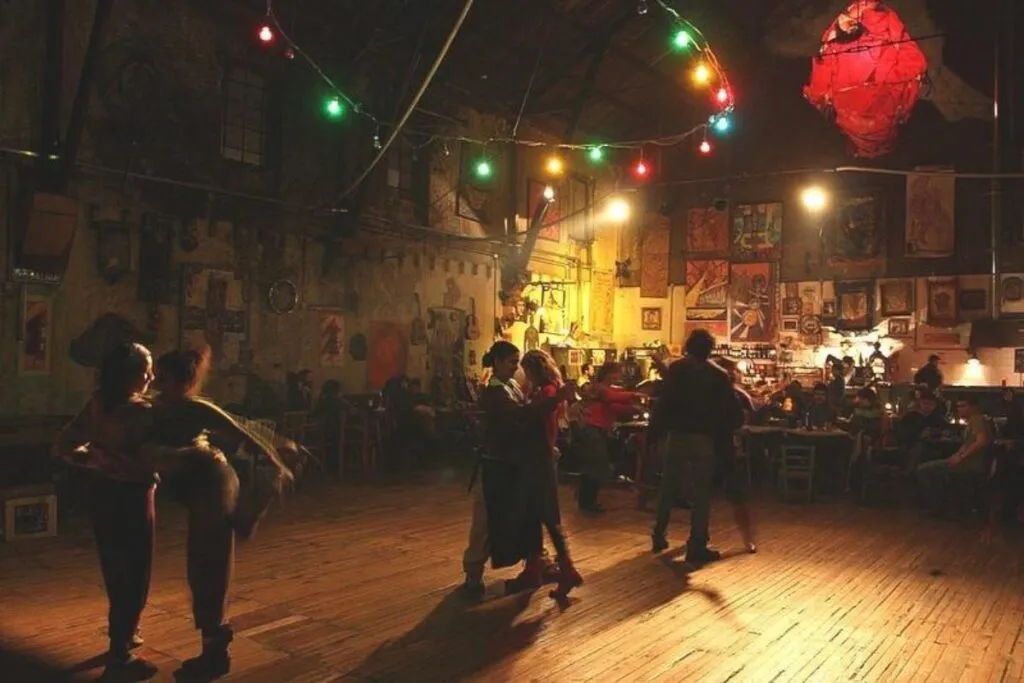
Located in the Almagro neighborhood, La Catedral Club is one of Buenos Aires’ most unique and alternative tango venues. Set inside a historic early 20th-century building, this bohemian-style space combines tango, live music, art, and a relaxed atmosphere that attracts both locals and travelers. Known for its informal spirit and creative energy, La Catedral offers a different way to experience a milonga in Buenos Aires, where traditional tango blends with a vibrant contemporary scene.
El Beso Tango
Riobamba 416, Balvanera
Website: https://elbeso.com.ar/
Instagram: @elbesotango
Hours: Open from Monday to Sunday in the afternoon and evening.
Located in the heart of Buenos Aires, El Beso is one of the city’s most traditional and historic milongas, known for preserving the classic spirit of tango. With decades of history, an authentic atmosphere, and a strong connection to the local tango community, it is a favorite among experienced dancers who appreciate traditional music, the codes of the milonga, and the elegance of the dance floor. For those looking to experience a genuine milonga in Buenos Aires, El Beso offers a glimpse into the timeless culture of Argentine tango.
For experienced dancers
La Viruta Tango Club
Armenia 1366, Palermo Soho
Website: https://lavirutatangoclub.com
Instagram: @lavirutatangoclub
Hours: Open Wednesdays, Fridays and Sundays at 8.30 p.m. until late.
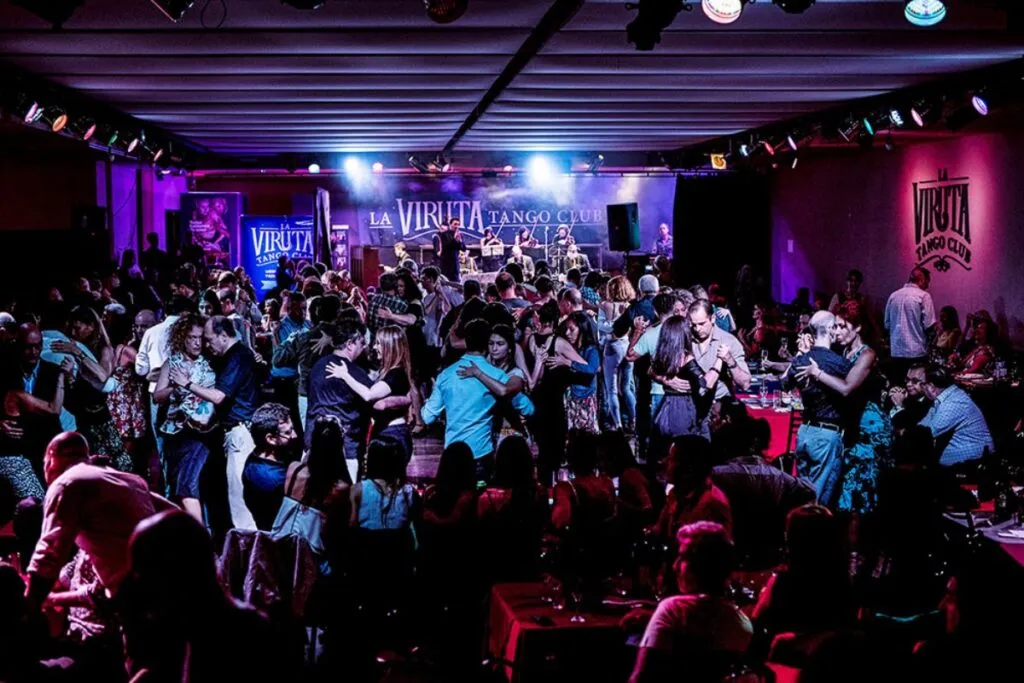
La Viruta Tango Club is one of the most emblematic tango venues in Buenos Aires, welcoming dancers and visitors from Argentina and around the world since 1994. Known for its welcoming and lively atmosphere, this traditional milonga offers tango classes, live shows, and the chance to experience an authentic Buenos Aires tango night, whether you are stepping onto the dance floor for the first time or already familiar with the rhythm of tango.
Milonga Parakultural
Maipu 365, San Nicolas
Instagram: @parakulturalmilonga
Hours: Open Tuesday and Fridays at 10 p.m. until late.
Parakultural Milonga is one of the most iconic tango gatherings in Buenos Aires, known for its authentic atmosphere and its role in keeping the traditional milonga spirit alive. Located in the city’s vibrant tango scene, it attracts both experienced dancers and visitors looking to experience the social side of tango. With its welcoming community, classic music, and lively dance floor, Parakultural is considered a must-visit for those wanting to discover the true essence of a milonga in Buenos Aires.
Open-air & weekend milongas
La Glorieta de Belgrano
Plaza de Barrancas de Belgrano, 11 de Septiembre and Echeverría, Belgrano
Instagram: @laglorietamilongaabierta
Hours: Saturdays and Sundays, 5 p.m. classes, 6:30 to 11 p.m. open milonga
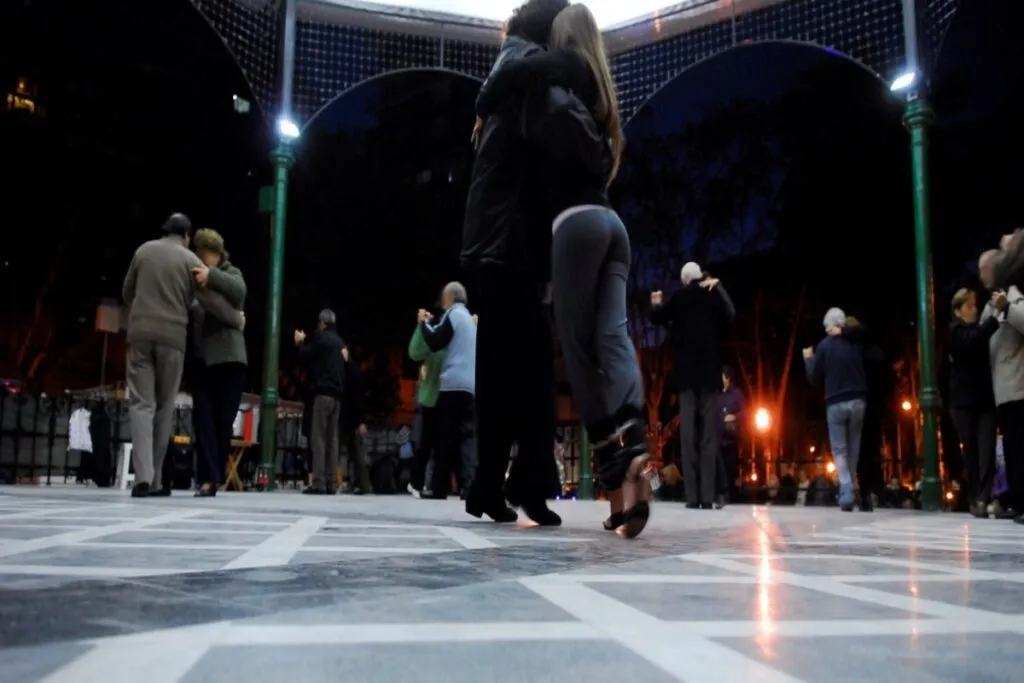
Located in the beautiful neighborhood of Belgrano, La Glorieta Milonga Abierta offers a unique open-air tango experience in one of Buenos Aires’ most charming settings. Held at the historic gazebo in Barrancas de Belgrano, this free milonga brings together local dancers and visitors in a relaxed and welcoming atmosphere. It is a great option for those looking to enjoy tango outdoors and experience the social spirit of a milonga in Buenos Aires surrounded by the city’s everyday life.
Milonga Placita del Pañuelo Blanco
Plaza Dorrego, Defensa y Humberto I, San Telmo
Instagram: @milongaplacitadelpanueloblanco
Hours: Sundays, 6 p.m. classes, 9 to 11 p.m. open milonga.
Located in San Telmo, Placita del Pañuelo Blanco Milonga is an open-air tango gathering that captures the authentic neighborhood spirit of Buenos Aires. Set in a charming public square, this milonga brings together local dancers and visitors in a relaxed atmosphere, offering the chance to enjoy tango outdoors while experiencing the city’s everyday cultural life. It is a great option for those looking for a more spontaneous and traditional milonga in Buenos Aires, beyond the classic tango venues.
Go beyond the tango shows and experience Buenos Aires through its authentic culture: Discover more options to dance milongas in Buenos Aires.
Milonga etiquette: what to know before you go
Attending a milonga is about more than just dancing; it is about understanding the traditions and social codes that make tango such a unique experience. One of the most distinctive customs is the cabeceo, a subtle invitation to dance through eye contact and a small nod. On the dance floor, couples follow la ronda, moving counterclockwise while respecting the space of other dancers. Music is organized into tandas (groups of songs) separated by cortinas (short breaks), which signal when dancers usually change partners. While these traditions may seem unfamiliar at first, they are part of the charm of a milonga and help create the respectful, welcoming atmosphere that defines Buenos Aires’ tango culture.
A brief history of the milonga
The word milonga has its roots in the Quimbanda language spoken by Angolan communities brought to South America during the colonial period, where it meant “talk.” Over time, it became associated with the Spanish payada, an improvised musical dialogue, blending African and Spanish influences to create a musical tradition that remains an essential part of Argentine culture today.
Originally, milonga was a musical genre with two main styles: milonga campera (country milonga) and milonga ciudadana (urban milonga). While its exact origins are still debated, the style reflects a rich fusion of African, European, and local influences that also shaped the development of tango.
Today, the word milonga also refers to the social gatherings where people meet to dance tango, milonga, and vals criollo. These events are an important part of Buenos Aires’ tango culture, welcoming dancers of all ages and levels while preserving the traditions, music, and social codes that make each milonga a unique experience.
Frequently Asked Questions
Do I need a partner to go to a milonga?
No. You can attend a milonga alone and meet other dancers there. Many people come without a partner, and it is common to change partners throughout the evening.
There is no strict dress code, but most people choose a smart and comfortable outfit. Comfortable shoes are essential, as tango involves spending a lot of time on the dance floor.
What time do milongas start?
Most milongas begin in the evening, usually around 8 or 9 PM, with tango classes often offered beforehand. The main dancing typically starts later, around 10 or 11 PM, and can continue until late at night.
For more information about Buenos Aires milongas and fun facts about Argentine culture, check out our blog. Or contact Say Hueque to start planning your trip to Argentina to experience the Milonga culture for yourself!