You may have heard about the different exchange rates for the Argentine peso while planning your trip to Argentina. The economic situation in Argentina may seem confusing or fluctuating, but it is important to familiarize yourself with the different exchange rates of Argentine currency.
The blue dollar in Argentina is the informal exchange rate for US dollars, which has historically differed from the official rate. For international visitors, understanding how Argentina’s currency exchange system works can help when budgeting for a trip, deciding how to pay for hotels and restaurants, and exchanging money during their stay.
However, the blue dollar is not automatically the best option for every traveler. Argentina has several ways to access pesos, including authorized exchange services and foreign credit or debit cards, which may receive exchange rates based on financial market references. The most suitable option depends on current exchange conditions, transaction fees, and your travel plans.
In this guide, you will learn what the blue dollar means, how it compares with other exchange rates, where to exchange money safely, and when to use cash or cards in Argentina. If you are preparing your itinerary, these tips can also help you plan your travel budget alongside our Argentina travel guide.

What Is the Blue Dollar?
The blue dollar in Argentina (dólar blue in Spanish) is the informal exchange rate at which US dollars are bought and sold outside the country’s official foreign exchange market. It emerged in response to currency controls and restrictions on access to foreign currency, which historically created a gap between the official exchange rate and the price of dollars in the informal market.
For years, the blue dollar was an important reference for travelers because exchanging US dollars for Argentine pesos at this rate could provide more pesos than using the official rate. However, Argentina’s foreign exchange rules and market conditions have changed over time, so the difference between rates is not fixed and should not be assumed to work the same way today.
Why Is It Called the Blue Dollar?
The name dólar blue is the commonly used Argentine term for the informal dollar market. You may hear it mentioned in news reports, conversations about the economy, or discussions about the cost of living. Exchange rates are often quoted as the buying rate (compra), which is what a buyer pays for your dollars, and the selling rate (venta), which is what you pay to purchase dollars.
Does the Blue Dollar Matter for Tourists?
It can, because exchange rates affect how much you spend on accommodation, meals, transportation, and activities. However, the blue dollar is an informal market rate, and exchanging money through unofficial channels carries risks, including counterfeit banknotes and scams. Travelers should compare the total cost and exchange rate offered by authorized providers before deciding how to pay.
For a broader overview of local customs and practical travel considerations, our guide to Argentine customs travelers should know can help you prepare for everyday transactions and interactions during your stay.
Official vs. Blue Dollar Rate
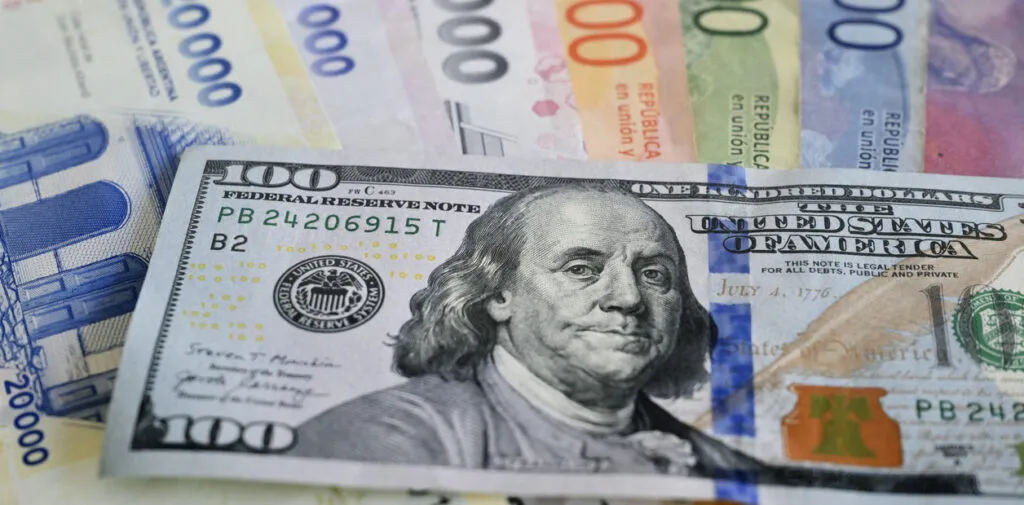
Argentina has historically had multiple exchange rates for the US dollar. The official exchange rate is the rate quoted through the formal foreign exchange market, while the blue dollar rate refers to the price of dollars in the informal market. The difference between them has fluctuated over time depending on currency controls, economic conditions, and government policies.
For travelers, understanding this distinction is useful, but it is important not to assume that the blue dollar always offers the best deal. Exchange regulations and financial market conditions can change, and the rate applied to a card payment may differ from both the official and informal rates.
What Is the Official Exchange Rate?
The official rate is used for transactions through authorized financial institutions and formal exchange channels. The rate available to an individual can depend on the type of transaction, applicable taxes or regulations, and the provider’s fees.
What Is the Blue Dollar Rate?
The blue dollar rate is an informal market reference for exchanging US dollars for Argentine pesos. It is often discussed in local media, but it is not a guaranteed rate available through banks or authorized exchange offices. Transactions in the informal market also carry additional risks, so visitors should compare legitimate alternatives before exchanging cash.
How to Exchange Money as a Tourist
If you are visiting Argentina, you can exchange foreign currency through authorized exchange offices, banks, and other providers permitted to conduct foreign exchange transactions. US dollars are widely recognized, particularly in Buenos Aires and major tourist destinations, but the options available and the rates offered can vary.
Before exchanging money, compare the rate you will actually receive, including any fees, and consider how much cash you are likely to need. You do not necessarily need to exchange your entire travel budget at once: combining cash with card payments can give you greater flexibility throughout your trip.
Where Can You Exchange Money in Argentina?
Authorized exchange offices (casas de cambio) are a practical option in major cities. Look for established providers that display their rates clearly and explain any commissions before completing the transaction.
Banks may also offer foreign exchange services, although eligibility, documentation requirements, currencies accepted, and opening hours vary. Check the requirements in advance rather than assuming every branch exchanges cash for tourists.

ATMs allow eligible international cards to withdraw Argentine pesos, but fees, withdrawal limits, and exchange rates depend on the card issuer and ATM operator. Check these conditions before relying on cash withdrawals as your main source of money.
Avoid exchanging currency with strangers on the street or accepting offers that seem unusually favorable. Informal transactions can expose travelers to scams, counterfeit banknotes, and other risks.
Paying with Cards vs. Cash in Argentina
Both cash and cards are useful when traveling in Argentina, and the best approach is usually to carry a combination of the two. International credit and debit cards are widely accepted in Buenos Aires and many tourist destinations, including hotels, restaurants, and larger shops. However, cash remains useful for small purchases, tips, local markets, and businesses that do not accept cards.

The key difference is not simply whether you pay in pesos or US dollars, but the exchange rate and fees applied to each transaction. Depending on your card issuer, network, and the current rules, foreign card payments may use a financial-market-based exchange rate rather than the standard official rate. Check your provider’s current terms before traveling instead of assuming that paying by card will always be cheaper than exchanging cash.
When Should You Pay by Card?
Cards are often the most convenient option for larger purchases, hotel bills, restaurant meals, and other transactions where you want a clear digital record. They also reduce the need to carry large amounts of cash.
Before your trip, check whether your bank charges foreign transaction fees, how it converts Argentine peso transactions, and whether ATM withdrawals incur additional costs. When a payment terminal offers to charge you in your home currency instead of Argentine pesos, choosing Argentine pesos generally avoids the merchant’s own currency conversion rate, although your card issuer’s fees and conversion terms still apply.
When Is Cash Useful?
Cash is particularly helpful for smaller purchases and in places where card acceptance may be limited. It can also be useful when paying independent vendors or visiting rural areas where electronic payment infrastructure is less reliable.
Keep some Argentine pesos available for everyday expenses, and avoid carrying all your travel money in one place. If you bring US dollars to exchange, use authorized providers and compare the final amount you will receive before completing a transaction.

Is It Better to Pay in US Dollars or Argentine Pesos?
Some hotels and tourism businesses may quote prices in US dollars, while everyday purchases are commonly priced in pesos. Whether paying in dollars is advantageous depends on the price offered, the exchange rate used, and any additional fees.
Always confirm the currency and final amount before paying. If you are arranging accommodation, transfers, or excursions as part of your Buenos Aires travel plans, check the payment currency and accepted methods with each provider in advance.
Practical Tips for Travelers
Managing money in Argentina is easier when you understand your payment options and prepare for the possibility that exchange rates and regulations may change during your trip. Rather than relying entirely on the blue dollar or carrying large amounts of cash, use a flexible approach that combines secure payment methods with a little advance planning.
Here are some practical tips to keep in mind:
- Check exchange rates before departure. Compare the rates offered by authorized exchange providers and your card issuer shortly before traveling. Do not rely on an old quote or assume the blue dollar will always offer a better rate.
- Bring a backup payment method. Carry at least one alternative to your main card, such as a second card or some cash, in case a payment is declined or a terminal is unavailable.
- Notify your bank if necessary. Check whether your bank requires travel notifications and confirm that your cards are enabled for international transactions.
- Carry some Argentine pesos. Cash can be useful for small purchases, tips, local markets, and businesses that do not accept cards.
- Use authorized exchange providers. Avoid street offers and unusually favorable rates from strangers. Confirm the exchange rate, fees, and amount you will receive before completing a transaction.
- Keep cash and cards secure. Store backup funds separately from your daily spending money, and avoid displaying large amounts of cash in public.
- Check payment conditions in advance. Hotels, tours, and transport providers may have different rules for deposits, balances, and accepted currencies. Confirm these details before booking.
- Plan for destinations outside major cities. In remote areas of Patagonia and other regions, ATMs and card acceptance may be more limited than in Buenos Aires, so carry an appropriate amount of cash.

Ultimately, there is no single payment method that works best for every traveler. The most practical strategy is to compare your options, understand the fees, and keep enough flexibility to adapt to changing conditions. For a smoother trip, combine these money tips with the logistics and cultural advice in our Argentina travel guide as you prepare your itinerary.
Frequently Asked Questions
What is the blue dollar in Argentina?
The blue dollar (dólar blue) is the informal exchange rate for US dollars in Argentina, historically different from the official rate due to currency controls and market conditions. The gap between rates changes over time, so travelers should compare current options rather than assume the blue dollar offers the best value. For safety, use authorized exchange providers.
Should I bring cash or use cards in Argentina?
It is generally best to bring a combination of cash and cards. International cards are widely accepted in Buenos Aires and many tourist destinations, while Argentine pesos are useful for small purchases, tips, local markets, and places with limited card facilities. Check your bank’s exchange rate and fees before traveling, and keep a backup payment method available.
Where can I exchange money in Buenos Aires?
You can exchange foreign currency at authorized exchange offices (casas de cambio) and eligible banks. Compare the rates and fees before making a transaction, and confirm that the provider is authorized to exchange currency. Avoid exchanging money with strangers on the street, as informal transactions carry risks such as scams and counterfeit banknotes.
Is it better to pay in dollars or pesos?
It depends on the price, exchange rate, and payment method. Everyday purchases in Argentina are generally priced in pesos, while some tourism providers may quote services in US dollars. Before paying, confirm the currency and final amount, and compare the effective cost after fees or currency conversion. Do not assume that paying in dollars or exchanging cash will always be the cheaper option.