- 1. It’s 5 am at Buenos Aires Airport, and I joined my unknown travel partners.
- 2. Around 12 pm. We head from El Calafate airport to El Chaltén by land (this is the only possible way).
- 3. So here is where the famous American chief Butch Cassidy cashed in for a while.
- 4. Mount Fitz Roy, the Smoky Mountain, is there!
This year, I decided to go for a physical challenge and spend a couple of days in El Chaltén, the hiking national hub in Argentine Patagonia. I’ve never thought there were so many things to discover just on the journey from El Cafate (the nearest airport you can reach from Buenos Aires) to El Chaltén, which is only reachable by land transportation. Here is the personal journal I kept of that trail and the things I discovered.
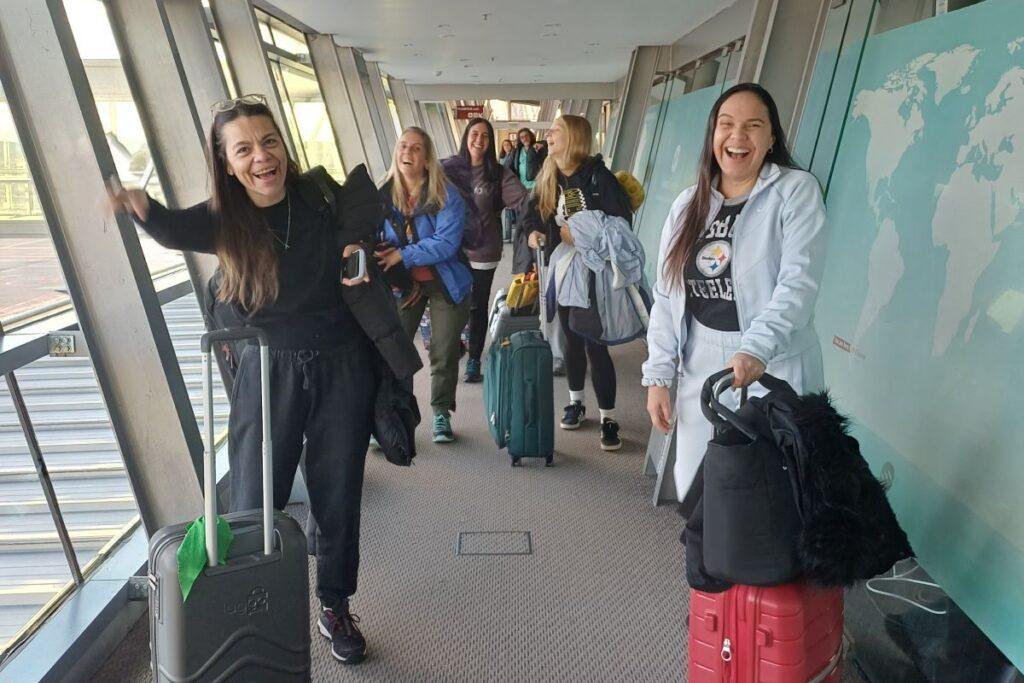
1. It’s 5 am at Buenos Aires Airport, and I joined my unknown travel partners.
8 other women are waiting at the airport when my transfer drops me off. One of them tells me she has already been to El Chaltén, the “Hikers’ Paradise” of Argentine Patagonia. For me, it’s my first time. The idea of spending the next 4 days hiking long hours in the mountains troubles me a bit. But I want to do it. What I don’t know is if I’ll be up to the challenge. I’m a writer and quite a sedentary one. I didn’t follow any physical preparation in particular for this trip. Saying that I walk 1640 feet per day in my regular life would be optimistic.
If I can make it to the top? If at halfway, I’m exhausted, and the tour guide has to shamelessly turn back only because of me? These are all possible scenarios. I don’t want to be a burden on the group traveling with me. I don’t want to disappoint myself. I should never quit the gym, that’s for sure.
The other women in the group seem nice, too. Traveling with others makes me feel better. Especially because some of them feel unsure of their physical resistance, too, and are new to hiking like me. One of them smokes and is especially troubled, but keeps up the optimism, which makes me like her.
Now we wait at the boarding gate. I can’t stand my feet. Why should I go and buy new hiking boots when everybody told me I shouldn’t? Luckily, a friend, with better criteria than I and hiking experience, borrowed her old pair too. I changed it. With the minutes left, my stomach starts to rumble. I’d better grab a coffee before I turn into a much less civilized person.
2. Around 12 pm. We head from El Calafate airport to El Chaltén by land (this is the only possible way).
It’s been one and a half hours since we left the airport in a minivan. And it left one and a half more to reach El Chaltén. The scenery is incredible all around. Mountains appear in all shades of color: grey, green, and brown. This is the Patagonian steppe, but we’re heading to greener vegetation and humid weather. The first lakes start to show, the first snow-capped summits, and what a blast! The first “guanacos”!
The guanaco is a kind of camelid from South America. You can find them all around Patagonia, whether you’re in Argentina or Chile, but also in some regions of the North. They are not exactly the same because the adaptation to weather and soil conditions should be different, but let’s say they are distant cousins.
The first one appears through the window to the right, the opposite side from where I’m sitting. We all plunged to the right side of the minivan, which had already started to speed down. We got to take some bad pictures of the gorgeous animals. Soon we’ll realize they can be soon in most parts of the route. Some grassed farther away, but others were really close to the road.
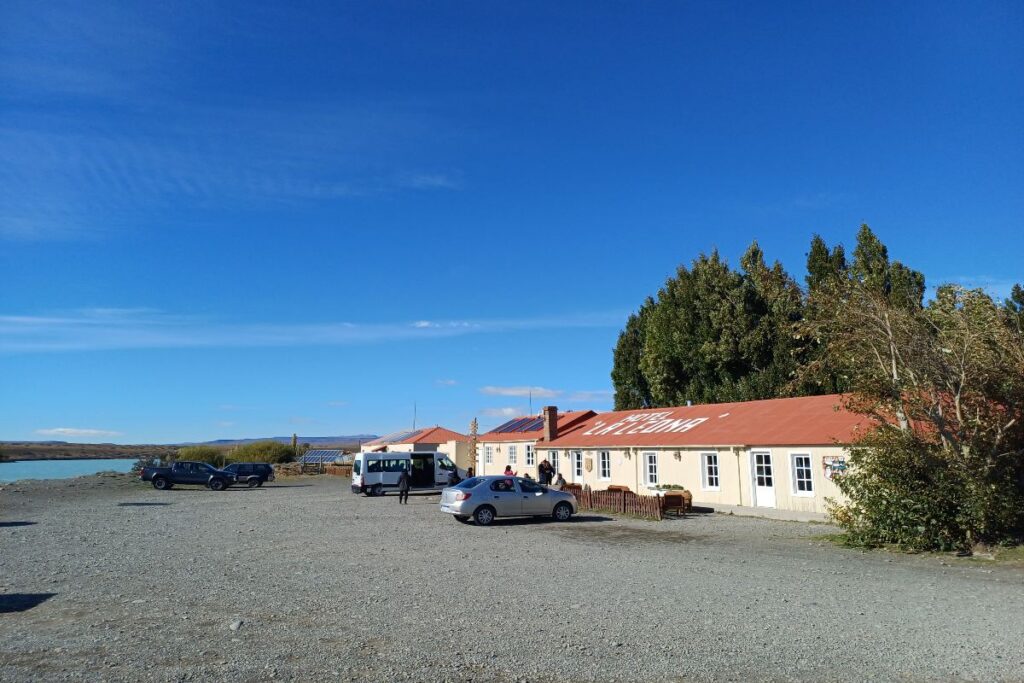
The driver told us we’ll also see them in El Chaltén. With this information, we can relax again in our seats and wait for our next stop, Hotel Parador La Leona, a mysterious hostel nestled halfway, built at the end of the 19th Century for travelers needing to overnight with their cattle and wait to cross the river heading to the Pacific Coast.
3. So here is where the famous American chief Butch Cassidy cashed in for a while.
This is one of the first things I learnt once in La Leona. We are practically alone, and it’s a peaceful place indeed. I feel the wind hitting my face suddenly, the smell of the fresh air brought by the river and the mountains nearby. I should bring my beanie. I didn’t think I’d need it with the sun shining alone in the sky, not a single cloud around. While the others visit the roadhouse and its coffee place, I approach the river. I’ve read that they call it the La Leona River after an Argentine pioneer (the Perito Moreno) was bitten by a lioness.
I turn around and head to the house with my travel partners, who must be already drinking coffee and grabbing something to eat. If I look around, there is nothing else, no human traces my eyes can see wherever I look. The name Butch Cassidy rings a bell; maybe I took it from a movie or a history book in Primary School.
Anyway, if you are a runaway thief, this is definitely a good place to cash. The story locals spread says he was not alone, but with two other famous criminals, Sundance Kid and Ethel Place, his wife. They have robbed two banks in Río Gallegos, an important city in the area, more than 200 miles.
The story ends happily for the villains. When the police came with identikits, the three were already gone. Like them, there were others, with legendary stories, like an outlander called Asensio Brunel, who rode saddles and ate raw puma meat. Or so goes the story.
Inside the place, it feels warmer. The combination of wood everywhere (in the furniture and the walls), the tantalizing smell of fresh coffee, and the sweet pastry. A man drinking a coffee with an empanada (the Argentinian taco) seems happy. A weird combination for me, but the empanada looks really good.
I don’t feel like having anything to eat or drink, so I wander around. The place is like a little museum in the middle of nowhere. There are relics in many places, an antique firearm, and a big rock with gold nuggets. Over the walls, the history of Road 40, connecting Argentina from North to South, catches my attention too.
The driver informs me it’s time to go. Just on time, we left when a bunch of tourists arrived. We still have one and a half hours of road ahead. Guanacos, as the driver promised, continue to make their appearances on our windows. I spot another of those little mountains, stone over stone, skirting the road. I saw others since we left the El Calafate airport. I’d like to know who does it, and if they have any meaning or if they don’t have any meaning at all.
Suddenly, we make a turn on the road, and it seems we are heading deeper into the land. A guanaco raises its head to see us pass and, right after, goes back to its task. A herd of horses with magnificent colors appears, going in the opposite direction. How would all this look under the rain, under a covering of snow? Then, with the sun warming up my face and the sensations that everything is yet to come warming up my heart, I fell asleep.
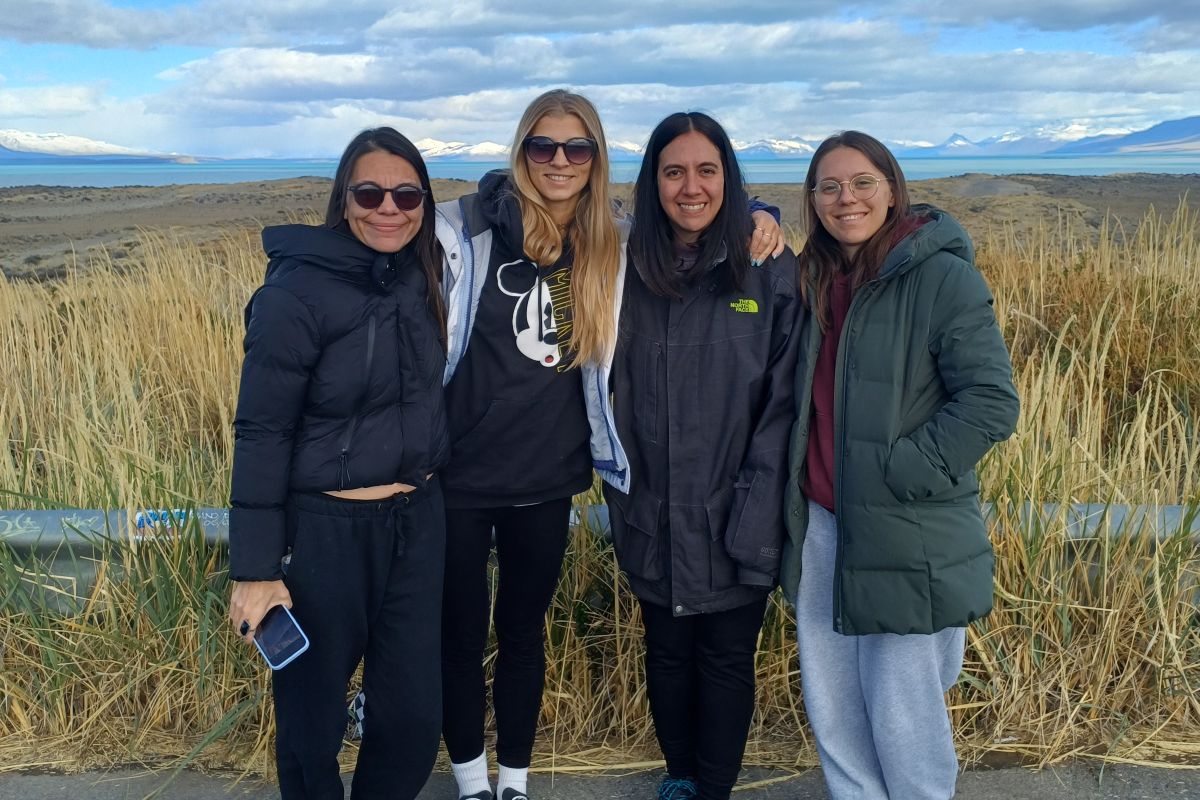
4. Mount Fitz Roy, the Smoky Mountain, is there!
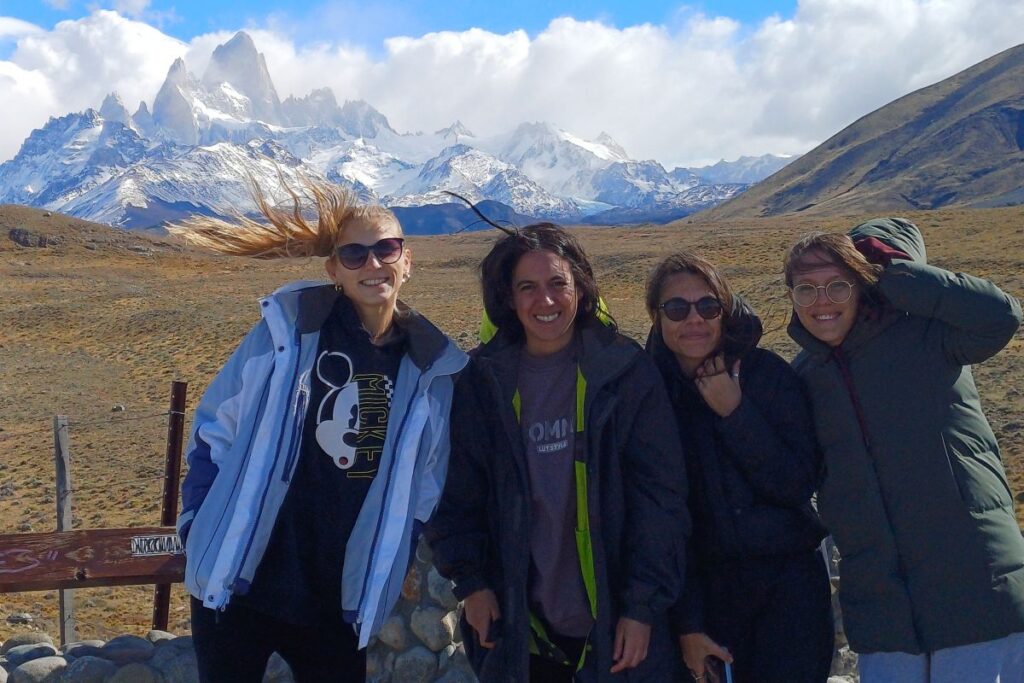
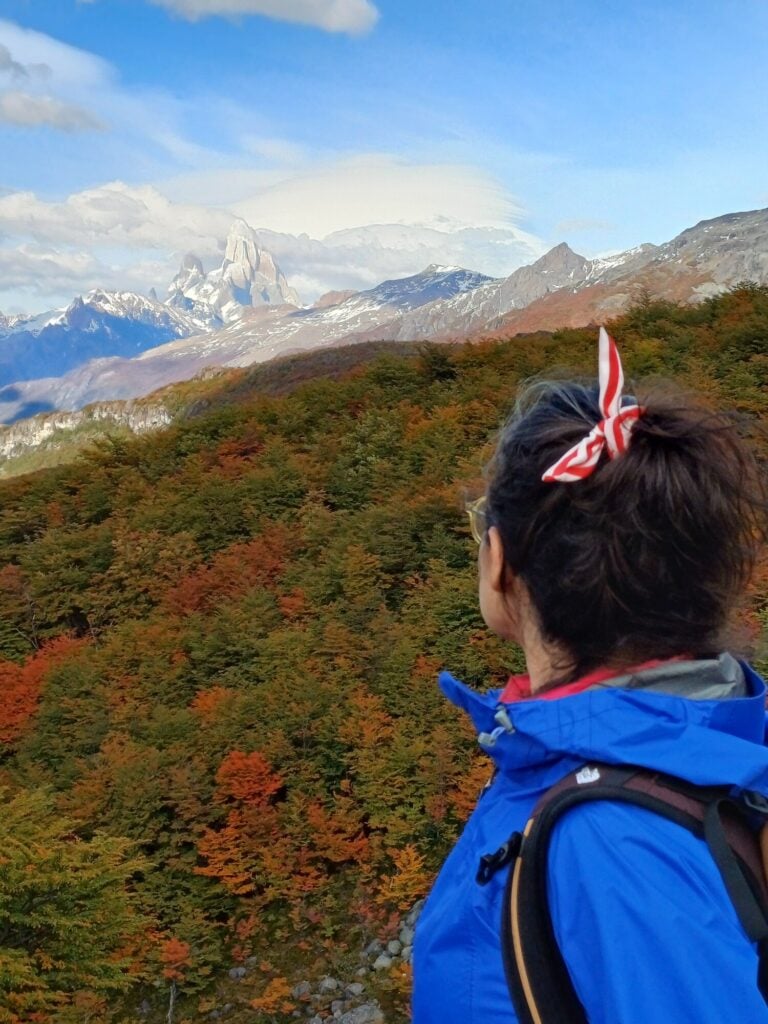
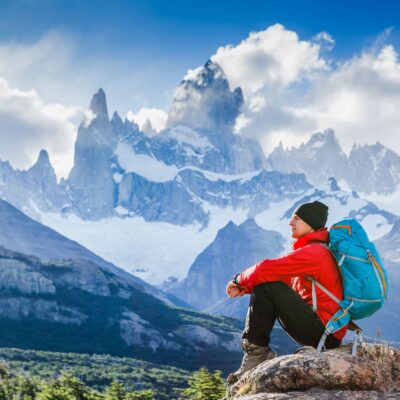
I woke up and didn’t hear the engines. We stop at a lookout. I’m the only one left inside. I look through the window to see where everyone is, and I see it, the summit of Mount Fitz Roy, is there! I put my jacket on, grab my beanie, and go out to take a picture.
I have read that everyone comes to El Chaltén to contemplate the sharp head of Mount Fitz Roy, the most famous mountain around here. But the truth is that it is really difficult to see it in its whole glory, and many come to El Chaltén and depart without it. However, we have been warned. The secret lies in the native Tehuelche name of this mountain, Cerro Chaltén. “Chaltén” means “smoky mountain” in the language of locals, and, because they know the summit was often covered by the clouds, they know unclouded skies were rare in the area.
But, to see Mount Fitz Roy summit is not the most important part of the experience, as it never is when we finally accomplish something and realize all we learned on the way becomes more important.
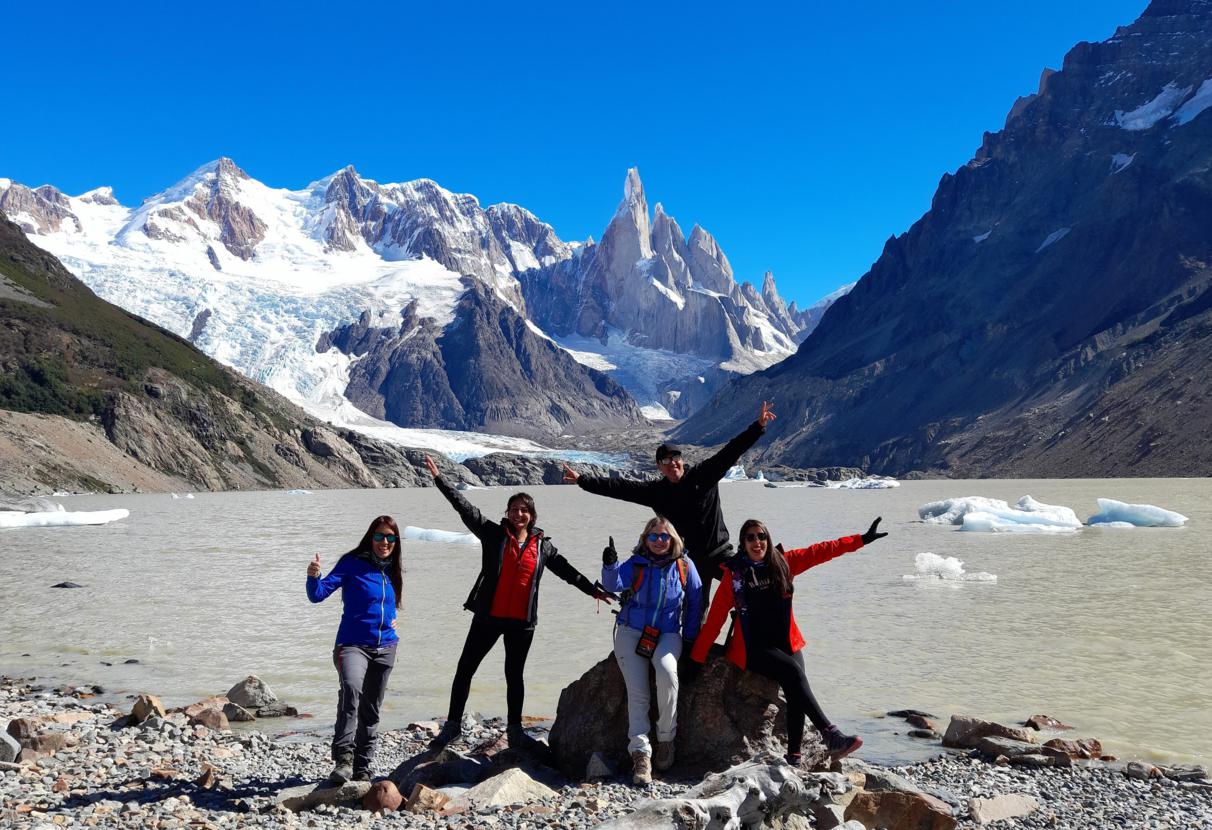
Of course, I’ll enjoy this moment for the time it lasts. The wind here is much stronger than in La Leona. I can’t make my hair stay in place, and the buzz of the wind and the cold is really intense. None of them kept my travel partners and me to stay there, with the imposing Smoky Mountain behind, waiting for the photographer to make the only shot possible under this weather.
It’s a gift, I think, that we have seen Mount Fitz Roy in its entire glory. It is a welcome gift from the mountains and the town in which we’ll arrive soon enough.
Back in the transfer, I see a man riding a bike in the opposite direction we’re rolling. Then, I see another walking in the same direction, against ours. I have just tasted the force of the wind; these people must be crazy. Then, my prejudice transforms into a sign. Suddenly, it seems to me those men could be like two seagulls announcing the imminent arrival of land, of our destination, of El Chaltén. And that is really good news.