- 1. A diplomatic conflict
- 2. Glacier Huemul Hike, what you should know
- 3. Nothing should be taken for granted
- 4. First part of the trail
- 5. Smiling faces along the way
- 6. Second part of the trail and first views
- 7. Last part of the trail and the famous ropes
- 8. A surprise at the top
- 9. One more gift from the mountain: Condors!
- 10. In the excitement I forgot about the glacier
- 11. Only 50 years left for Glacier Huemul to disappear
- 12. What I thought while gazing at the glacier
- 13. What is happening in Argentina with glaciers' conservation
I’m having breakfast at the hotel, looking out the window; there is no rain. The wind either seems terrible today, but I guess we will figure it out soon enough. It’s early, although the sun is up. Our transfer to Huemules Reserve will arrive in any second now.
It is my second day on the reserve, but today we’ll visit the other side where people embark to navigate the Lake of Desert, a famous landmark in Patagonia whose possession was disputed in a diplomatic conflict that ended with military actions and one person dead.
1. A diplomatic conflict
It all began when a Chilean settler was asked by Argentine border authorities to regularise his situation. When the Chilean Gendarmerie came to protect their fellow citizens, bullets flew, and there was only one casualty: the Chilean carabineer Hernán Merino Correa. All happened in 1965, and it was not until 1995 and after International Arbitration that the area was finally declared to be part of Argentine Patagonia.
2. Glacier Huemul Hike, what you should know
But it’s not the navigation on Lake of the Desert that challenges me today, but a new hike, significantly shorter than yesterday’s hike to Cagliero Glacier and the Refuge, to reach Glacier Huemul.
I know we won’t be there before half an hour, so this is my chance to catch up on some sleep. Today’s guide starts sharing the characteristics of this hike. His words endeavour to badger my sleep. So I heard that there is only one steep climb where we’ll waddle between big rocks.
It’s only 20 minutes, he adds, and there are ropes to ease the ascent. We’ll see, I repeat to myself. Rope, really? I can see myself hanging from the rocks already. If that’s the case, there I go anyway. I turn onto my side and try to sleep during the last minutes.
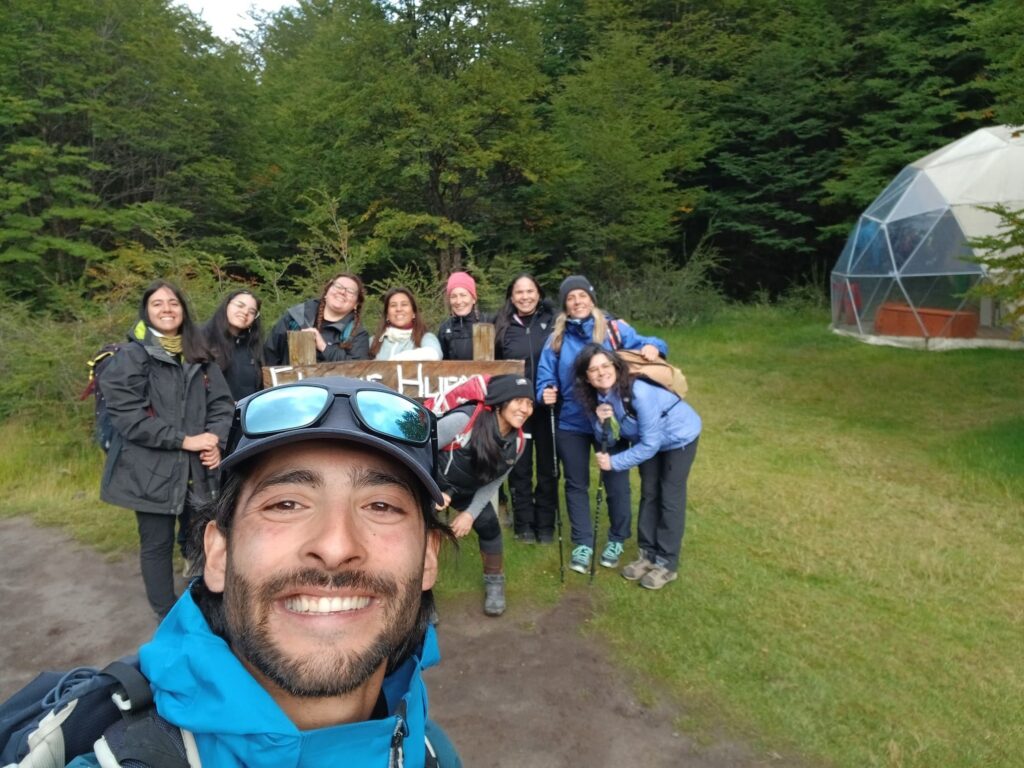
We arrived at an empty parking space at the shore of a lake whose final shores I don’t get to see from here. So this is the Lake of Desert. Guides say that we should enjoy the peacefulness so far; in peak season the place is jam-packed.
The advice here, even when you travel in high season (which in Patagonia is from October to April), is to be here as early as possible, before the first groups taking the navigation to the Lake arrive.
3. Nothing should be taken for granted
While the guide performs the technical talk before starting the hike, I approach the shore. The silence reigning here is wonderful, and so hard to find nowadays. I remember the conflict in which a life was lost for the right to these lands.
And I conclude: it is good to remember, now and then, that nothing should be taken for granted. Not even the ground we are stepping on now as national citizens.
Luckily, the cold isn’t terrible and most of all, it doesn’t rain. To ask the sun to come out would be exorbitant, but I think we’ll get lucky.
There is a line of bathrooms, a premium and wooden-made version of a porta-John, so we seize our chance.
I don’t expect much from the cleaning of these kinds of toilets, but I turned on getting a pleasant surprise, and my colleagues too, so much that we took our first steps inside the forest talking about it. Until one of them says: “We should see them at the end of the day”. She has a point.
4. First part of the trail
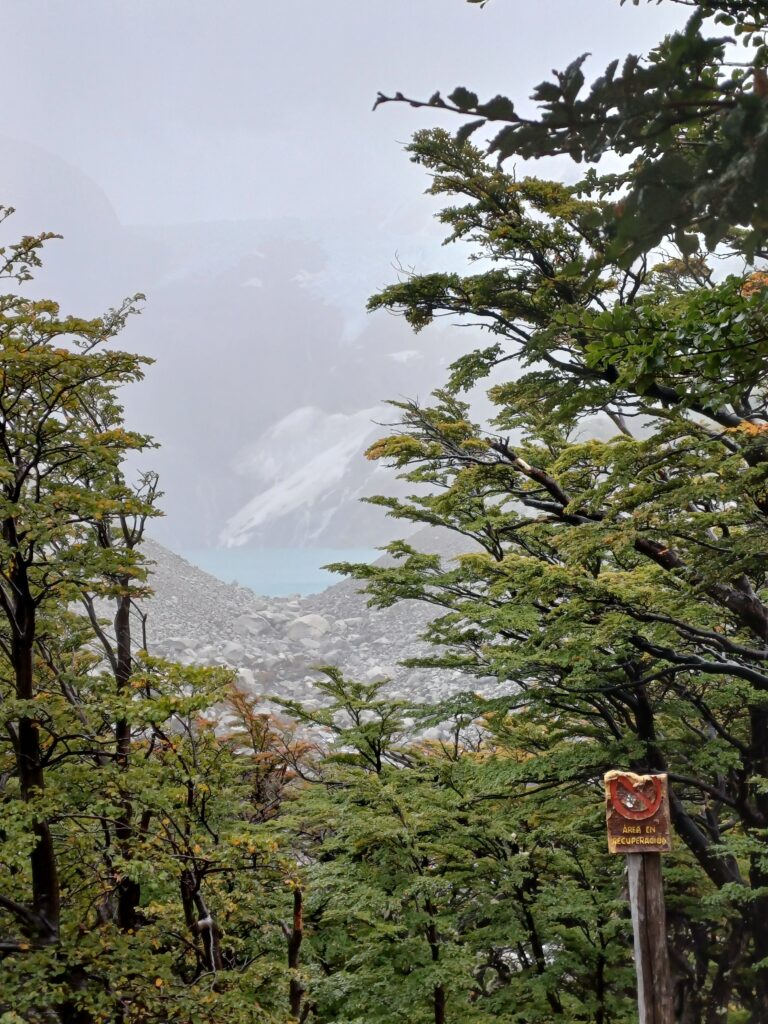
The trail is wide and shadowy. We entered the forest. The number of trees surprises me, as does the amount of trees blown over by the wind, which now fertilize the soil.
We walk skirting a river; I start to see a similar pattern in these kinds of hikes. It occurs to me that Nature is wise also in doing that.
If I have to climb a rugged, jagged rock, right from the beginning, I would probably desist. But starting like this, with a gentle stroll in the woods, while the path starts its gentle ascent and your legs faintly harden their muscular effort, the mountain becomes accessible for all kinds of strangers.
I try to focus on where I put my feet, like in yesterday’s hike to Cagliero Glacier. But something in the trees of this forest distracts me from the trail.
5. Smiling faces along the way
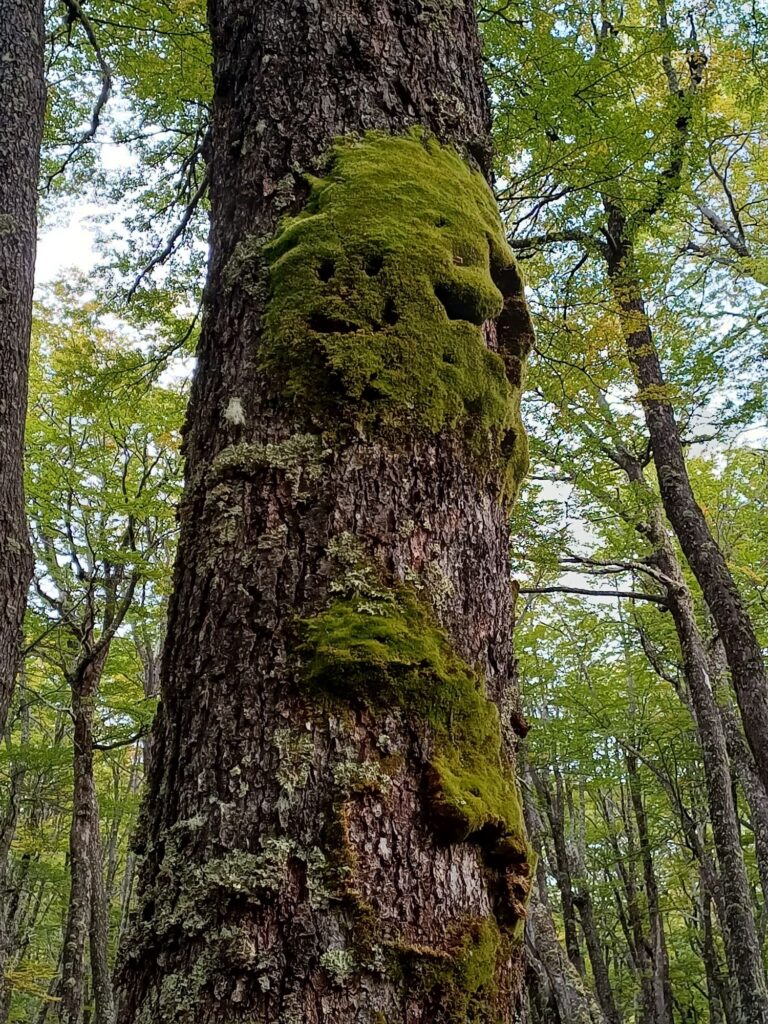
I see a smiling, green face kind of saying hi from a trunk. A few steps away, a second spongy and green little face gazes at me from the high of another trunk. Curious, I think, and keep walking.
By the time I see the third and the fourth, I take causality out of the possible explanations and ask the guide.
He says they are naturally formed by mud. But some of them feature suspiciously almost perfectly round holes as eyes and a human-style curving string as mouth.
People have fun in so many strange and varied ways.
6. Second part of the trail and first views
The trail starts to get moody, and it obliges me to focus. The first rocks, impossible to tackle with only one step, appear.
I get used to the younger trunks skirting the trail to leverage my leg’s strength. I also use my walking sticks. I need both to maintain the ascent rhythm.
I try not to think about how much it’s left until the summit, and it helps me a lot. Trying to keep up the talking, too, a luckily endless pursuit in our group.
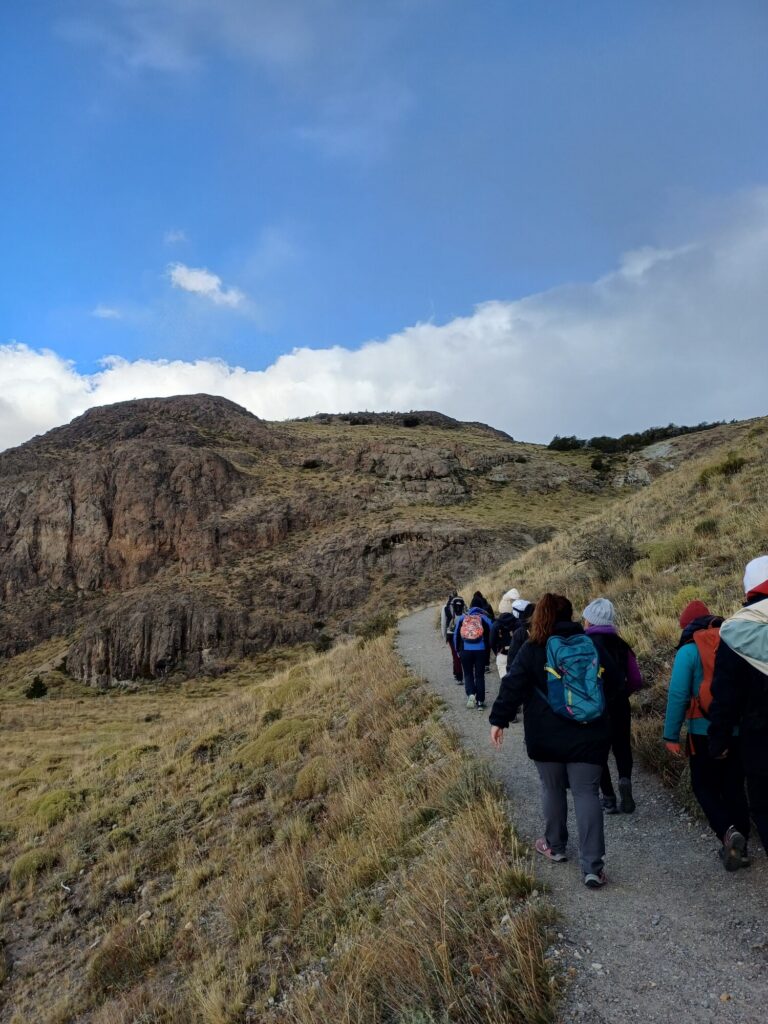
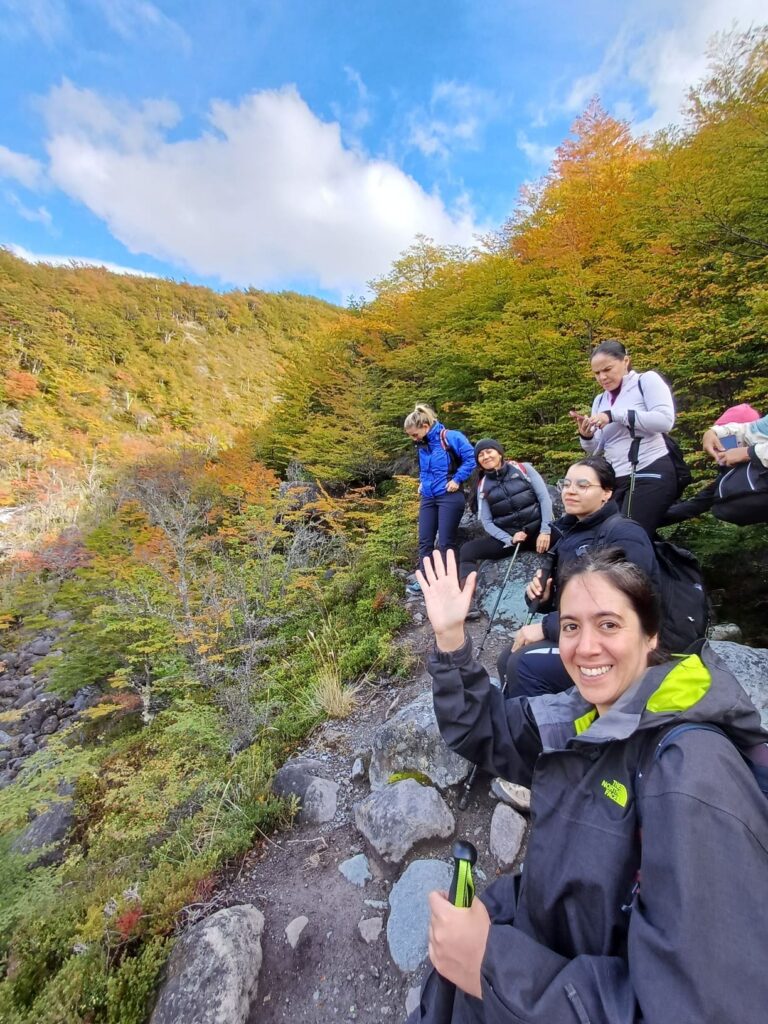
The guide points out a glade, a big rock where we can sit, and some spare places we can stand on and watch the landscape. It’s a natural balcony from where we can hear the fizzing flow of the river receding from the glacier and opening its way through the forest. Apart from that and our voices, silence reigns all around us.
The guide gets us going again; the most difficult part, the famous roped trail, lies still ahead.
7. Last part of the trail and the famous ropes
After a few minutes walking, there it is. I almost can’t see the ground beneath my feet. Now we walk over the sheer stones, sometimes a tree root or two.
I have just realized we have never left the wood and we won’t do it until we reach the summit.
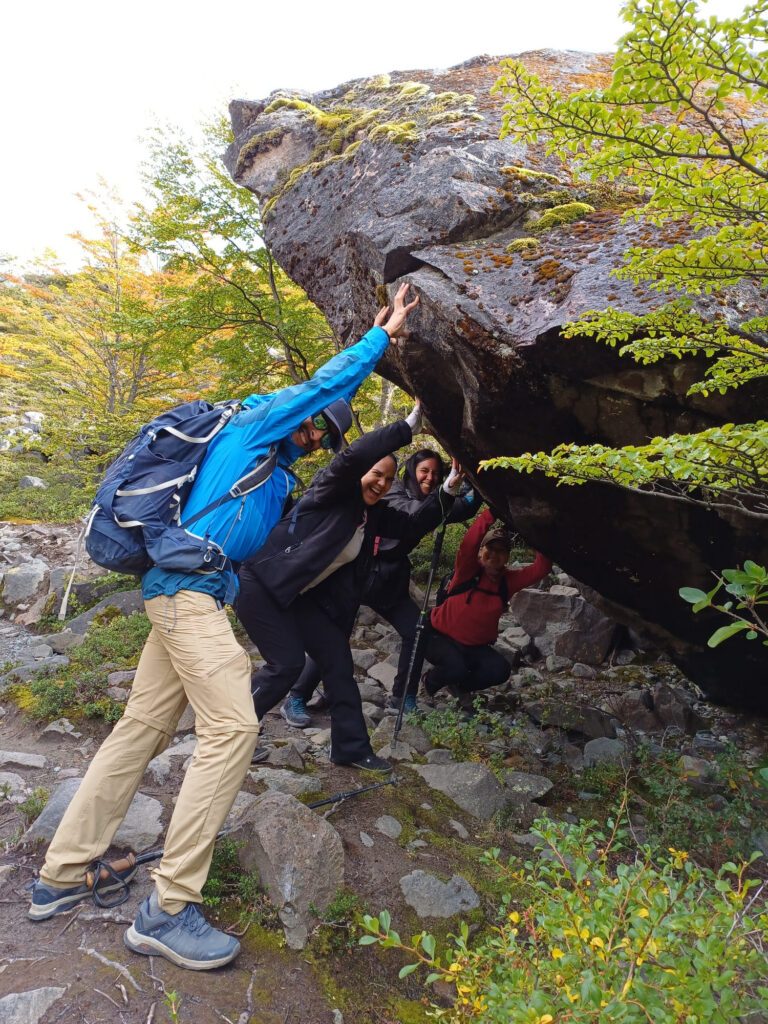
I look up to where the guide is already standing; the line of rocks has grown far and high, skirted by a line of young trees. Someone tied them together with ropes and formed these movable staircase handrails I’m grabbing now to ascend.
I feel secretly relieved. But, as I have done before with the walking sticks, I ignored the ropes and continued climbing by myself, at least for a while.
At length, rocks get bigger, the trail steeper, and my forces grow weaker.
Then, the mountain decided for me again; with a renewed humbling experience, I grabbed the ropes, decided not to let them go until the summit.
We can’t be far, I think to myself. Then, I hear voices nearby; however, I haven’t seen anyone passing us by.
8. A surprise at the top
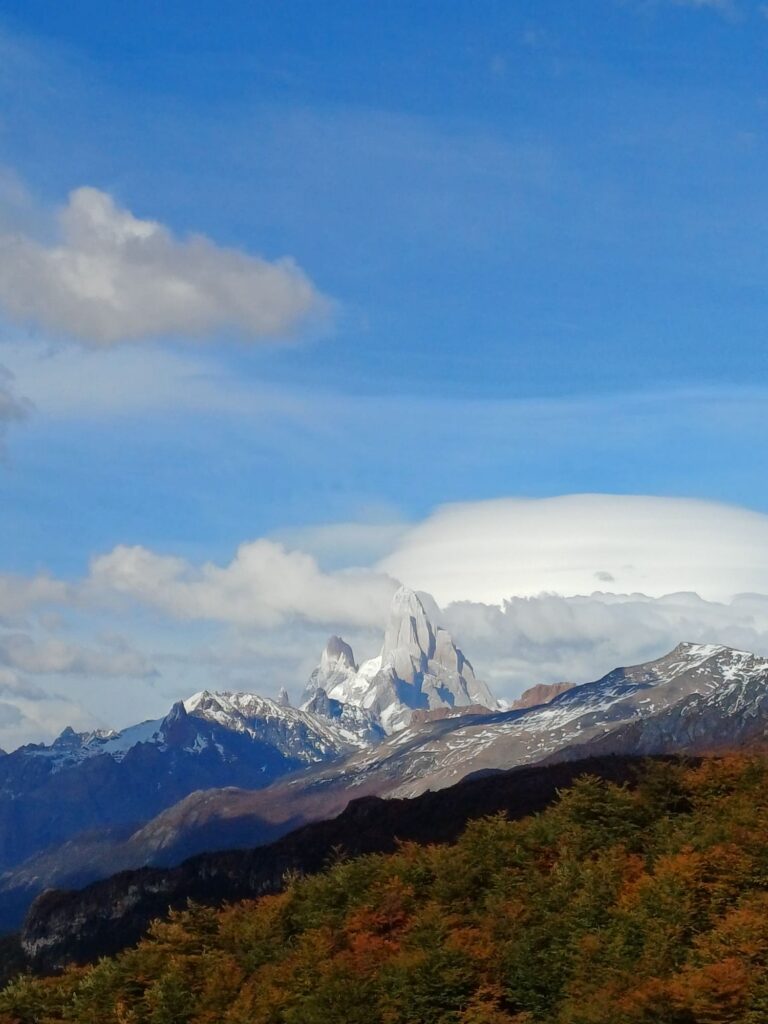
I start to see it; just a few meters left, and we’ll be there. Fitz Roy is clearing out! I hear someone saying from above. It’s a guide who reached the summit a couple of minutes before us.
I need to catch my breath, but I want to rush up to the top. The sun is starting to come out, and I’m not sure for how long.
I want to see Mount Fitz Roy before the clouds make it disappear again.
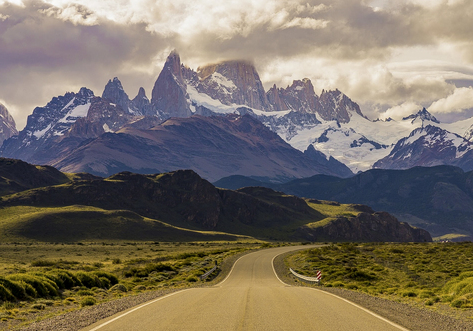
I climb as quickly as my legs can bear, and reach a small plain with some bushes and small trees. I get desperate to see it, that mysterious pile of rocks which fires the illusion of every person in town and every foreign traveler.
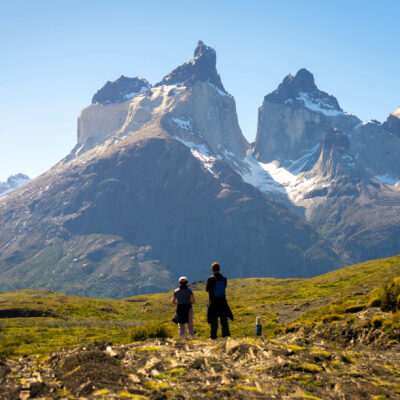
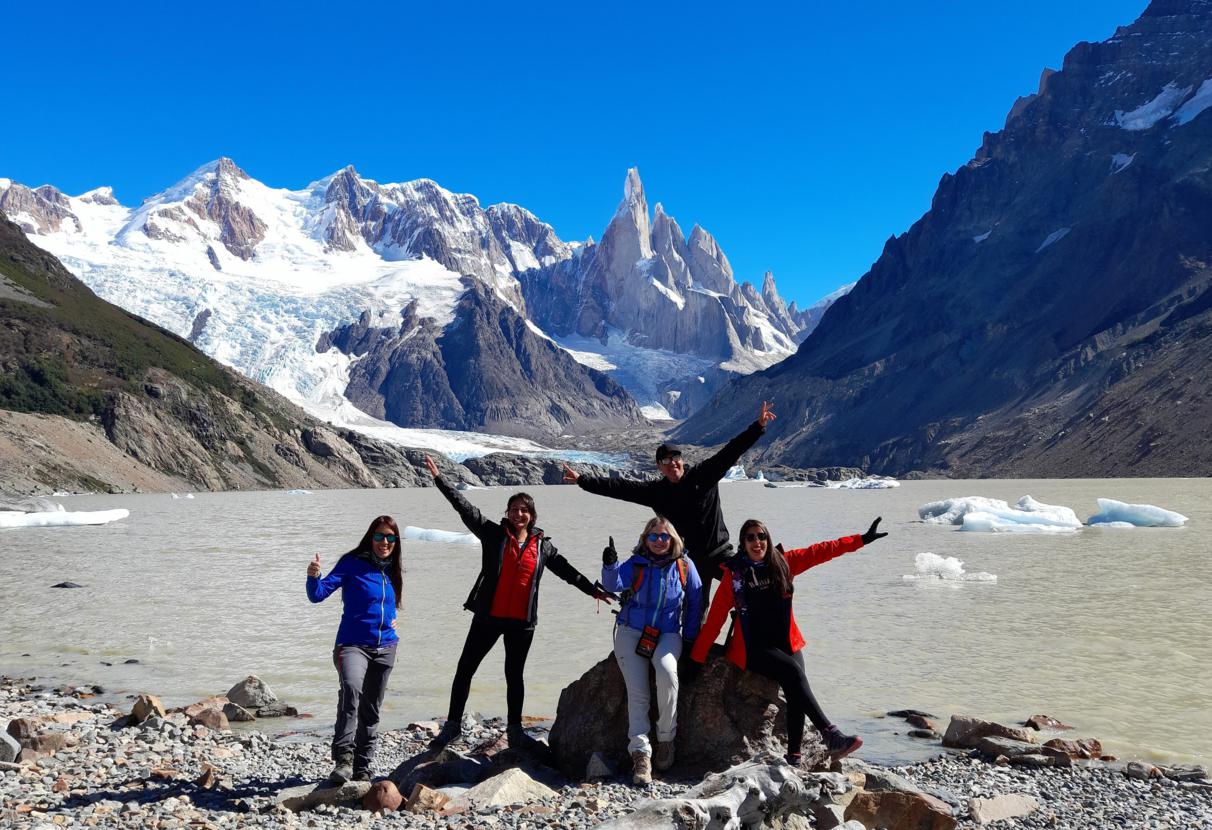
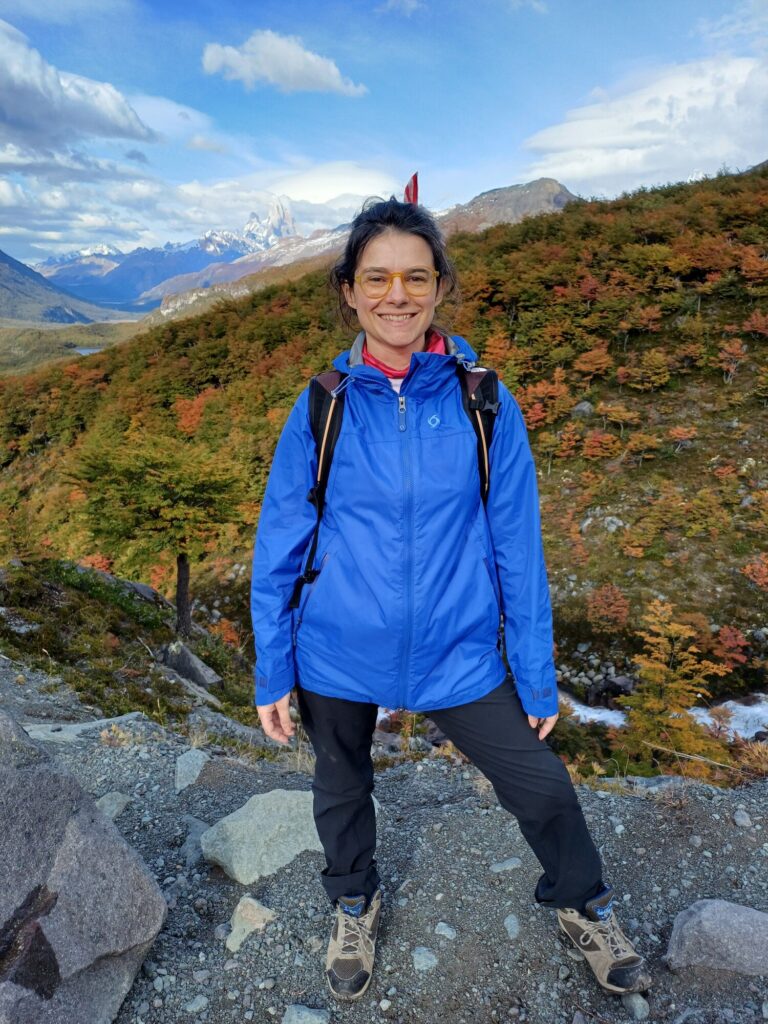
There it is, the unmistakable sharp peak, cut against the solitary blue of the sky.
What a precious gift! says our guide, a precious gift indeed, adds. The other, his colleague, nods.
I try to listen and understand these men, men from the mountain. If they say so, it must be.
What we are witnessing must be rare and infrequent.
Is it possible that the mountain would be rewarding us? What a stupid question, I say to myself.
I don’t think the moment could get any better, but immediately something contradicts my thoughts.
9. One more gift from the mountain: Condors!
From behind the slopes, I see them coming, flying directly to us, and I realize it may not be a stupid feeling.
Two Condors fly from the neighbouring mountain, two black dots enlarging their sizes every second, rushing to us, turning into two sizable bodies with wings that overfly and oblige us to tilt our heads back, foolishly endangering our necks.
I can’t believe all this is a causality. I rather think that something good we have made to deserve it, that somehow we have contributed to this happiness I feel and recognize in my fellows.
10. In the excitement I forgot about the glacier
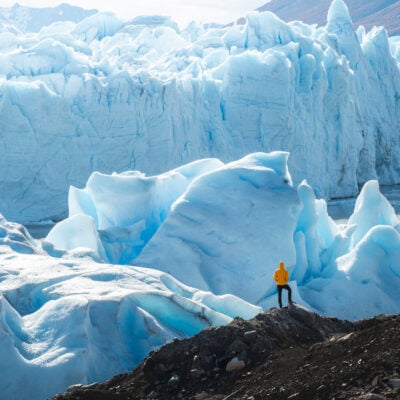
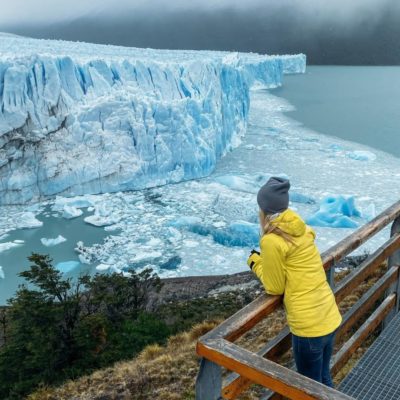
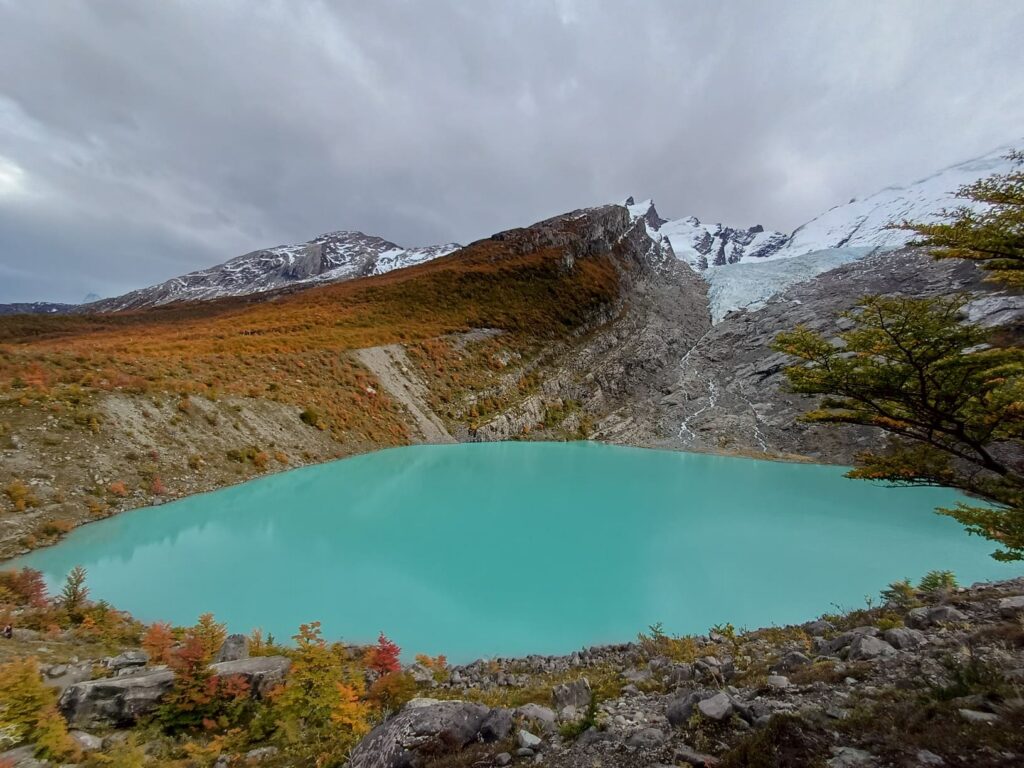
One of the girls comes and points out something to my right, a place I could not yet turn to see. I see the deep blue lagoon, the deep grey of rocks against the hanging ice covering most of it, like floating over the still water.
With the miraculous appearance of the Fitz Roy and the condors, I have already forgotten the purpose of our quest, the goal of this hike: The Huemul Glacier.
A forgotten memory from my childhood strikes me. I see myself entering a toy store with my parents, whose hands I try to leave as soon as we enter the place, and run towards every color, shape, and texture I see.
I used to get lost in that thunder of sensations, never knowing where to start. I don’t know it yet, having reached this place. So I tried, as I tried back then, to do it all together, enjoy everything happening around with no hierarchies.
11. Only 50 years left for Glacier Huemul to disappear
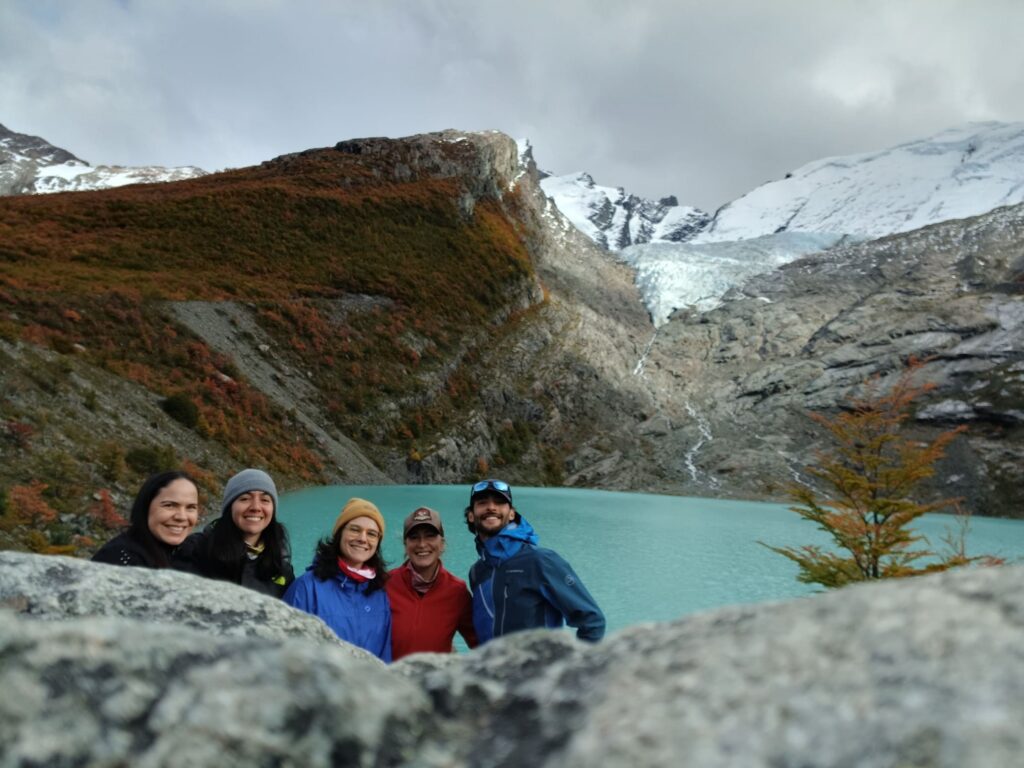
I should concentrate on enjoying the peak of Fitz Roy before it disappears, and probably it will be very soon. Huemul Glacier has some years yet before it completely evaporates. At least, that is what the guide tells us.
He says that, 50 years ago, the ice touched the water; now, there is a wide stripe of grey and rock separating water from the ice.
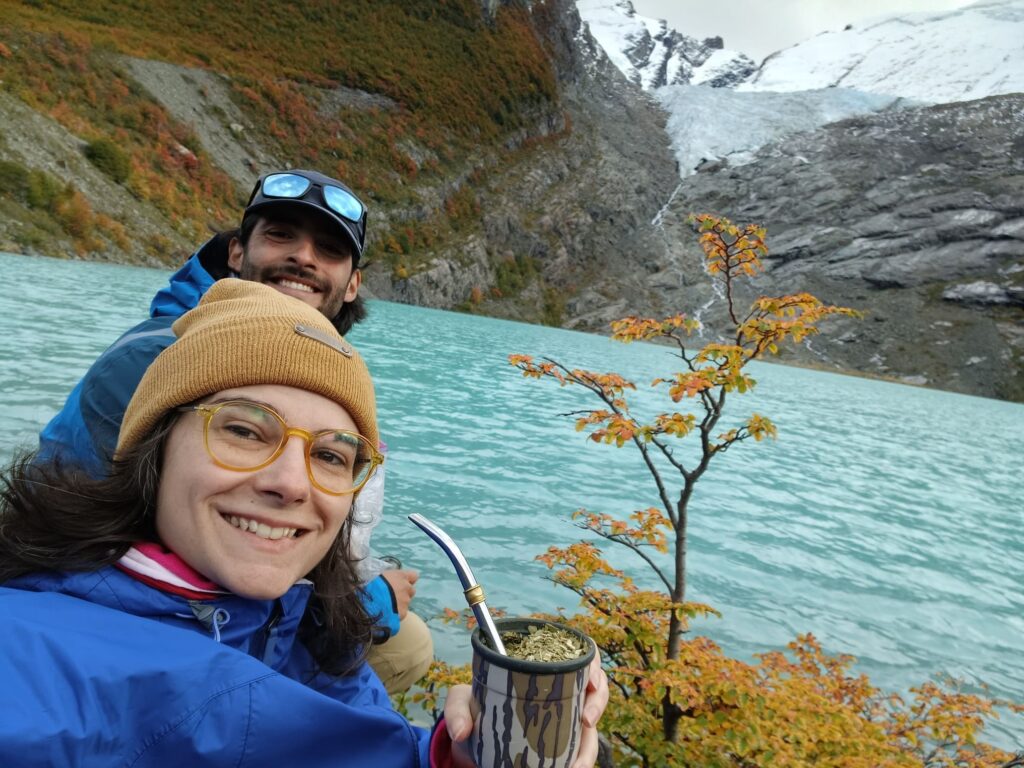
We stay there for a while; the sun is shining, so the cold is bearable. The guide prepares the mate, and we drink and share it. I take one or two and go down the promontory from where we stand and get closer to the lagoon’s shore.
12. What I thought while gazing at the glacier
I sit on a rock and contemplate the glacier Huemul. I remember what the guide just told us, and quickly, a very real sadness, a sadness I didn’t see coming, overwhelms me all of a sudden. Why? There is nothing this place has to do with my everyday life. Then, why this sadness?
A feeling of guilt arouses inside me from God knows where.
I picture myself in the future, coming with my children and reaching not this view, but a dry, massive hole and a whiteless mountain. Then I could show them only the scrapes left by the sharp advance of the icy arms of the glacier, year after year, before vanishing into the sky, before transforming into clouds and rain.
It may be a time few of us would remember. It would be a time people in the future could only imagine or hear about in tales, like in a movie.
13. What is happening in Argentina with glaciers’ conservation
There is a second thought knocking at my door: In my country, Argentina, a law has just deregulated the conservation rights through which glaciers have been protected as natural monuments and scientifically precious for the production of knowledge.
I don’t know much about laws and politics, but I do know that the new law reduces the value of these glaciers only as a source of drinkable water. It may be so, but, again, I don’t know the machinations and dealings.
But I do know for certain one thing: If anyone manages to get here, get close enough to confront the measure of an ancient giant, if one manages to get swept away and back in time to other Eras of the World just by sitting here on the same shore, everything gets clear. One understands there must be much more in that hanging ice, more than a reservoir of water to put down our thirst.